Caves to visit in Sardinia
Saturday, September 11, 2021
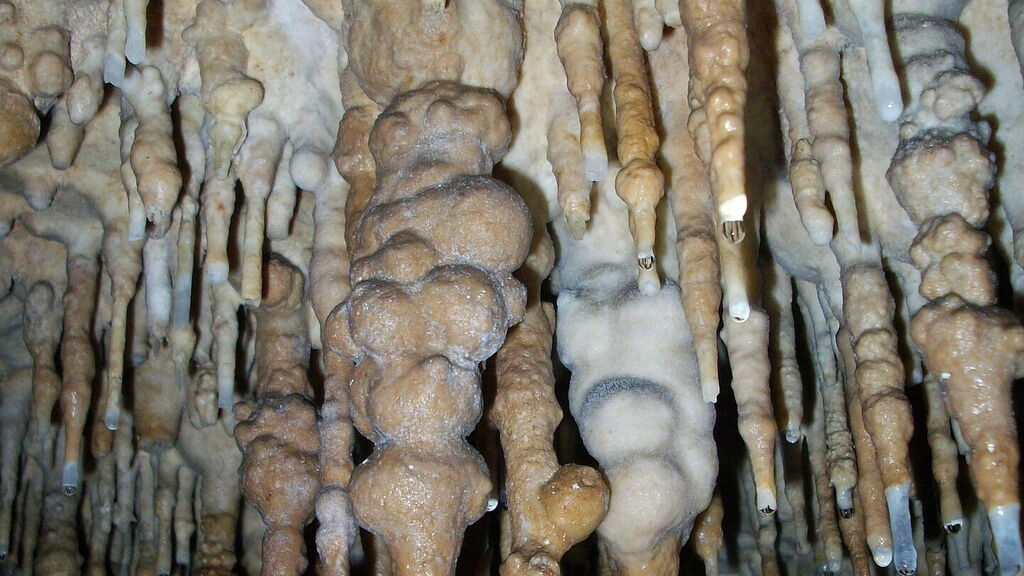
Sardinian caves
Not only an island with unspoilt wild coasts, fabulous beaches, transparent waters and incredible colors. Sardinia holds several naturalistic treasures of great scientific interest. We refer to the underground caves, which attract thousands of visitors every year, including simple enthusiasts and professional speleologists, as well as numerous tourists looking for alternative attractions.
On this page we present the best caves to visit in Sardinia, ranging from north to south of the island, which are very valid and interesting alternatives to the beach.
Notoriously, the most famous marine caves in Sardinia are two: The Grotta del Bue Marino and La Grotta di Nettuno: both set in two marine contests of poignant beauty and great suggestion ... but there are many others.
Keep in mind the following spots when you come to visit Sardinia, one of the most beautiful islands in the world, especially out of season.
On this page we present the best caves to visit in Sardinia, ranging from north to south of the island, which are very valid and interesting alternatives to the beach.
Notoriously, the most famous marine caves in Sardinia are two: The Grotta del Bue Marino and La Grotta di Nettuno: both set in two marine contests of poignant beauty and great suggestion ... but there are many others.
Keep in mind the following spots when you come to visit Sardinia, one of the most beautiful islands in the world, especially out of season.
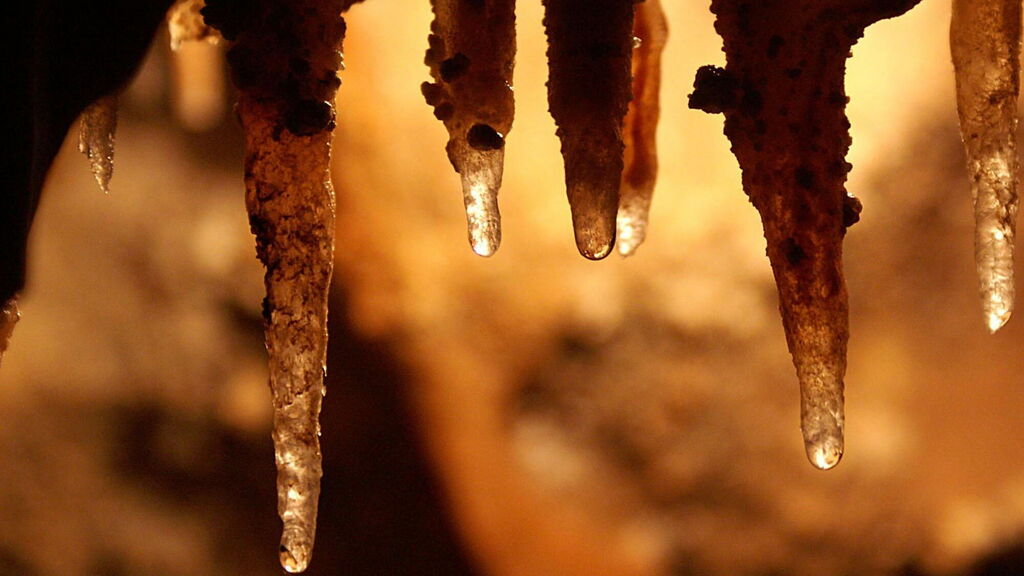
Famous aquatic caves of Sardinia
Here is the list of the main Sardinian caves, and their location. Just read further to discover more about them:
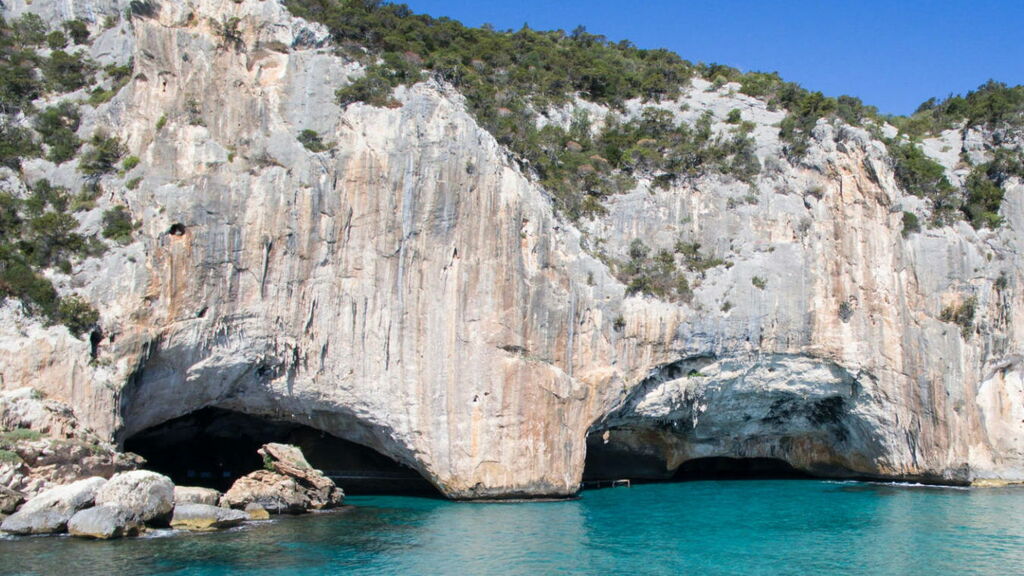
Grotta del Bue Marino (The “Sea Oxen” Caves), Cala Gonone, in Dorgali
A peculiar name for this natural wonder, located in a context of rare beauty. The Grotta del Bue Marino has its access in one of the most beautiful stretches of sea in the world.
The etymology of the name derives from the 'sea ox', as the Sardinians call the monk seal, which once inhabited these areas. Unfortunately, for years there have been no more sightings of the tender and mild mammal, so much so that it is feared that it has disappeared from the Gulf of Orosei.
The entrance to the cave is quite impressive: you can access it through two wide arches, which touch the crystal-clear turquoise water. They look like eyes of a giant with a semi-submerged face.
This access can be reached by sea, by excursion boats departing from various nearby ports: Cala Gonone, Santa Maria Navarrese, Arbatax, Orosei and even La Caletta.
We could write about this cave for days, such is its beauty and its naturalistic, biological and speleological importance. Let's start by providing an important fact: it winds for about 15 kilometers in the bowels of the earth. The cave is part of a vast network of underground tunnels, known as the karst system of Codula di Luna, which extends for about 70 kilometers under the Gennargentu massif, the largest mountain of Sardinia. In other words: the largest karst system in Italy. There you are! Another naturalistic record for Sardinia.
The cave is divided into two parts: a closed northern branch, considered "fossil" since karst activity has ceased, and a southern branch, open to visitors.
Close to the access of the south branch there are interesting rock engravings of stylized human figures, pictured around the sun, called petroglyphs, dating back to the Neolithic era.
The tourist route winds through the south branch for about 900 meters, to be discovered alongside expert Guides. You walk inside a large tunnel, skirting some lakes, including a crystal-clear salt lake, about 1 km2 wide, one of the largest in the world.
Along the way it is impossible not to be fascinated by magnificent stalactites and stalagmites which offer fascinating chromatic spectacles, thanks to the light rays that penetrate the cave.
The visit ends in the Spiaggia delle Foche, the “seal beach” where monk seals used to mate and give birth to the pups.
Speleologists can explore further 4000 meters of the south branch, while the north branch is accessible landside, via a path which connects it to the wonderful Cala Fuili beach.
Both mountain lovers and sea lovers can rest assured: this fantastic destination makes everyone agree! In the surroundings there are several vertical walls, known to most skilled free climbers in the world. Furthermore, the cave is located in proximity to some natural pearls, like the coves of Dorgali and Baunei.
The closest beach is the iconic Cala Luna, one of the most well-known and photographed beaches in the world, with its large caverns that provide shade for visitors.
Finally, here is a treat for music lovers: every year, inside the Grotta del Bue Marino, an evocative concert takes place, included in the program of the Cala Gonone Jazz festival.
Where to stay nearby? Villa Lara D'Oriente in Budoni , is less than 15 km from La Caletta and about 70 km from Cala Gonone away.
The etymology of the name derives from the 'sea ox', as the Sardinians call the monk seal, which once inhabited these areas. Unfortunately, for years there have been no more sightings of the tender and mild mammal, so much so that it is feared that it has disappeared from the Gulf of Orosei.
The entrance to the cave is quite impressive: you can access it through two wide arches, which touch the crystal-clear turquoise water. They look like eyes of a giant with a semi-submerged face.
This access can be reached by sea, by excursion boats departing from various nearby ports: Cala Gonone, Santa Maria Navarrese, Arbatax, Orosei and even La Caletta.
We could write about this cave for days, such is its beauty and its naturalistic, biological and speleological importance. Let's start by providing an important fact: it winds for about 15 kilometers in the bowels of the earth. The cave is part of a vast network of underground tunnels, known as the karst system of Codula di Luna, which extends for about 70 kilometers under the Gennargentu massif, the largest mountain of Sardinia. In other words: the largest karst system in Italy. There you are! Another naturalistic record for Sardinia.
The cave is divided into two parts: a closed northern branch, considered "fossil" since karst activity has ceased, and a southern branch, open to visitors.
Close to the access of the south branch there are interesting rock engravings of stylized human figures, pictured around the sun, called petroglyphs, dating back to the Neolithic era.
The tourist route winds through the south branch for about 900 meters, to be discovered alongside expert Guides. You walk inside a large tunnel, skirting some lakes, including a crystal-clear salt lake, about 1 km2 wide, one of the largest in the world.
Along the way it is impossible not to be fascinated by magnificent stalactites and stalagmites which offer fascinating chromatic spectacles, thanks to the light rays that penetrate the cave.
The visit ends in the Spiaggia delle Foche, the “seal beach” where monk seals used to mate and give birth to the pups.
Speleologists can explore further 4000 meters of the south branch, while the north branch is accessible landside, via a path which connects it to the wonderful Cala Fuili beach.
Both mountain lovers and sea lovers can rest assured: this fantastic destination makes everyone agree! In the surroundings there are several vertical walls, known to most skilled free climbers in the world. Furthermore, the cave is located in proximity to some natural pearls, like the coves of Dorgali and Baunei.
The closest beach is the iconic Cala Luna, one of the most well-known and photographed beaches in the world, with its large caverns that provide shade for visitors.
Finally, here is a treat for music lovers: every year, inside the Grotta del Bue Marino, an evocative concert takes place, included in the program of the Cala Gonone Jazz festival.
Where to stay nearby? Villa Lara D'Oriente in Budoni , is less than 15 km from La Caletta and about 70 km from Cala Gonone away.
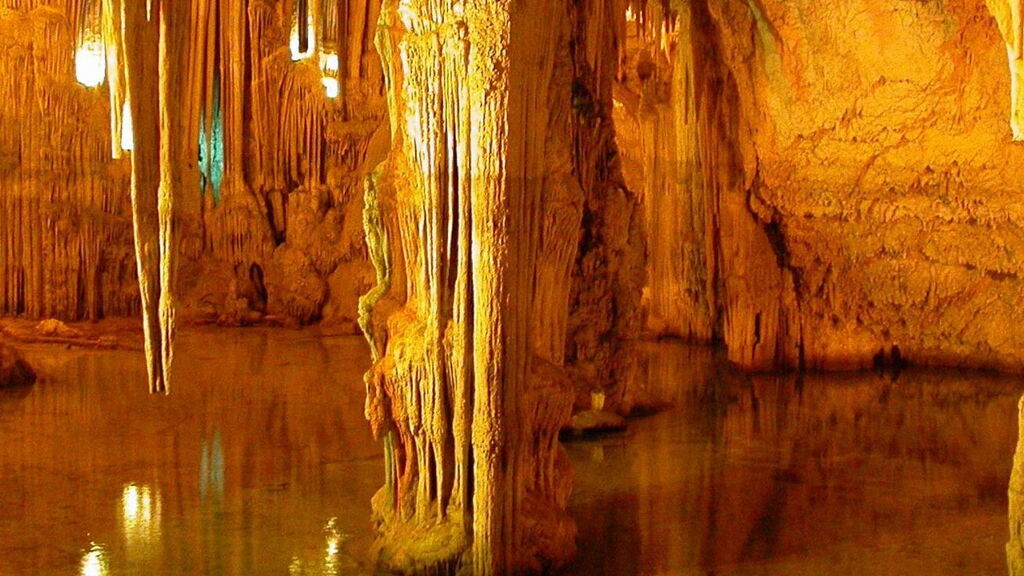
Grotte di Nettuno (the Neptune Caves), Capo Caccia, in Alghero
In the north-west we find another well-known cave, in the territory of Alghero, not far from the international airport. It is called the Grotta di Nettuno, or "Coves de Neptú” in Catalan language - still spoken in Alghero -. The “Neptune Cave” was discovered by a fisherman in the 18th century.
It hosts 150,000 visitors a year. It is among the biggest marine caves in Italy, as well as one of the most evocative natural gems of the whole Mediterranean Sea. Formed about two million years ago, it is one of the major tourist attractions in Sardinia, boasting several iconic features. First of all, its position. It is accessible from the north-western cliff of the majestic Capo Caccia promontory. You can reach it by sea or by land. By sea on excursion boats that leave from the port of Alghero and from Cala Dragunara; landside through the famous staircase.
If you intend to visit the cave by sea, you must go to the tourist port of the wonderful Catalan town of Alghero and buy the ticket for the navigation and for the entry: after a pleasant sea trip of about 30 - 40 minutes, you will reach the walkway, allowing you to disembark in front of the cave dedicated to the “God of all seas”! Along the way you can admire the fantastic Riviera del Corallo, the so-called “Coral Coast”, with its fantastic high cliffs.
The entrance is about 24 kilometers from Alghero. By reaching the cave landside, get ready for a descent, and above all an ascent, which are quite challenging. A nice road leads to the Capo Caccia parking, where the famous staircase called "Escala del cabirol" starts. Its Catalan name means: the 'staircase of the roe deer'. This architectural work, built overhanging the cliff, consists of 654 steps (yep!) that connect the summit of Capo Caccia with the cave’s entrance.
During the journey, to reach Capo Caccia, you will drive on the panoramic road of Porto Conte, offering dreamlike views of the bay and the blue sea. Take the time to make some panoramic stops, especially in front of the Foradada (perforated) island, which juts out from the sea in front of Capo Caccia. The islet takes its name from the hole that crosses it horizontally, known as Grotta dei Palombi.
Once inside, you will be overwhelmed by the beauty of the large "rooms" that make up the cave of Neptune, with its wonderful karst formations, a white sandy beach and a huge underground lake.
The caves wind for 4 kilometers inside the Capo Caccia mountain. Only 1 kilometer is open to visitors. You will lose yourself in the magical setting of stalactites and stalagmites, before meeting the transparent waters of the "La Marmora” salt lake, 100m long and 9m deep. Inside the cave there is a sandy beach. Several stalagmites are classified among the most beautiful concretions in the Mediterranean, such as "the holy water font", which supports some small natural drinking cups for the birds that nest in the area, and the so-called "Christmas tree". In the suggestive “Sala delle Rovine” you can admire a column 18m high. The next room, called "Smith" houses the main attraction of the cave: "the Great Organ", a huge column that resembles a pipe organ. In sequence, you cross the “Hall of laces”, and the “Tribuna della musica”, which overlooks the lake and the beach.
The other part of the cave is reserved to experienced speleologists, who can visit the "Mushroom Lake" and a huge room that houses the “lunar lake”, approximately 70 meters long and over 50 meters deep.
The Neptune Cave is not the only cavity located under the “white giant” of Capo Caccia: also well-known is the majestic Green Cave a.k.a. Altar Cave; accessible only to the most experienced cave divers. At the bottom of the cave there is a lake that shines with green light, hence the name. At one time the cave was not submerged and was regularly used by the people of the past, who made it a place of worship, as well as a funerary site.
Where to stay nearby? Villa Reina del Mar, Fertilia, Alghero, is only 18 km away from Neptune’s Cave.
It hosts 150,000 visitors a year. It is among the biggest marine caves in Italy, as well as one of the most evocative natural gems of the whole Mediterranean Sea. Formed about two million years ago, it is one of the major tourist attractions in Sardinia, boasting several iconic features. First of all, its position. It is accessible from the north-western cliff of the majestic Capo Caccia promontory. You can reach it by sea or by land. By sea on excursion boats that leave from the port of Alghero and from Cala Dragunara; landside through the famous staircase.
If you intend to visit the cave by sea, you must go to the tourist port of the wonderful Catalan town of Alghero and buy the ticket for the navigation and for the entry: after a pleasant sea trip of about 30 - 40 minutes, you will reach the walkway, allowing you to disembark in front of the cave dedicated to the “God of all seas”! Along the way you can admire the fantastic Riviera del Corallo, the so-called “Coral Coast”, with its fantastic high cliffs.
The entrance is about 24 kilometers from Alghero. By reaching the cave landside, get ready for a descent, and above all an ascent, which are quite challenging. A nice road leads to the Capo Caccia parking, where the famous staircase called "Escala del cabirol" starts. Its Catalan name means: the 'staircase of the roe deer'. This architectural work, built overhanging the cliff, consists of 654 steps (yep!) that connect the summit of Capo Caccia with the cave’s entrance.
During the journey, to reach Capo Caccia, you will drive on the panoramic road of Porto Conte, offering dreamlike views of the bay and the blue sea. Take the time to make some panoramic stops, especially in front of the Foradada (perforated) island, which juts out from the sea in front of Capo Caccia. The islet takes its name from the hole that crosses it horizontally, known as Grotta dei Palombi.
Once inside, you will be overwhelmed by the beauty of the large "rooms" that make up the cave of Neptune, with its wonderful karst formations, a white sandy beach and a huge underground lake.
The caves wind for 4 kilometers inside the Capo Caccia mountain. Only 1 kilometer is open to visitors. You will lose yourself in the magical setting of stalactites and stalagmites, before meeting the transparent waters of the "La Marmora” salt lake, 100m long and 9m deep. Inside the cave there is a sandy beach. Several stalagmites are classified among the most beautiful concretions in the Mediterranean, such as "the holy water font", which supports some small natural drinking cups for the birds that nest in the area, and the so-called "Christmas tree". In the suggestive “Sala delle Rovine” you can admire a column 18m high. The next room, called "Smith" houses the main attraction of the cave: "the Great Organ", a huge column that resembles a pipe organ. In sequence, you cross the “Hall of laces”, and the “Tribuna della musica”, which overlooks the lake and the beach.
The other part of the cave is reserved to experienced speleologists, who can visit the "Mushroom Lake" and a huge room that houses the “lunar lake”, approximately 70 meters long and over 50 meters deep.
The Neptune Cave is not the only cavity located under the “white giant” of Capo Caccia: also well-known is the majestic Green Cave a.k.a. Altar Cave; accessible only to the most experienced cave divers. At the bottom of the cave there is a lake that shines with green light, hence the name. At one time the cave was not submerged and was regularly used by the people of the past, who made it a place of worship, as well as a funerary site.
Where to stay nearby? Villa Reina del Mar, Fertilia, Alghero, is only 18 km away from Neptune’s Cave.
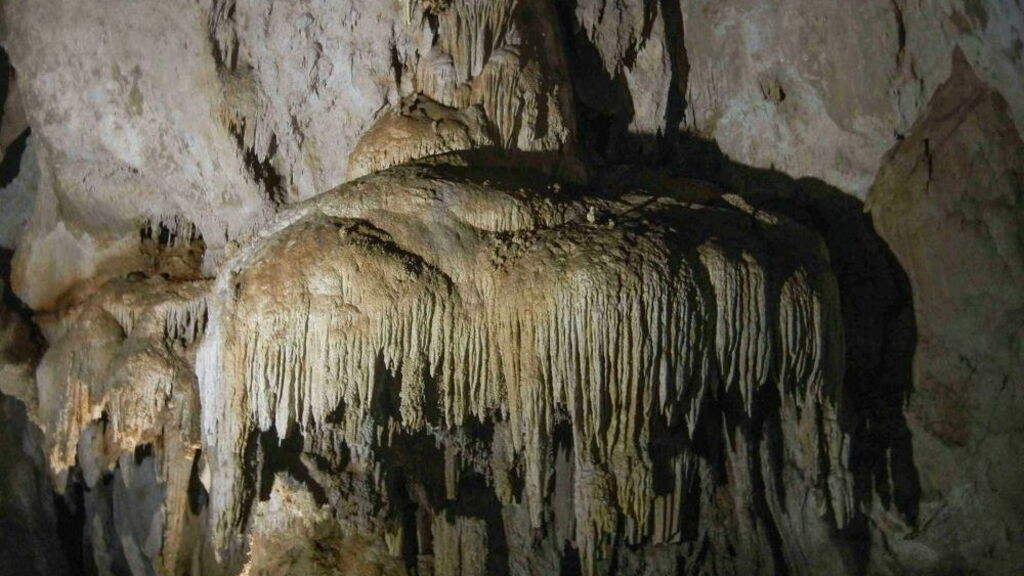
Grotta di Is Zuddas, Monte Meana, in Santadi
Let’s move further south, to talk about a Cave with a peculiarity that makes it unique in the world. The Grotta di Is Zuddas, created by water over millions of years in the territory of Santadi from which it is about six kilometers away. The feature that makes it unique in the world is the presence of the Eccentrics of aragonite, of which we speak below.
Is Zuddas is part of a complex of karst tunnels, which develops in the bowels of Mount Meana, in the lower Sulcis.
Near the cave lived a mammal, endemic to Sardinia and Corsica, now extinct: the "Prolagus sardus".
The cave has undergone several exploratory phases. Today, of its 1650 meters, about 500 meters are open to the public and can be visited in about an hour.
Inside the cave you can admire valuable concretions, such as stalactites, stalagmites and even tubular stalactites. The acicular aragonites, similar to mineral inflorescences, stand out in beauty. The precious piece and real speleological mystery is represented by the "eccentrics of aragonite", concretions unique in the world. These are very white and intricate tufts of mineral threads, grown in every direction, in spite of all the known laws of physics. Even today, scientists do not know how to explain why, and how they developed in this way. They actually cover the vault of the “Room of the eccentrics”. Along the way you will also discover the "Hall of the Theater" and the "Organ Room" where, as in Neptune's Grotto, there is a column similar to an ecclesiastical pipe organ.
If you pass by these parts during the Christmas period, be sure to visit the evocative Nativity scene of Is Zuddas, which is set up inside the cave.
Is Zuddas is part of a complex of karst tunnels, which develops in the bowels of Mount Meana, in the lower Sulcis.
Near the cave lived a mammal, endemic to Sardinia and Corsica, now extinct: the "Prolagus sardus".
The cave has undergone several exploratory phases. Today, of its 1650 meters, about 500 meters are open to the public and can be visited in about an hour.
Inside the cave you can admire valuable concretions, such as stalactites, stalagmites and even tubular stalactites. The acicular aragonites, similar to mineral inflorescences, stand out in beauty. The precious piece and real speleological mystery is represented by the "eccentrics of aragonite", concretions unique in the world. These are very white and intricate tufts of mineral threads, grown in every direction, in spite of all the known laws of physics. Even today, scientists do not know how to explain why, and how they developed in this way. They actually cover the vault of the “Room of the eccentrics”. Along the way you will also discover the "Hall of the Theater" and the "Organ Room" where, as in Neptune's Grotto, there is a column similar to an ecclesiastical pipe organ.
If you pass by these parts during the Christmas period, be sure to visit the evocative Nativity scene of Is Zuddas, which is set up inside the cave.
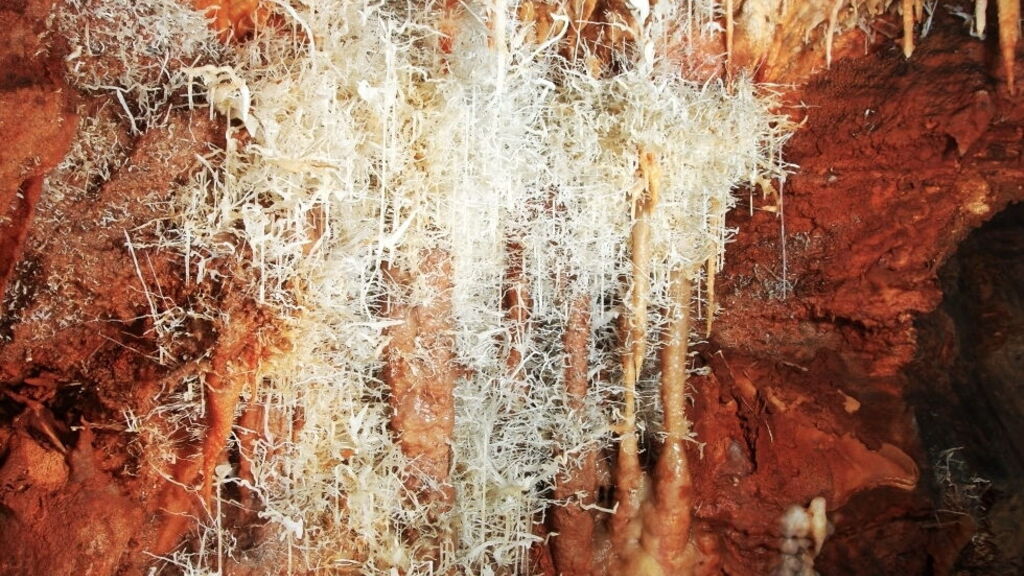
Grotta del Fico (the Fig's Cave), in Baunei
Baunei boasts one of the most spectacular territories of Ogliastra, and the whole of Sardinia. In this scenario of immense beauty, we find a real jem: the Grotta del Fico, the “Fig Cave”. The karst cavity is located near Cala Goloritzé beach, and more precisely between Cala Mariolu beach and Cala Biriala beach, marvelous coves set like gems in the limestone cliffs of one of the most beautiful coasts in the world.
The “Fig cave” has its entrance at 7m from sea level, which can be reached thanks to a special scaffolding. From the entrance, the view of the facing sea is incredible, with its marvelous blue and turquoise tones. Inside, you walk on walkways overlooking the dry bed of an ancient underground river, admiring stalactites, stalagmites and columns of various shapes, sizes and colors, which cover the rooms of the cave and offer precious visual glimpses.
This cave is also linked to the presence of the "Monk Seal", which used to reproduce on the beaches inside the cave. It was probably the last refuge in the area frequented by the tender mammal, before leaving the Ogliastra coast forever.
You can participate in the guided tour of about 45 minutes, exploring the main gallery, reaching a sort of well communicating with the sea. The first explorers of the cave reported that in this maritime stretch they sighted specimens of monk seals.
Speleologists have access to a further section of the cavity, which is closed to visitors.
Not far from the Grotta del Fico, you will find the Grotta del Miracolo, the “Miracle Cave”. It overlooks Cala Sisine, another gem in the Gulf of Orosei.
The “Fig cave” has its entrance at 7m from sea level, which can be reached thanks to a special scaffolding. From the entrance, the view of the facing sea is incredible, with its marvelous blue and turquoise tones. Inside, you walk on walkways overlooking the dry bed of an ancient underground river, admiring stalactites, stalagmites and columns of various shapes, sizes and colors, which cover the rooms of the cave and offer precious visual glimpses.
This cave is also linked to the presence of the "Monk Seal", which used to reproduce on the beaches inside the cave. It was probably the last refuge in the area frequented by the tender mammal, before leaving the Ogliastra coast forever.
You can participate in the guided tour of about 45 minutes, exploring the main gallery, reaching a sort of well communicating with the sea. The first explorers of the cave reported that in this maritime stretch they sighted specimens of monk seals.
Speleologists have access to a further section of the cavity, which is closed to visitors.
Not far from the Grotta del Fico, you will find the Grotta del Miracolo, the “Miracle Cave”. It overlooks Cala Sisine, another gem in the Gulf of Orosei.
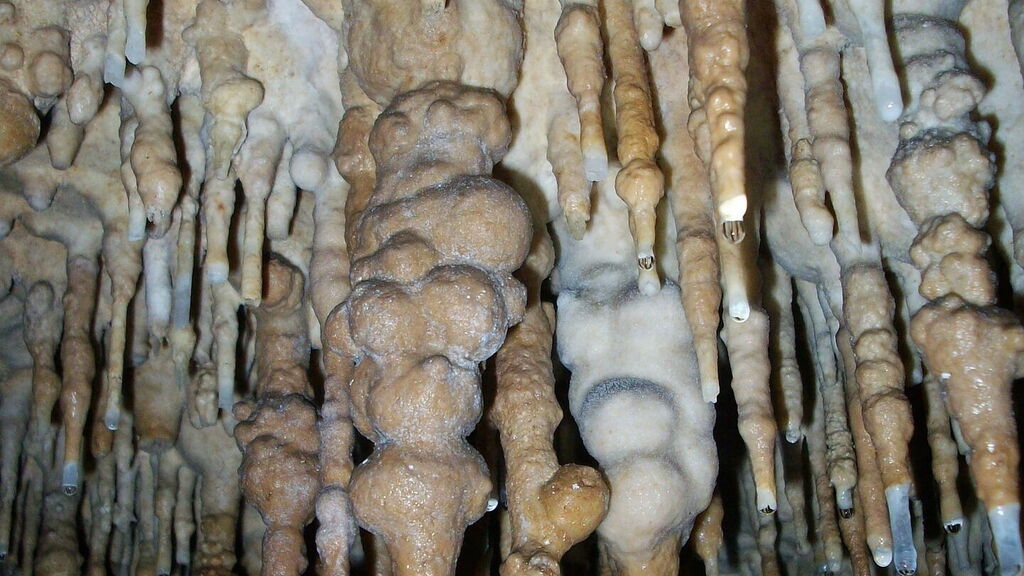
Grotta di Ispinigoli, in Dorgali
Not far from Cala Gonone, we find another important cavity, also fossilized due to the ceased karst activity. We are talking about the Ispinigoli Cave, in the Supramonte of Dorgali, where the temperature is always cool and constant. If you are big speleology fans, you can visit it in combination with the “Grotta del Bue Marino”.
It is accessible from a natural terrace, after descending a staircase. Immediately you will find yourself in front of a unique spectacle: a limestone column 38 meters high: resulting from the union between a stalactite and a stalagmite. It is one of the tallest columns in Europe. It starts from the "floor" and reaches the "vault" of the vast room which has a diameter of about 80 meters. There are also countless stalagmites and particular undulating concretions, which offer a suggestive chromatic show thanks to light and shadow.
Beyond this room, access is once again reserved only for expert speleologists. The off-limits point marks the Abyss of the Virgins, a narrow and deep channel, with an evocative name. It unravels for about 12 kilometers in the bowels of the earth. This chasm, up to 60 meters high, is connected to two further caves: the Grotta di San Giovanni su Anzu and the Grotta di Sos Jocos! Ispinigoli is like a portal to a vast karst world, still under exploration. Speleologists think the entire system extends for 25 kilometers, of which about 17 kilometers have been explored so far.
Inside the evocative "Abyss of the Virgins" artifacts from different prehistoric and historical eras have been brought to light. The name may derive from the findings of human remains, which led to the never confirmed hypothesis, that the canal was used by the Phoenician populations to perform sacrificial rites.
Where to stay nearby? We suggest Villa Jalisia, in Budoni about 60 km from Ispinigoli.
It is accessible from a natural terrace, after descending a staircase. Immediately you will find yourself in front of a unique spectacle: a limestone column 38 meters high: resulting from the union between a stalactite and a stalagmite. It is one of the tallest columns in Europe. It starts from the "floor" and reaches the "vault" of the vast room which has a diameter of about 80 meters. There are also countless stalagmites and particular undulating concretions, which offer a suggestive chromatic show thanks to light and shadow.
Beyond this room, access is once again reserved only for expert speleologists. The off-limits point marks the Abyss of the Virgins, a narrow and deep channel, with an evocative name. It unravels for about 12 kilometers in the bowels of the earth. This chasm, up to 60 meters high, is connected to two further caves: the Grotta di San Giovanni su Anzu and the Grotta di Sos Jocos! Ispinigoli is like a portal to a vast karst world, still under exploration. Speleologists think the entire system extends for 25 kilometers, of which about 17 kilometers have been explored so far.
Inside the evocative "Abyss of the Virgins" artifacts from different prehistoric and historical eras have been brought to light. The name may derive from the findings of human remains, which led to the never confirmed hypothesis, that the canal was used by the Phoenician populations to perform sacrificial rites.
Where to stay nearby? We suggest Villa Jalisia, in Budoni about 60 km from Ispinigoli.
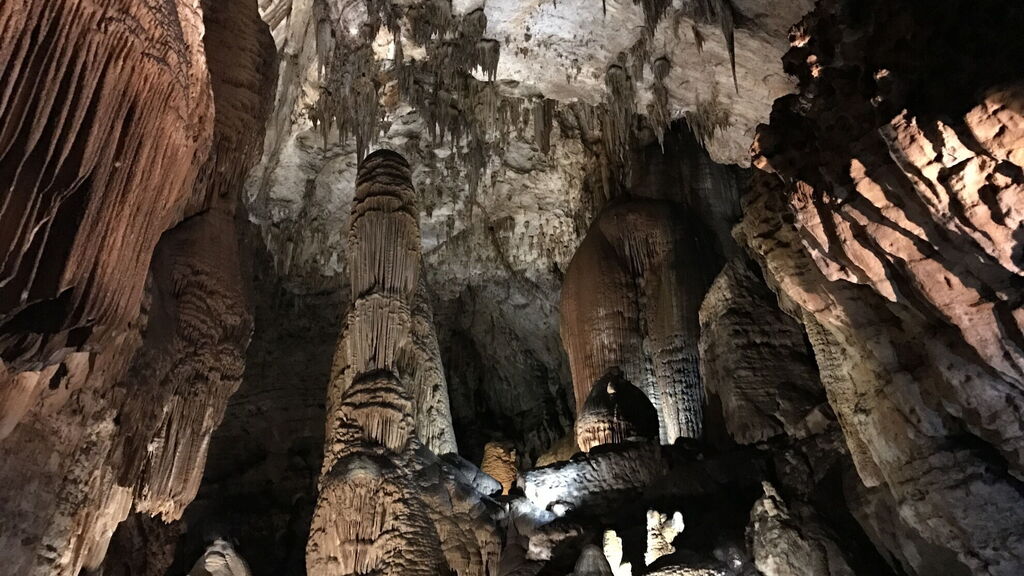
Grotta su Marmuri, in Ulassai
Let's move a few more kilometers towards the wildest interior of Sardinia, in the territory of the Municipality of Ulassai to find the Grotta di Su Marmuri, one of the most impressive cavities in Europe, thanks to its high vault, reign of a large colony of bats.
The cavity is located in the historic region of Ogliastra, eastern-central Sardinia. The cave is approximately located under the characteristic Tacco, the “heel” of Ulassai, one of the many plateaus with sheer walls in the area. You can visit about 850 meters of the cave, where there are two small lakes, in addition to the usual concretions typical of these environments: stalagmites, stalactites and the spectacular columns. The Su Marmori cave, which translated means "the marble cave", is also known to biologists due to some endemic species, such as a cave amphibian and an underground beetle.
Where to stay overnight? If you are looking for an exclusive villa in Sardinia, our experts in the Booking department are at your disposal and will find a solution that suits your needs. For an informal chat, just call, or Whatsapp the following number +39 3423633722.
The cavity is located in the historic region of Ogliastra, eastern-central Sardinia. The cave is approximately located under the characteristic Tacco, the “heel” of Ulassai, one of the many plateaus with sheer walls in the area. You can visit about 850 meters of the cave, where there are two small lakes, in addition to the usual concretions typical of these environments: stalagmites, stalactites and the spectacular columns. The Su Marmori cave, which translated means "the marble cave", is also known to biologists due to some endemic species, such as a cave amphibian and an underground beetle.
Where to stay overnight? If you are looking for an exclusive villa in Sardinia, our experts in the Booking department are at your disposal and will find a solution that suits your needs. For an informal chat, just call, or Whatsapp the following number +39 3423633722.
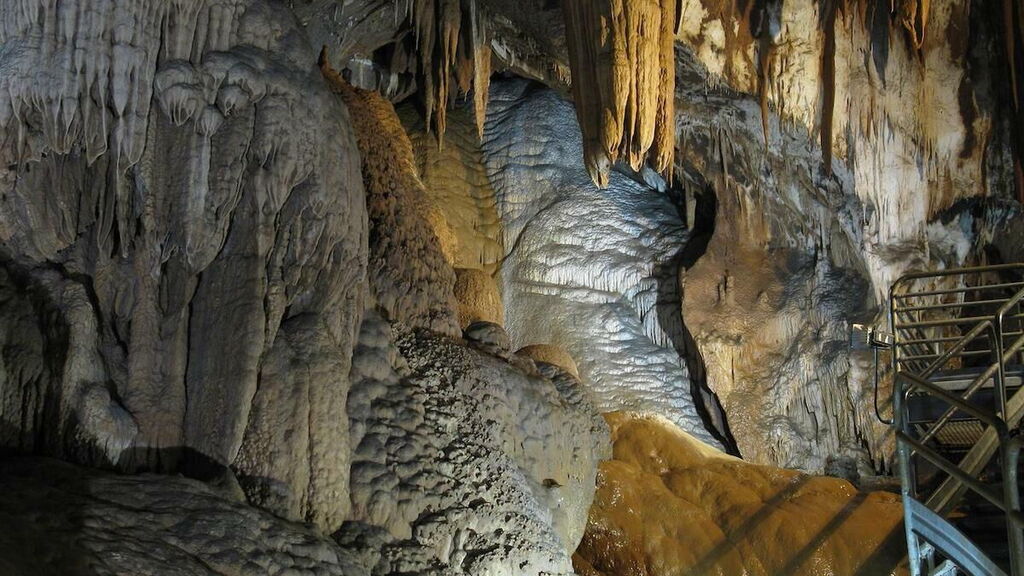
Grotte di Su Mannau, in Fluminimaggiore
Let's go back to South Sardinia, in the Iglesias area. Here there is a unique cave of its kind, the Grotta di Su Mannau, in the territory of Fluminimaggiore, whose origins date back to over 500 million years ago, but still has karst activity. It consists of about 8 km of tunnels that wind in two branches originating from two streams. The part open to the public is called the left branch, dug by the river "Placido", and is divided into an archaeological room and a purely speleological part. This allows you to combine two passions in a single visit. The archaeological hall was a pre-Nuragic hypogeal temple, where the cult of water was venerated.
Of undoubted interest is the fact that the cave was connected with the wonderful Temple of Antas. The latter was built in the Punic-Roman era, dedicated to the divinity Sardus-Pater: an unexpected architectural marvel in central Sardinia.
The right branch, on the other hand, was created following the activity of the "Rapido" river, and is almost horizontal.
The visit of the speleological part starts from the Central Hall, to be overcome with the help of ropes. Expert guides lead the 500-meter route of about 60 minutes, illustrating various rooms of great beauty, limestone formations, stalactites, stalagmites, columns, "crystal firs", crystal-clear lakes, where an endemic shrimp, unique in the world, lives.
If you are in these parts, perhaps to visit the Temple of Antas, take the opportunity to also visit the cave: you will not regret the decision.
Of undoubted interest is the fact that the cave was connected with the wonderful Temple of Antas. The latter was built in the Punic-Roman era, dedicated to the divinity Sardus-Pater: an unexpected architectural marvel in central Sardinia.
The right branch, on the other hand, was created following the activity of the "Rapido" river, and is almost horizontal.
The visit of the speleological part starts from the Central Hall, to be overcome with the help of ropes. Expert guides lead the 500-meter route of about 60 minutes, illustrating various rooms of great beauty, limestone formations, stalactites, stalagmites, columns, "crystal firs", crystal-clear lakes, where an endemic shrimp, unique in the world, lives.
If you are in these parts, perhaps to visit the Temple of Antas, take the opportunity to also visit the cave: you will not regret the decision.
Caves to visit in Sardinia: how to book
And you? Are you passionate about caving or are you simply curious to visit such beauties? Then Sardinia is the right destination to explore countless and fantastic aquatic and land caves.
If you would like to receive a quotation for a package of visits that also includes an overnight stay in one of our exclusive villas for rent in Sardinia, click here, or Whatsapp the number +39 3423633722.
Here are some sites where you can get more information or possibly book entrance tickets for the caves:
enjoydorgali.it
grottadinettuno.it
grotteiszuddas.com
sardegnaturismo.com
Back to top!
If you would like to receive a quotation for a package of visits that also includes an overnight stay in one of our exclusive villas for rent in Sardinia, click here, or Whatsapp the number +39 3423633722.
Here are some sites where you can get more information or possibly book entrance tickets for the caves:
enjoydorgali.it
grottadinettuno.it
grotteiszuddas.com
sardegnaturismo.com
Back to top!