Northern Sardinia, what to do and see
Villages and white sand: The secrets of northern Sardinia
Northern Sardinia is a vast area, which we can associate with the Province of Sassari, including the former province of Olbia Tempio and the whole of the Gallura, and which ideally includes the northernmost strips of land of the provinces of Nuoro and Oristano. This quadrant is known all over the world for its dreamy bays of white sand and transparent waters, which are among the most beautiful beaches in the world. Furthermore, the international fame of the Costa Smeralda has meant that several locations in the North East stand out among the most exclusive locations of all, Porto Cervo in the lead.
Even the tourist villages of the north-west have more and more their say in the international tourist panorama, due to the presence of beaches of great beauty, historic centers with architectural pearls, the result of interesting and intricate historical events.
In this article we reveal what to see in northern Sardinia, departing a little from the usual tourist itineraries.
Asinara, Maddalena and much more: secret spots in the north of Sardinia
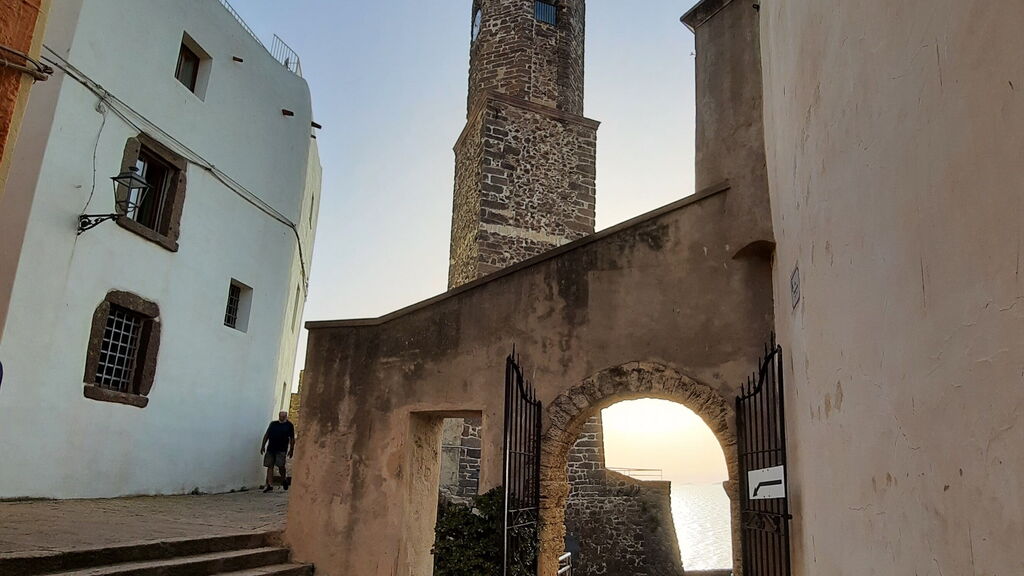
Every year, thousands of visitors flock to the most popular tourist resorts in the north of the island: the fishing village of Stintino, with the surprising island of Asinara and the Caribbean-like beach La Pelosa; the radiant Catalan town of Alghero with the impressive Neptune's Caves; the sparkling Costa Smeralda, destination of the international jet set and the nearby paradisiacal Maddalena Archipelago; Santa Teresa di Gallura and the lunar landscape of Capo Testa, which is the closest locality to Corsica; the marvelous coves of San Teodoro; the medieval village of Castelsardo. To name just a few of the best-known places. For each of these locations we have published several articles, which you can easily find and select by clicking here.
Outside the usual routes contained in the most popular tourist guides, we want to suggest some lesser-known locations in Northern Sardinia, of great charm, and some itineraries of undoubted interest.
Read on to find out more.
Alternative itineraries in northern Sardinia
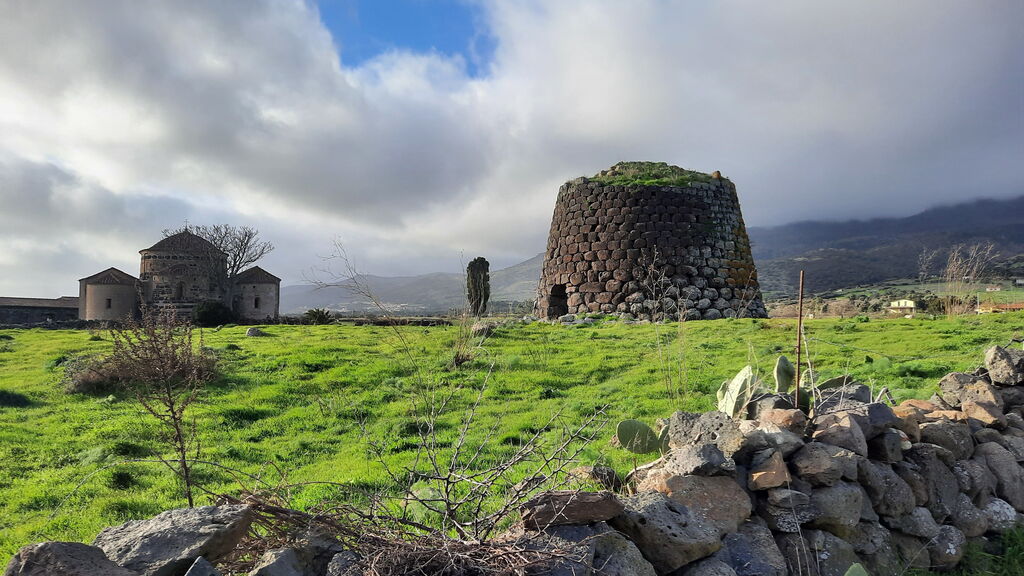
First of all, we recommend a visit to the main archaeological monuments of northern Sardinia, especially from the prehistoric and Nuragic times. You will discover rather interesting events and details, which will make you better know this magical island, that you will love more and more. We have grouped various sites, based on the area where you can find them.
In the northwest area, near Alghero, you can visit the Nuragic complex of Palmavera and the pre-Nuragic necropolis of Anghelu Ruiu, possibly to be accompanied by a visit to the Cantine di Sella & Mosca, one of the most prestigious Sardinian wineries open to visitors.
Halfway between Sassari and Porto Torres is one of the most peculiar and incredible pre-Nuragic monuments in Sardinia and the entire Mediterranean area: we are talking about the Monte d'Accoddi altar, a sort of Sardinian Ziqqurat. A unique monument of its kind worldwide and of immense historical and archaeological interest.
Driving further north-west you will arrive in Porto Torres, a city probably founded by Julius Caesar Octavian in 46 BC, with the name of "Colonia Iulia Turris Libisonis". Here you can visit the ruins of the Palazzo di Re Barbaro and the remains of a Roman bath complex.
About 40 kilometers from Sassari, we find another important archaeological monument: the Nuraghe Santu Antine, in the territory of Torralba, which is one of the most impressive and best preserved Nuragic complexes of the entire island. Those who are particularly interested can also enter the nearby province of Nuoro, precisely in the territory of Silanus, where we find the Nuraghe of Santa Sabina with its Byzantine church and some Tombs of Giants.
Moving north east, in the Arzachena area, there are a large number of archaeological sites of international interest, such as the Nuraghe la Prisgiona, the Nuraghe Albucciu, the Tomb of the Giants of Coddu Veccju, the necropolis Li Muri, the Tomb of the Giants of Li Lolghi, and several other sites.
A few kilometers from Tempio Pausania, in the heart of Gallura, is the beautiful Nuraghe Majori, which is worth a visit if you are passing by. Moving a few kilometers to the west, in Perfugas you can visit the sacred well of the nuragic era Predio Canopoli. In the territory of Nulvi, there is a second one: the nuragic well temple of Irru. This site is located in an area that is also very rich in nuraghi: among well-preserved ruins and towers, there are about 80.
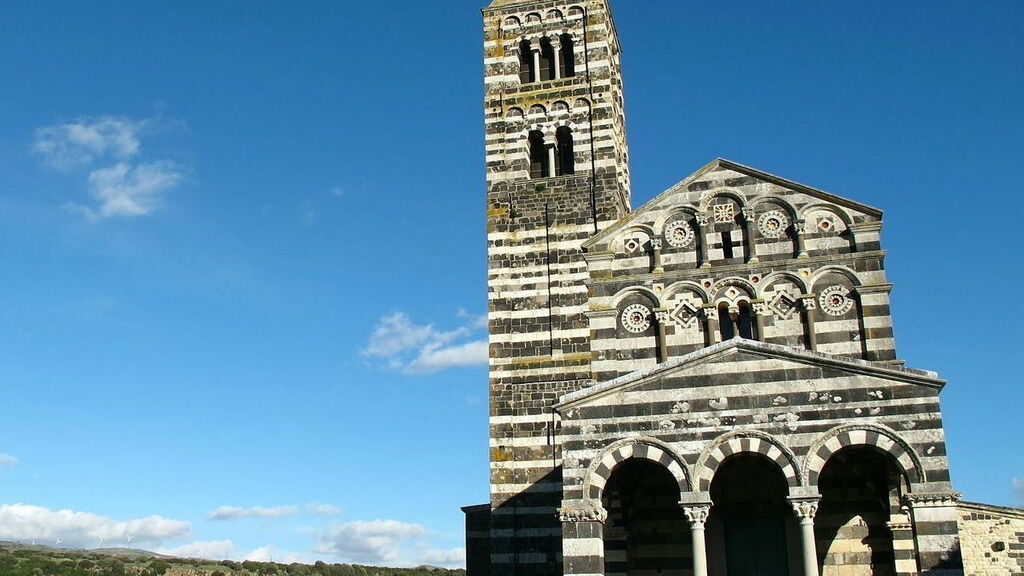
Lovers of sacred architecture who wish to discover the splendid Romanesque style in Sardinia, can drive from east to west, or vice versa. The itinerary can be completed in one day. All churches are close to the road that leads from Olbia to Sassari and then to Porto Torres.
In sequence, like pearls in a necklace, we find: the Basilica of San Simplicio in Olbia; the Basilica of Sant'Antioco di Bisarcio, in the territory of Ozieri; the Basilica Sanctuary of Our Lady of the Kingdom in Ardara; The beautiful basilica of the Holy Trinity of Saccargia, in Pisan-Romanesque style, located in the territory of Codrongianos. The visit ends in Porto Torres, in front of the largest and oldest Romanesque church in Sardinia: the majestic Basilica of San Gavino, San Proto and San Gianuario, with the peculiar opposing apses and the crypts containing the relics of the Turritan martyrs to whom the church is dedicated.
Those who love to travel the winding roads by bike or even better by motorbike, cannot miss a further excursion in northern Sardinia. The itinerary covers the entire old road SS 127 Settentrionale Sarda, from Olbia to Sassari.
The route can ideally be divided into two parts, with Tempio Pausania acting as pivot. We leave early, after breakfast, from Olbia, an interesting town where we suggest you visit Corso Umberto and the area of the Brin pier. The first part of the itinerary heads west, among granite hills, pastures, vineyards and landscapes of great beauty. It is a constantly uphill path full of spectacular curves, ideal for traveling by motorbike. It crosses the internal Gallura, towards Monte Limbara. You can stop in Telti and Calangianus, areas famous for the production of Vermentino wine and cork, finally arriving in Tempio Pausania. The town deserves a longer stop. You can think of extending the break until lunchtime, to be done in a farmhouse in the area, or in the restaurants and cafes of the wonderful old town built almost entirely of granite.
After the intermediate stop, continue westwards, gradually descending from Tempio Pausania towards the gentle hilly landscape of Anglona. This region can be reached after crossing the Coghinas river, between Bortigiadas and Perfugas. After this point, get ready to go through a lot of curves and ups and downs, until you cross the center of Laerru and then continue toward Martis. In the territory of this village, you can visit the Carrucana petrified forest and make a stop at the Triulintas waterfall, an ideal location for taking beautiful photographs to enrich your social media accounts. At this point we suggest a small detour from the original route, taking the SS132 towards Chiaramonti, to briefly visit the spectacular ruins of the Doria Castle.
After the break in Chiaramonti, drive back towards Martis and then continue to Nulvi, an ancient village where you can have a snack in the beautiful municipal gardens, which offer shade even on the hottest days, or sip a refreshing drink in the numerous bars of Corso Vittorio Emanuele. Finally, head towards Osilo, but keep driving on the old SS127. In Osilo you can climb up to the church of Nostra Signora di Bonaria, perched on the top of a hill, from which you can enjoy a breathtaking view of the surrounding valleys. The last stage will finally take you to Sassari. Be careful to avoid taking the new Anglona road, which is much smoother and faster to travel, but less beautiful.
If you were to travel the suggested itinerary by motorbike, you can count on doing it easily during the day. By bicycle, due to the many kilometers to cover, about 140, it may be necessary to plan an overnight stay halfway.
Once you reach the capital town of the Province, head to the historic center, to visit the majestic and elegant Piazza Italia, the nearby Piazza Castello and the Cathedral of San Nicola. The Cathedral’s main nucleus is in medieval Romanesque style, but has a very interesting late Baroque facade, and various neoclassical and Gothic elements. The back of the Cathedral overlooks Piazza del Comune, where the Town Hall of Sassari is located. You can easily reach the Cathedral, walking the entire ancient Turritana road, which starts near the Central Post Office, a few meters from Piazza Castello away. If you would like to stay in the city after sunset, to savor some local nightlife, we recommend the restaurants and pubs of Piazza Tola, the new epicenter of nightlife, frequented by hipsters and young local yuppies, as well as the clubs around Piazza Italia and the important Via Roma, which branches off from it.
If you wish, having traveled the entire SS 127, instead of stopping in Sassari, you can choose to continue on the SS 127 bis to Alghero, for a beautiful Sardinian coast-to-coast.
A further proposal of a more traditional itinerary in Northern Sardinia, with lots of tips and useful details, can be found by clicking here!
Several villas are suitable for hosting our guests who want to explore northern Sardinia, while offering the opportunity to relax by the pool after exploring the island:
- Stintino, Villa Linayre – with private pool and breathtaking views of the Asinara island;
- Olbia, Villa Li Cuncheddi – with private pool and panoramic sea view.