North Sardinia 21 days tour with Sardinia villa rental
21 days Tour with Sardinia villa rental
If you do not yet know Sardinia, it’s the right time to plan your sweet escape. If you have already been on the island, you surely appreciated how it looks like a mini continent, which fascinates and enchants in an ancient way. Countless visitors say they have established a special bond with the island and its proud inhabitants, feeling the need to return to explore it more in depth. Sardinia has a territory of about 24,000 km² (9,270 square miles) and 1,900 km (1,180 miles) of coastline, bathed by crystal clear water with incredible colors, that have nothing to envy the atolls of the Pacific! Wild coasts and pristine strips alternate with long white sandy beaches, hidden coves and rocky ravines, sometimes giving way to imposing cliffs overlooking the sea. In the most inaccessible and secluded stretches, the landscape is dominated by imposing walls of rock, patiently sculpted by wind and water.
The Sardinian countryside also constitutes a world to be discovered, where flat areas of crops and pasture follow gentle hill slopes and native vineyards, as well as rugged mountain areas, appreciated by hikers and climbers. Vegetation and fauna also change abruptly, seconding the alternation of mountain and coastal areas. It is possible to travel kilometers without ever meeting anyone, nor seeing inhabited centers. Those are peculiar landscapes, where the aromatic scents of the Mediterranean scrub dominate. Along the way, the view is interrupted only by the iconic shapes of mighty stone buildings dating back to the Bronze Age: the mysterious “nuraghe”.
Let's start discovering the mini continent of Sardinia.
The north east in villas in Sardinia with private pool
From the pedestrian area, you can easily reach two churches of great historical and architectural interest: San Paolo, with its beautiful majolica dome, and the ancient Romanesque basilica of San Simplicio. The latter is dedicated to the patron saint of the city, celebrated in mid-May for several days in a row. The pedestrian area offers various opportunities to taste the best dishes of the Sardinian culinary tradition in typical restaurants. Or you could have a refreshing drink in the numerous trendy bars and clubs in the Corso Umberto and side alleys.
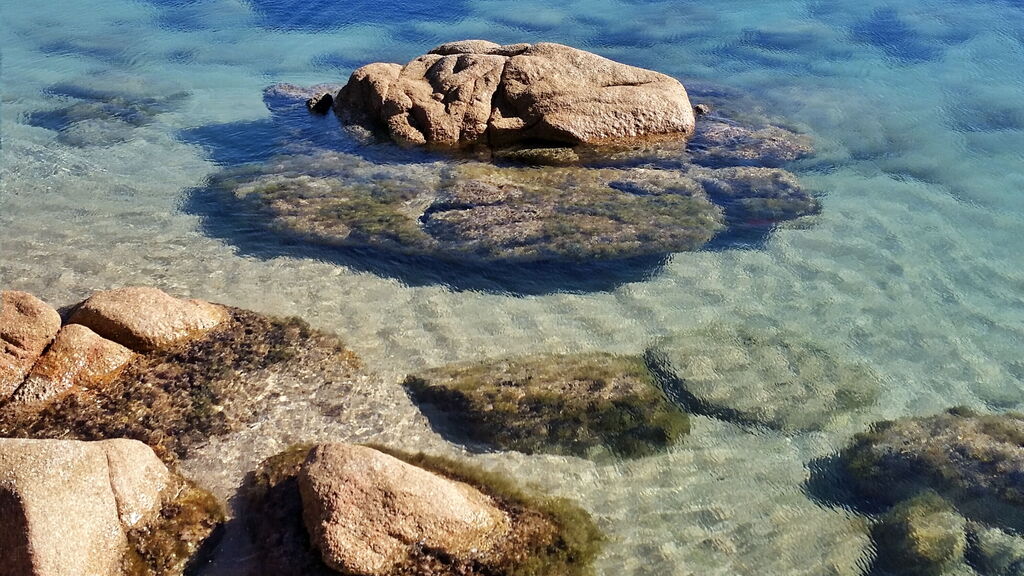
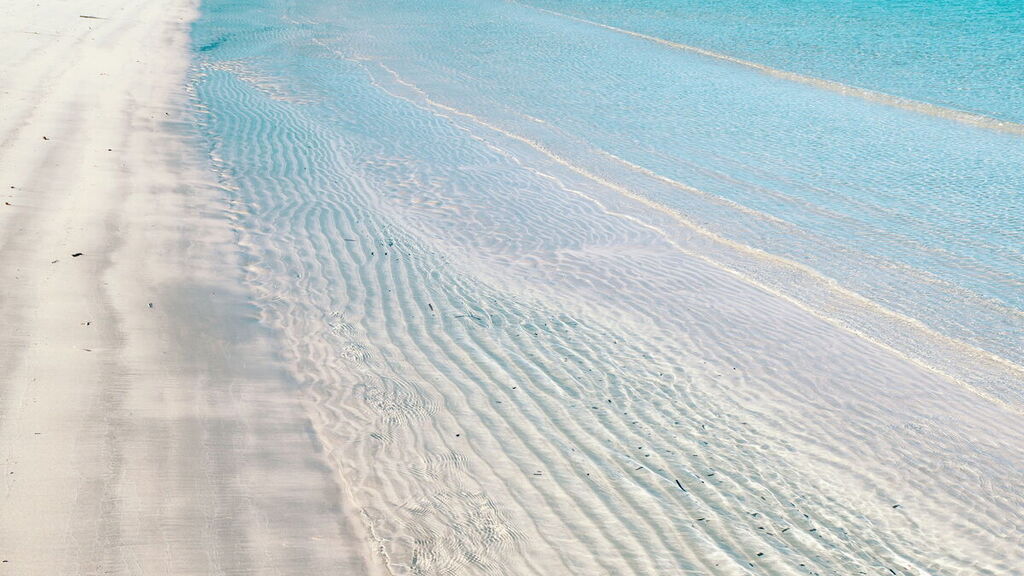
The time has come to reach the first of your stops, from which you can easily visit the surroundings: you can book one of our Sardinia villas by the sea. During the first week of the tour, we suggest staying a few kilometres south of Olbia, in San Teodoro. The town is known for its beaches with unreal transparencies and colours ranging from turquoise to the most intense blue, and shallow waters suitable for families with children; also for the lagoon ecosystem, where you can spot colonies of flamingos, the ideal location for "birdwatching"; as well as for the rich offer in evening entertainment. Our advice is to spend a week in the surrounding area so that you can explore the northeast at your leisure.
Once settled, having enjoyed the swimming pool and sunbathed on paradisiacal beaches, like Cala Brandinchi, Lu Impostu and La Cinta, set off for Porto Cervo and the Costa Smeralda - the Emerald Coast.
A must for visitors to the northeast, the Costa Smeralda needs no introduction: its aura of exclusivity is known all over the world. Walk inside the maze of alleys in Porto Cervo. Fall in love with the typical Smeraldina architecture. Enjoy a coffee or ice cream in the little squares and spend the day relaxing like a star and the jet set who visits the exclusive village. If you would like to take part in an elegant tasting of local products and wines, you can visit the Vigne Surrau winery by Arzachena, the administrative capital of Costa Smeralda.
Northern Gallura in villas in Sardinia with private pool
Time to leave San Teodoro and set off for Santa Teresa di Gallura, a town located in the northernmost part of Sardinia. In Santa Teresa, you can rent another exclusive villa with swimming pool in Sardinia, for the second week of your tour. Santa Teresa hosts tens of thousands of tourists during the high season. They visit it above all for the beaches of fine sand and to enjoy the superb landscapes offered by the stretch of sea between Sardinia and Corsica. From Santa Teresa, the view sweeps up to the white cliffs and buildings of Bonifacio, and on clearer days up to Cinto Mountain. The distance between Sardinia and Corsica in this stretch of coast is about 12 kilometres (7,5 miles).
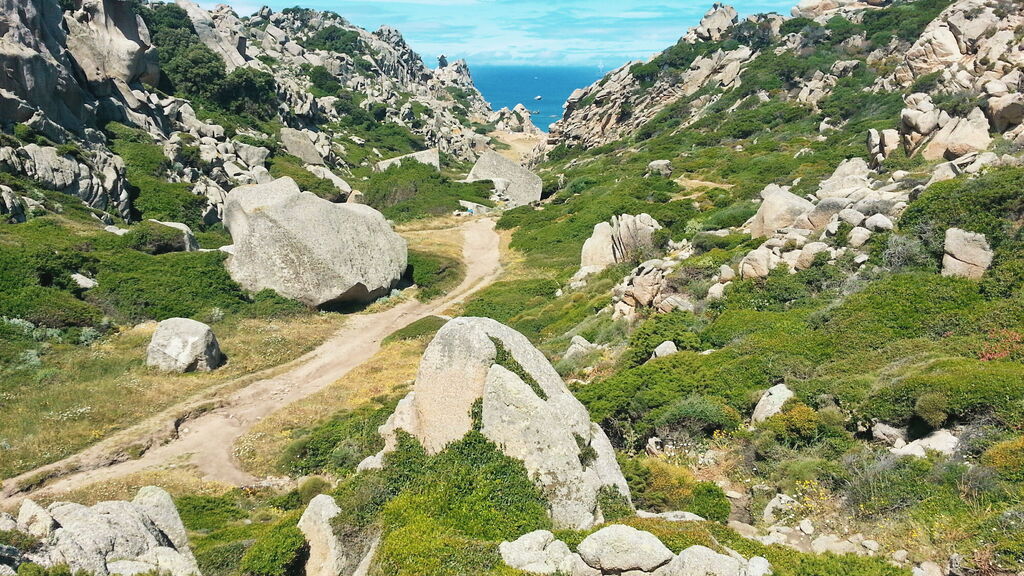
The best-known beach is located only a few steps from the main square of the town: Rena Bianca, with fine white sand, and waters of various shades, awarded several times the Blue Flag. Part of Santa Teresa's territory is Capo Testa, a rocky promontory at the northernmost tip of Sardinia. It is known for its incredible hidden coves, fairy-looking granite rocks and for the legendary Valle della Luna, a haunt of hippies for decades, which recently even housed a colony of friendly goats. We suggest you spend at least half a day here: you will not be disappointed by the charm of this “magical” place. Bring your swimsuit with you, if you want to take a dip in the marvellous Cala Spinosa, but also comfortable shoes, suitable for walking on mountain paths.
From your new base in Santa Teresa, you can easily reach Palau and the Maddalena archipelago in a few minutes by car: undoubtedly a naturalistic paradise. You can book a sailing or motor boat in exclusive, to better appreciate the wonders offered by these naturalistic pearls, which attract visitors from all over the world. Established in 1994, the Maddalena Archipelago National Park includes over 60 islands of various sizes and unparalleled beauty. Among the many noteworthy destinations, we point out the islands of Caprera, Budelli, Santa Maria, Santo Stefano, Razzoli and Spargi, as well as the mother island La Maddalena. On this island you can visit the town of the same name: the only inhabited centre of the archipelago. Among the paradisiacal beaches, we mention Bassa Trinita and Spalmatore. The archipelago is also of great historical importance, as the "hero of two worlds", Giuseppe Garibaldi spent the last years of his life in Caprera, where you can visit the house museum, Garibaldi.
We also suggest a stop by the pink beach of Budelli, which owes its typical colour from the sediments of a small organism, but on which there is a strict landing ban, to safeguard the fragile ecosystem of the island and the beach itself. The countless landing spots of the archipelago will amaze you with their incredible colours of the water and seabeds, framed by rocks shaped by the elements. During the day you may spot groups of dolphins having fun accompanying your boat with incredible jumps and tricks, and with a little luck, even encounter a loggerhead turtle. Spending a day in these diving paradises is a "good for your soul experience".
Let's completely change the type of excursion. Still departing from Santa Teresa, we suggest you discover the countryside of Gallura, the most authentic part, so rich in traditions. Among the "mandatory" stops we mention Aggius and Tempio Pausania. In the territory of Aggius, take a short break on the panoramic terrace overlooking the inland Valle della Luna, not to be confused with the homonymous valley of Capo Testa. Here you will spot lots of granite massifs with anthropomorphic and animal features. Then continue toward the picturesque village Aggius, known for the beauty of the granite hills and for the authentic medieval town centre, which has been awarded the Orange flag of the Italian Touring Club. Furthermore, the village is known for the hand-woven traditional carpets, and for having hosted legendary Sardinian bandits, between which the so-called "Muto di Gallura". In order to better understand the particular historical period in which these notorious figures lived, you can even visit the Museum of Banditry.
Time to head toward Tempio Pausania, a very important town in the hills. Enjoy a stroll in the old town, almost entirely made of local granite. The area is well known for the cork oak woods, a real local resource, and for the Vermentino di Gallura, an excellent white wine suitable for pairing with fish-based dishes. Tempio is also known throughout Sardinia for its carnival, which is deeply rooted and celebrated by all the inhabitants. The town hosted the Ligurian singer-songwriter Fabrizio De André and his family, who spent several years in the nearby Agnata estate and are still remembered today with great affection and nostalgia from the local population.
We suggest you discover the historic stone centre, the Cathedral and the granite squares, and enjoy the typical dishes in the local restaurants. One recipe above all: the Suppa Cuata, accompanied by a fruity Vermentino wine. If in the area you would like to discover something more about the majestic cone-shaped constructions, you can take part in a guided tour of one of the most important nuraghi of Gallura: the Nuraghe Majori.
Spend the remaining days however you like, on the beach or by the pool, in order to be in shape and ready for your next move.
The northwest in Sardinia villas by the sea
Alghero is one of the three cities of Sardinia having an international airport, located in the hamlet of Fertilia. The coast of Alghero bears the name "Riviera del Corallo" - Coral Coast, a name due to the highly prized coral colony, which in Alghero is worked by skilled goldsmiths. Among the most popular and well-known beaches, just a few kilometres from the city centre, you can enjoy Il Lazzareto, Mugoni and Le Bombarde, highly appreciated for their transparency and sandy seabeds, where you can sunbathe in complete relaxation. Alghero also has a city beach: the so-called Lido di San Giovanni.
A rare pearl in the territory of Alghero is the marine area of Capo Caccia - Isola Piana, with the majestic limestone promontory, where you can admire natural masterpieces such as Neptune's cave, reachable by land and by sea, and the suggestive island of Foradada. Archaeology enthusiasts can visit various pre-Nuragic and Nuragic sites in the surroundings, we highlight the necropolis of Anghelu Ruju and the Nuragic complex of Palmavera.
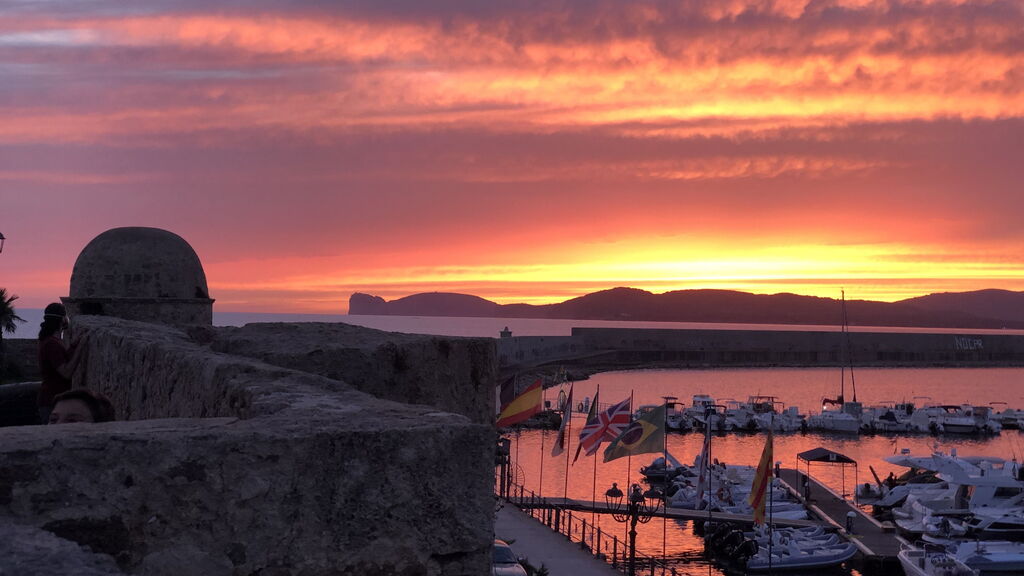
Visiting the amazing old town of Alghero is a must. It is the most fascinating part of the town, consisting of a network of alleys that lead to squares and mostly end waterfront. The mighty white walls, nowadays part of the promenade path, the massive fortifications and defensive towers, as well as the ancient buildings and the ecclesiastic constructions, all evoke the Catalan origins of the city. Among other churches, we point out the cathedral of Santa Maria, and the churches of Carmelo and San Michele, with the colourful majolica dome, for their historical, artistic and architectural value. If you happen to be in the city during Easter, you will be able to appreciate the religious rites of the traditional Spanish Holy Week, deeply felt by the proud inhabitants.
As an alternative to Alghero, a few kilometres further north, you can consider a villa in Stintino for rent. Please consider that both Alghero and Stintino deserve to be visited. Stintino is the name of the most northwestern peninsula of Sardinia, as well as the name of the small fisher village located on the peninsula. The fame of Stintino is linked to real "assets" of inestimable value, to use a popular financial term; the Asinara Island and the Pelosa beach. They are iconic! Stintino can be considered a real "brand". La Pelosa is one of the most known and photographed beaches in the world: an ultra-low seabed made of very fine white sand, that marries a sea with crazy shades, flanked by the so-called Pelosetta, another white beach embellished by the presence of the iconic Aragonese tower. In the background brown cliffs of sparkling local stone of Capo Falcone. A unique and globally recognizable ecosystem.
The Stintinese territory consists of a strip of land that crosses two seas: the deepest 'mare di fuori' to the west, and the 'mare di Dentro'', which also includes the Pelosa area, within the Asinara Gulf, to the east. The village of Stintino was originally a fishing village and is nowadays a very popular tourist destination. Relax by walking between the 'Old' and 'New' ports, where the characteristic wooden boats with Latin sail are moored. The village, which has about 1,600 residents, is visited by tens of thousands of tourists during the summer. The history of the town is linked to tuna fishing, the stages of which are summarized in the small museum of the Tonnare. Fishing is the basis of the ancient culinary tradition, which we recommend you discover in the typical restaurants of the Stintino alleys.
Asinara island deserves a separate mention. It is the second in order of magnitude among smaller Sardinian islands: you will be overwhelmed by its poignant beauty, especially the pristine inlets with a thousand shades of the sea. It is also known for its characteristic fauna, including the island's mascot: the white donkey.
Today the island is part of the national park and marine protected area, therefore it is not possible to freely visit it, but exclusively through guided excursions led by qualified and authorized personnel. The island boasts a very interesting historical-anthropological past, as it housed a high security prison, established in 1975, where Sardinian bandits and bosses of the underworld were imprisoned. The presence of the prison helped preserve the naturalistic integrity of the island, as it was a long time off-limits for safety reasons. The commanders of the penal colony and the families of the guards resided in the small village of Cala d'Oliva. In addition, the magistrates Falcone and Borsellino, Italian heroes, stayed there during the instruction of the maxi trial at "Cosa Nostra".
While you spend the week in the northwest, take the opportunity to visit another village of undoubted historical and naturalistic interest: Castelsardo, one of the most beautiful villages in Italy. The town is located on the north coast of Sardinia, perched on a promontory. It recalls Ligurian towns in architecture and layout, with some of which it shares its origins. The original nucleus developed around the Doria castle, dating back, according to some historians to A.D. 1102, but more likely at the end of the thirteenth century. Today the castle is home to the Museum of the Mediterranean Weaving, in fact, the skilled "Castellanese" women still pass this centuries-old art to the next generations. The old town occupies the upper part of the city and is a veritable labyrinth of alleys where it is easy to get lost, which can also result in a pleasant walk. Get ready for a path of ups and downs that can be tiring for the less trained.
While discovering this medieval setting, don't forget to take a break at the suggestive cathedral of Sant'Antonio Abate, with an imposing bell tower built with local red rocks and a colourful dome, and with an amazing position overlooking the sea. The crypts below, which house the 'Maestro di Castelsardo' museum, are also worth visiting. As in Alghero, if you are in Castelsardo during Holy Week, do not miss the rituals linked to "Il Lunissanti". On Monday following Palm Sunday, a long pilgrimage is made towards the Basilica of Nostra Signora di Tergu. At night, while the sacred choirs of tradition are sung, the historic centre is light up by torches.
At a short distance from Castelsardo, you can discover one of the most photogenic rocks in the area: the "Domus de Janas" of the "Elephant rock". The Domus de Janas are nothing more than ancient prehistoric tombs, in Sardinian called "houses of the fairies" (the Janas).
Are you a foodie? Very good: Castelsardo is the right place to taste particular seafood dishes. Both in the historic city and in the more modern districts, close to the central and modern Piazza Pianedda, you can find several restaurants where you can try recipes based on local sea delights.
Did you follow our suggestions? Nice!
Now you know a good portion of northern Sardinia! You will surely agree that it was an experience to be repeated.
An itinerant trip on the island represents a succession of landscapes, scents, sensations, which only this ancient island in the center of the Mediterranean can offer.
Stay tuned, other itinerary ideas will follow.