Which are the quietest beaches in Sardinia?
The 5 best secluded beaches in Sardinia, according to us.
Sardinia is an island kissed by nature. Few territories in the world can boast such a high number of dream beaches as this magical island in the middle of the Mediterranean.
All the beaches of Sardinia differ from each other in some features, given by the combination of recurring elements. The unique color of the sand, from the purest white to coral pink, passes through intense gold. The consistency of the shoreline can be composed of impalpable sand like powdered sugar, smooth pebbles like grains of rice, or even bare rock. The shades of the crystalline water vary between turquoise, deep blue, cobalt blue, and emerald green. The presence or absence of vegetation and Mediterranean scrub. The shape of the bay, horseshoe, crescent, thin strip between two seas, oblong, diamond-shaped, or converging arches. The presence in the surroundings of high cliffs, granite rocks, flat fields, imposing dunes, islands, and islets. Countless combinations can be obtained, and it seems that nature in Sardinia wanted to try them all, as if unsure which beach should be named the queen.
Some beaches of Sardinia are known and loved by tourists from all over the world, who visit them regularly, such as Cala Brandinchi in San Teodoro, the iconic La Pelosa in Stintino, or Porto Giunco in Villasimius, not to forget the Ogliastra coves and the beaches of the Maddalena Archipelago. The downside of such international fame is that the most beautiful and easily accessible beaches are quite crowded, especially during high season. Today, we want to suggest some Sardinian hidden beaches, equally fascinating but certainly less frequented. We are sure that all the effort and the long journey to the unspoiled gems will be worth it.
Read on to discover the best bays where you can enjoy the sea and the sun in complete tranquility and where you can relax all year round.
The most peaceful beaches in Sardinia: even in August!
Below is the list of the 5 quietest beaches in Sardinia, according to us:
- Dune di Piscinas, Costa Verde, Arbus – West Coast.
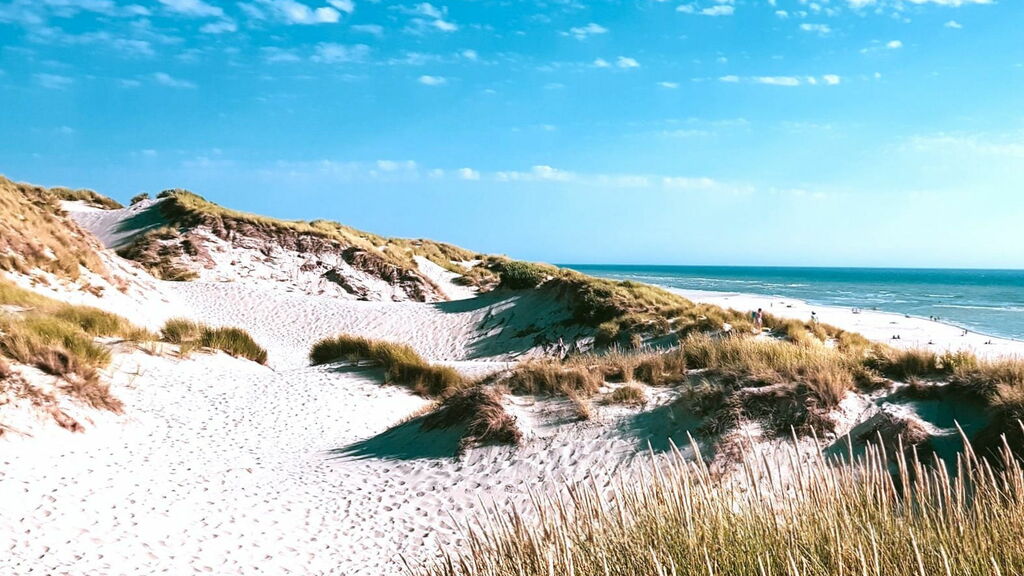
We believe that this gem of the Costa Verde is one of the most "extraterrestrial" locations in Sardinia, whose dunes of fine golden sand, which extend for about 7 kilometers inland, are part of the UNESCO World Heritage Site. It is a vast expanse of about 28 km², covered with majestic hills of sand which approach the sparkling blue sea. They are constantly moved and shaped by vigorous sea winds. Given the vastness of the beach, the beach is always uncrowded, even during high season, and, given the scarcity of homes, hotels, or other structures, your privacy is guaranteed. Suffice it to say that part of the shore is reserved for naturists and is now considered the largest nude beach in Europe. Those who do not like this practice will still find enough space to plant an umbrella and relax away from everyone.
If you are on holiday with your children, we recommend the utmost caution by swimming. It has to be done only under the close supervision of an adult, with well-inflated and firm armrests around the upper arms, and only when the sea is completely calm. This is because the conformation of the seabed and the presence of currents make swimming unsafe. The water is immediately deep, and the seabed is made up of large steps that soon fall into the open sea. In addition, the presence of winds could increase the wave motion: it is no coincidence that the beach is very popular and frequented all year round by surfers. The wildness of the spot, which recalls oceanic settings, suggests the utmost caution. Considering such features, we recommend the beach more to adults, adventurous couples, and water and extreme sports enthusiasts rather than to families with children.
We are talking about a landscape of such wild beauty that it will take your breath away. It is set in a remote and uncontaminated natural context. No coincidence that the location was chosen by internationally renowned artists and movie directors for a set of films and video clips. Piscinas is listed by National Geographic among the most beautiful beaches in the world. Lush species belonging to the Mediterranean scrub grow on the dunes, creating beautiful contrasts between the gold of the sand, the blue of the sea, and the green of the vegetation. A short distance from the shoreline, there are small woods of olive trees, junipers, and mastic trees. In spring, some flowers bloom on the dunes. Now and then, a shy Sardinian fallow deer peeps out. However, the zoological highlight is represented by the spawning of sea turtles, a wonder to protect at all costs.
There are several ways to reach the imposing dunes of Piscinas. The most adventurous route starts from Montevecchio: you have to drive on the SP4.18 / SP66. But we strongly advise against taking this route except with an off-road vehicle, a 4x4, or a large enduro motorcycle. It is a dirt road, almost a mule track, with several downhill bends, which in some places is a little dangerous. You must proceed with extreme caution since several kilometers of the cart track lack adequate barriers and protections. The journey is at your own risk! But it is also a rather suggestive route, as it crosses a wonderful mountain area, with the presence of old disused mines, the ruins of which are still visible. Suggestive are the many road signs that mark the Alt! by reminding us that the area is off-limits.
Finally, you will have to pass through the ghost village of Ingurtosu, part of the Historical and Environmental Geomining Park of the Sardinia Region, where you will feel like you are inside an old Wild West movie. From here, the road is short and steep, up to the old rusty carriages and abandoned railway wagons, which transported the minerals extracted in the mines to the boarding point directly on the shore. A short distance from the sea, there are some kiosks-restaurants, and you can also rent beach- and sports equipment. There is even a fully equipped RV area nearby. Once you reach the beach, surrounded by dunes up to 60 meters high, you will feel truly distant from modern civilization and everyday life. Enjoy that moment away from stress. Turn off all electronic devices and breathe in the salty sea air.
- Li Mindi, Badesi – North Coast.
Halfway between Castelsardo and Santa Teresa di Gallura, on the north coast of Sardinia, an area of vines and production of the renowned Vermentino, we find Badesi. It is a small center with a strong touristic soul, which boasts kilometers of wonderful coastline and sandy beaches. In this area, the mistral wind can blow with unprecedented force, something which is known by a crowd of windsurfers and wave surfers. The coast is beaten all year round by extreme sports lovers.
In Badesi Mare, you will certainly find a secluded beach where you lay at a safe distance from other bathers. Among the vast Badesi coastline, we point out Li Mindi. It is a wide, clear beach made up of a mix of fine sand and coarser grains. The beach stretches along the coast for several kilometers and is bordered by dunes of very fine sand, on which gnarled and aromatic junipers grow, as spectacular and choreographic as few tree species can be. The Coghinas flows at these latitudes, one of the major waterways in northern Sardinia. It hosts various species of birds along its course, creating a delicate ecosystem of great interest for biology and birdwatching enthusiasts.
- Su Tingiosu – West Coast.
In this case, more than a single beach, we are talking about a unique and remote place located on the west coast of Sardinia, more precisely in the Sinis peninsula. The area is quite famous for all the places of historical and archaeological interest enclosed in the territory of Cabras, such as Mont'e Prama and Tharros, as well as for the beautiful beach Is Arutas, made of quartz grains. Su Tingiosu is the name given to high limestone cliffs overlooking the crystalline sea. The white cliffs are about two kilometers long and wind between Mari Ermi beach, in the territory of Cabras, and the rocks south of the maritime hamlet of s’Arena Scoada, in the territory of San Vero Milis. From the etymological point of view, the name probably derives from the term “diagnose,” which means "poor" in the local dialect.
The cliffs, which in some points reach 25-30 meters in height, are very romantic at sunset due to the intense colors they take on. In front of them, you can spot the flat shape of the island of Mal di Ventre, part of the protected area of the Sinis peninsula, which has risen to the headlines for various socio-political events. The stretch of sea facing Su Tingiosu takes on shades between the most intense green and cyan. The cliff can be crossed all its length, thanks to a path beaten by hikers and mountain bikers. It is suitable for trekking excursions and to be explored by sea with small boats. Now and then, you can find pretty sandy coves where you can land to enjoy the sea in complete tranquility, away from everything and everyone. We suggest exploring the cliff in search of coves at low tide.
Several species of seabirds nest on the cliffs, including cormorants, which attract birdwatchers. There are also interesting submerged caves, rich in marine fauna, a great destination for divers and snorkelers.
- Cala Domestica, Buggerru – West Coast.
We have already written about this wonder of nature, as we suggested: “where to go to the beach in Sardinia.” But in addition to being truly beautiful, it is also a rather remote beach. Once again, we are on the west coast, which, not surprisingly, is the least visited coast of Sardinia. Cala Domestica is located south of the Costa Verde, and it is possibly the most beautiful beach on the entire west coast, even if the competition is fierce. The whole area is closely linked to the island's mining history. In a steampunk setting, the remains of disused mines, deposits, tunnels, and impressive infrastructures are still recognizable, which tell of a bygone era in which minerals were extracted from the great belly of the southwest of the island. Today, there are essential services in the surrounding area, such as refreshment points and car parks.
Cala Domestica beach is located about two kilometers south of Buggerru. Until the 1940s, cargo ships with minerals extracted from the area's mines sailed from these shores. Some galleries dug in the past by miners are still recognizable. A tunnel connects the main beach to a smaller, secluded, and romantic cove of wild and unspoiled beauty called La Caletta. It can also be reached by hiking on the rocks. Further on, on the high cliff, there is a fortified tower from the Spanish era, which can be reached through a path that starts from the coast and from which you can enjoy an incredible view.
The main cove is enclosed in a large inlet, protected by imposing white limestone cliffs. Behind the beach grows a fragrant Mediterranean scrub. The beach is soft and rather light, with shades between white and gold. The waters that lap the shoreline are as transparent as thin air and have incredible shades, ranging from the most intense green to cobalt blue. The seabed, suitable also for children's play, is soft and sandy: it is pleasant to walk on it with your ankles soaked. The waters overlooking the cove are rich in kaleidoscopic marine fauna and are excellent snorkeling spots. Immersed in such a context, the knowledge of space and time is lost, entranced by the wild beauty of such an earthly Eden.
- Cala Moresca and Figarolo beach, Figarolo island, Golfo Aranci – Northeast coast.
Let's feed two birds with one scone! We're talking about Cala Moresca in Golfo Aranci and Figarolo Beach, located right in front of it. Cala Moresca is an enchanting natural inlet with two beaches of fine golden sand, behind which stands the verdant promontory of Capo Figari near Golfo Aranci. In front of it stands the triangular shape of the limestone island of Figarolo. The cove is spectacular thanks to the transparency of the crystalline sea and its shades of emerald green and turquoise. It can be reached easily starting from the center of Golfo Aranci, a tourist town close to Olbia. Via Cala Moresca, a dirt road that runs alongside a railway line, departs directly from the port. Leave your car in an open parking and walk the stretch that separates you from the beaches. We recommend that you bring only what is strictly necessary with you.
Photography enthusiasts can take advantage of the presence of the rails along the sea, which offer suggestive shots. At the end of the road, at the bottom right, there are two sheltered beaches surrounded by a dense pine forest that offers shade during the hottest hours. They are usually not too crowded, but if you are looking for more privacy, take a boat and cross the stretch of sea that divides Cala Moresca from Figarolo island. On the northwestern side of the island, there is a V-shaped beach, mainly composed of white limestone pebbles, accessible only by sea. Easy to assume that it is very secluded! The toponym "Figarolo" derives from the presence of fig trees. There are also other noteworthy tree species, such as ancient olive trees and holm oaks. Despite its small size, the island has interesting wildlife, including mouflons and peregrine falcons.
If you love diving, the stretch of sea between Cala Moresca and Figarolo is ideal for diving and snorkeling due to the conformation of the seabed and the presence of colorful fish and other underwater species.