Islands of Sardinia: the ultimate guide
Sunday, September 5, 2021
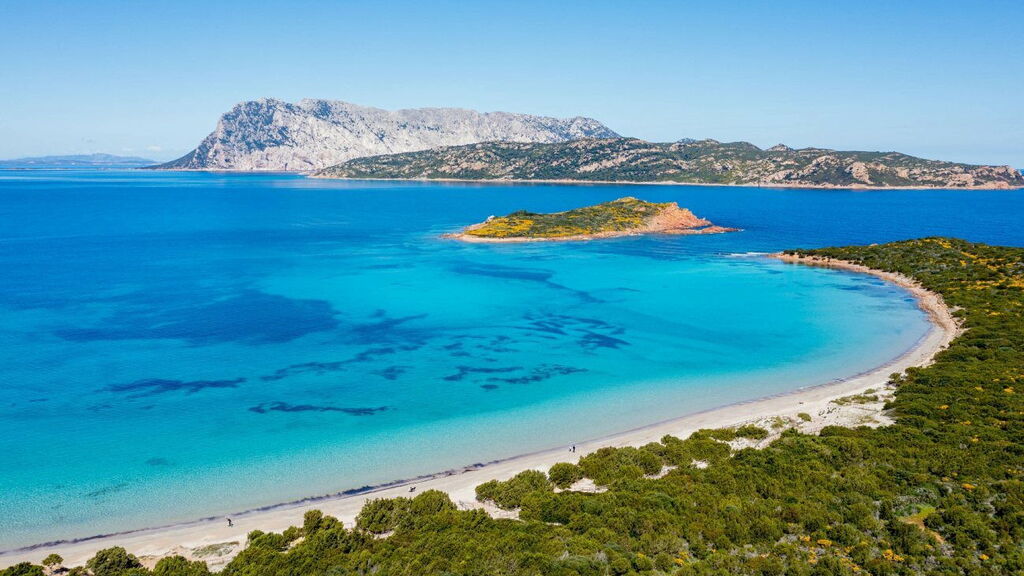
Sardinia’s smaller islands
Sardinia boasts a territory of 24,000 square kilometers wide, and is the second largest island in the Mediterranean after Sicily. Several smaller islands are part of the Sardinian territory, some belonging to archipelagos, other islands in their own right. Some have villages and inhabited settlements, most of them are uninhabited, and practically uncontaminated. These minor islands are often real terrestrial paradises, comparable with the atolls of the Pacific or the pearls of the Caribbean.
In this article we will talk about the main minor islands of Sardinia, highlighting the peculiarities that make them unique and spectacular. For convenience we divide the islands into two categories: The southern islands, ideally located south of Oristano, and the northern islands, located north of this imaginary line.
In this article we will talk about the main minor islands of Sardinia, highlighting the peculiarities that make them unique and spectacular. For convenience we divide the islands into two categories: The southern islands, ideally located south of Oristano, and the northern islands, located north of this imaginary line.
The islands of southern Sardinia
In Southern Sardinia there are several islands of great interest, frequently visited by international tourists. We selected three of them, possibly the most characteristic ones. Before we delve into, those are their names:
The Islands of Northern Sardinia
In North Sardinia there is a greater number of islands, above all due to the presence of the Maddalena Archipelago, which has over sixty islands and islets, all under the most rigorous environmental protection and part of the La Maddalena Archipelago National Park .
Several islands in northern Sardinia are well known and visited by visitors from all over the world. Below is the list of what we are going to deepen below:
Several islands in northern Sardinia are well known and visited by visitors from all over the world. Below is the list of what we are going to deepen below:
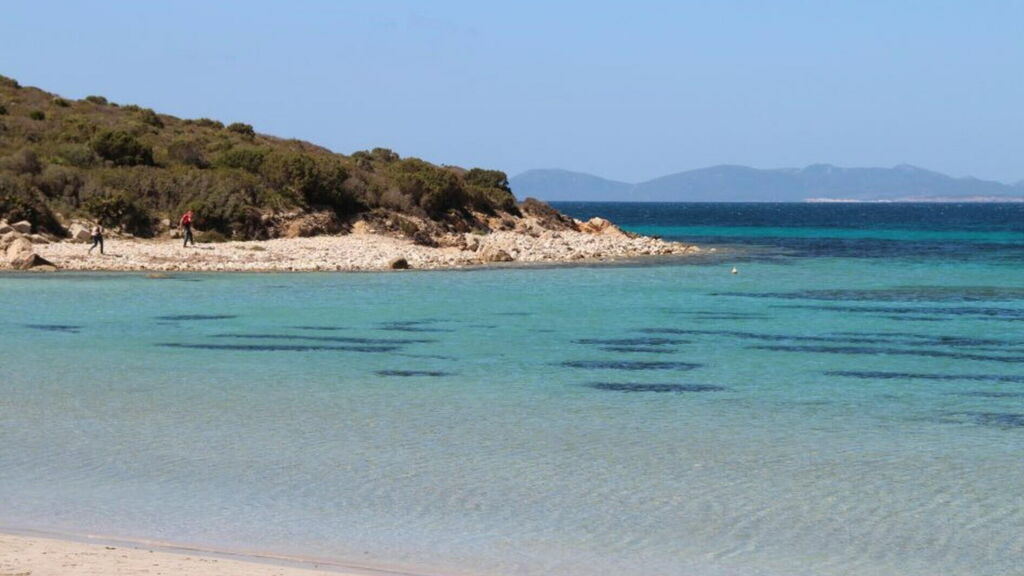
South Sardinian Islands. Sant’Antioco Island
We already wrote about the island of Sant’Antioco It is the largest island among all the smaller islands of Sardinia, with its approximately 109 square kilometers of surface. It has two inhabited centers of great interest: the homonymous Sant'Antioco, with about 11,000 inhabitants, and the smaller Calasetta, from which ferries depart for the facing island of San Pietro, and where the Ligurian dialect called "Tabarchino” is still spoken today, just like in Carloforte.
The island is part, together with the island of San Pietro, of the Sulcis archipelago, located in the extreme southwest of Sardinia. Both islands are inhabited.
Sant'Antioco is an island of wild beauty, thanks to the coasts and beaches known throughout Sardinia, such as the magnificent beach of Coa 'e Cuaddus, or Coaquaddus, in our opinion absolutely worth seeing. But the island offers much more, almost immersed in unspoiled nature, which easily lends itself to exploration, thanks to the short distances and connecting roads.
Sant’Antioco can be reached either by sea, or through an isthmus and a bridge, which connect it to the Sulcis road network and to Cagliari, the capital of Sardinia, a very important cultural city, as well as a hub for international connections.
The island is part, together with the island of San Pietro, of the Sulcis archipelago, located in the extreme southwest of Sardinia. Both islands are inhabited.
Sant'Antioco is an island of wild beauty, thanks to the coasts and beaches known throughout Sardinia, such as the magnificent beach of Coa 'e Cuaddus, or Coaquaddus, in our opinion absolutely worth seeing. But the island offers much more, almost immersed in unspoiled nature, which easily lends itself to exploration, thanks to the short distances and connecting roads.
Sant’Antioco can be reached either by sea, or through an isthmus and a bridge, which connect it to the Sulcis road network and to Cagliari, the capital of Sardinia, a very important cultural city, as well as a hub for international connections.
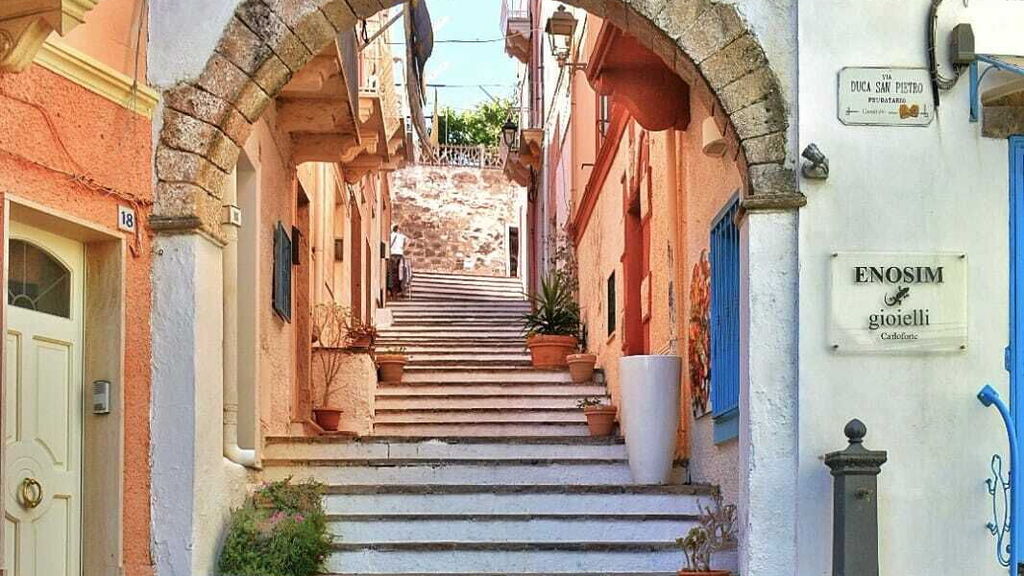
South Sardinian Islands. San Pietro Island
We have already written about the island of San Pietro, about the event known as Girotonno, in Carloforte. It is the twin island of Sant’Antioco, with which it has several common features, but also marked differences. First of all, San Pietro can only be reached by sea, by ferries departing from Calasetta or from Portoscuso, located on the facing Sardinian “mainland”.
The island has an extension of about 51 square kilometers and the only town on it, Carloforte, has about 6,000 inhabitants. The "Carlofortini" are still the keepers of the dialect of Ligurian origins called "Tabarchino", spoken, in a less pure variant, even in Calasetta. It is one of the various linguistic enclaves of Sardinia (for example, along Alghero). For the strong historical and cultural link with the Ligurian capital Genoa, Carloforte has been awarded the title of honorary municipality by the province of Genoa.
The island has an extension of about 51 square kilometers and the only town on it, Carloforte, has about 6,000 inhabitants. The "Carlofortini" are still the keepers of the dialect of Ligurian origins called "Tabarchino", spoken, in a less pure variant, even in Calasetta. It is one of the various linguistic enclaves of Sardinia (for example, along Alghero). For the strong historical and cultural link with the Ligurian capital Genoa, Carloforte has been awarded the title of honorary municipality by the province of Genoa.
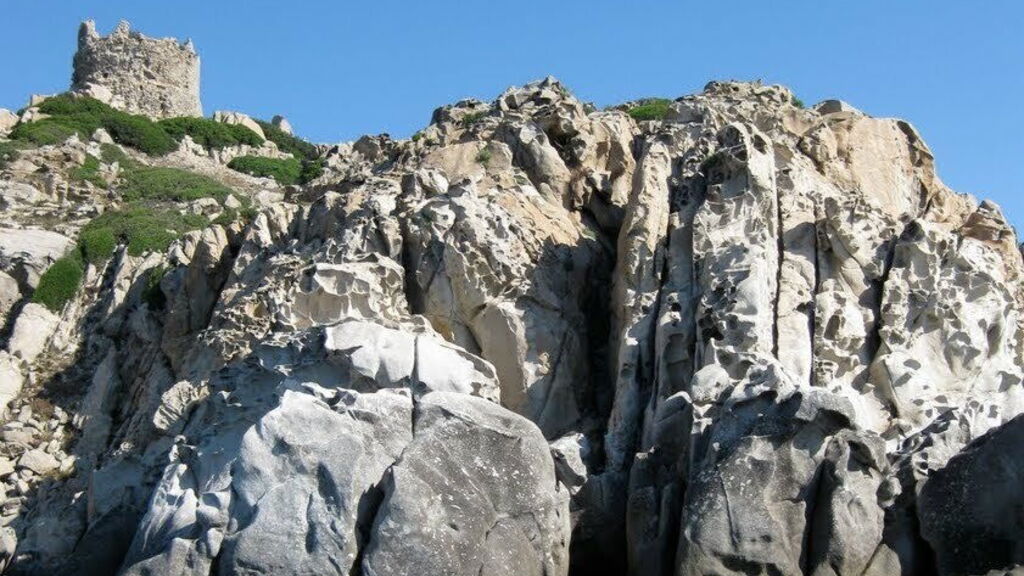
South Sardinian Islands. Serpentara Island
Serpentara, the so called snake island, owes its "menacing" name not to the presence of poisonous reptiles, but most likely to its shape. The elongated and sinuous profile can be spotted in the distance, vaguely reminiscent of an aquatic snake. In contrast, the island has rich vegetation and is inhabited by a colony of wild rabbits. It is a small granite island, located four kilometers from the coast of the beautiful Villasimius, to which it belongs.
The island is smaller than the other islands we are talking about in this article, but noteworthy, as it is part of the paradisiacal context of the Capo Carbonara marine protected area. Serpentara, as well as the nearby Isola dei Cavoli, is part of that protected area, in whose waters it is often possible to spot playful dolphins.
There is only one building on the island, a suggestive ruined Saracen tower, the scene of past bloody battles, called "Torre Saracena di San Luigi".
The island is smaller than the other islands we are talking about in this article, but noteworthy, as it is part of the paradisiacal context of the Capo Carbonara marine protected area. Serpentara, as well as the nearby Isola dei Cavoli, is part of that protected area, in whose waters it is often possible to spot playful dolphins.
There is only one building on the island, a suggestive ruined Saracen tower, the scene of past bloody battles, called "Torre Saracena di San Luigi".
North Sardinian Islands. Asinara island
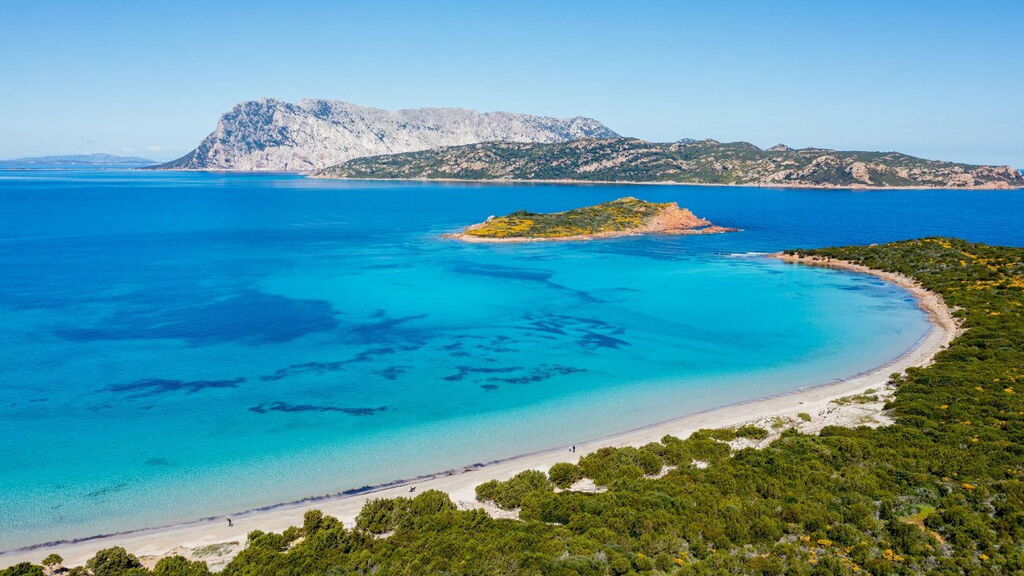
Asinara is a wonderful island that stands out in front of the Stintino peninsula. Separated from the small Isola Piana by a narrow navigable canal, called Passaggio dei Fornelli, this unique naturalistic pearl belongs to the municipality of Porto Torres.
It has more or less the same surface as the Island of San Pietro, but has an elongated shape as it extends to the northeast.
For several decades the island was the seat of a maximum-security prison, where bosses of the Italian and Sardinian underworld were imprisoned. Asinara is also linked to the history of the last few years of two Italian heroes, Judges Falcone and Borsellino. We already spoke about this matter, in our itinerary proposal for northern Sardinia.
In 1885 the families who lived on Asinara abandoned it, due to the construction of the prison. Some of them moved to the facing peninsula, where they founded the fishing village of Stintino, today a very important Sardinian tourist destination. The coast in front of the island of Asinara is known all over the world for the amazing La Pelosa beach: perhaps the most beautiful beach in the Mediterranean!
The island is purely mountainous, with high and rather jagged coasts. In the various inlets there are coves of breathtaking beauty, surrounded by typical Mediterranean vegetation. Today, the prison area has been redeveloped and can be visited, as well as the entire island, which is part of the Asinara National Park. The area is subject to maximum environmental protection, so to visit it, it is necessary to contact the Park's Authorized Guides.
In the thirties of the last century, an Austro-Hungarian ossuary was erected, built by Austria’s Governement. This monument holds over 7,000 remains of Austro-Hungarian prisoners who died in the penal colony during the First World War.
Among the natural sensations of the park there are also various animal species, such as various species of turtles, mouflons, but above all the super cute and famous white donkeys.
It has more or less the same surface as the Island of San Pietro, but has an elongated shape as it extends to the northeast.
For several decades the island was the seat of a maximum-security prison, where bosses of the Italian and Sardinian underworld were imprisoned. Asinara is also linked to the history of the last few years of two Italian heroes, Judges Falcone and Borsellino. We already spoke about this matter, in our itinerary proposal for northern Sardinia.
In 1885 the families who lived on Asinara abandoned it, due to the construction of the prison. Some of them moved to the facing peninsula, where they founded the fishing village of Stintino, today a very important Sardinian tourist destination. The coast in front of the island of Asinara is known all over the world for the amazing La Pelosa beach: perhaps the most beautiful beach in the Mediterranean!
The island is purely mountainous, with high and rather jagged coasts. In the various inlets there are coves of breathtaking beauty, surrounded by typical Mediterranean vegetation. Today, the prison area has been redeveloped and can be visited, as well as the entire island, which is part of the Asinara National Park. The area is subject to maximum environmental protection, so to visit it, it is necessary to contact the Park's Authorized Guides.
In the thirties of the last century, an Austro-Hungarian ossuary was erected, built by Austria’s Governement. This monument holds over 7,000 remains of Austro-Hungarian prisoners who died in the penal colony during the First World War.
Among the natural sensations of the park there are also various animal species, such as various species of turtles, mouflons, but above all the super cute and famous white donkeys.
North Sardinian Islands. Tavolara island
Tavolara, as they simply call it in Gallura, is considered the most "royal" island among all those belonging Sardinia. The island is defined as the smallest kingdom in the world, perhaps because there is a legend linked to a peculiar story, which always gives us a smile, attributable to a supposed dialogue between the then king of Sardinia, Carlo Alberto di Savoia, and the" self-styled King of Tavolara ", as described in a past article - click here to learn more!
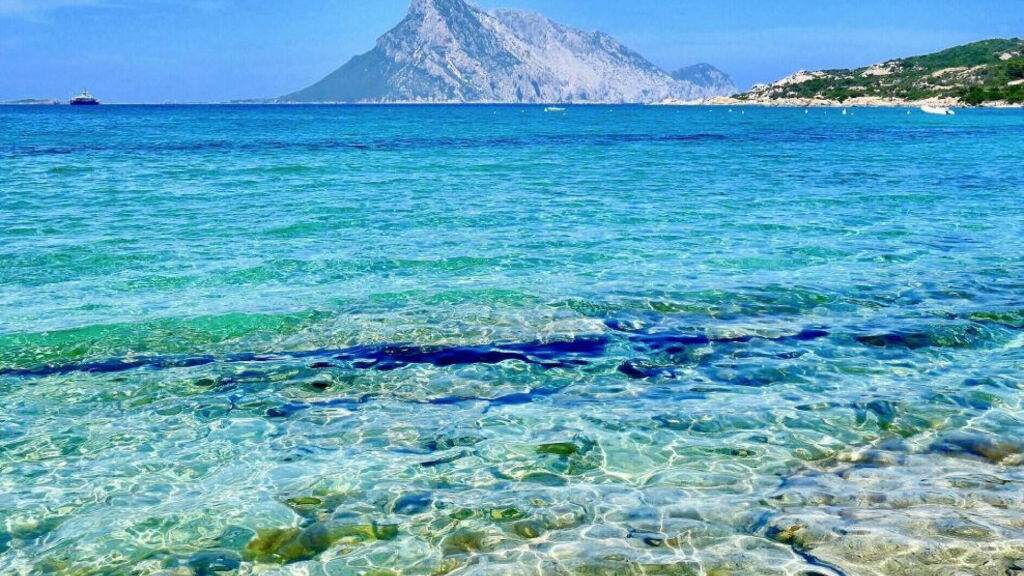
The island has an imposing and unmistakable profile: it is a massif of limestone and granite, 560 meters high and about 4 kilometers long. A mountain that rises majestically from the middle of the sea!
The massive bulk of the island can already be seen in the distance from the major hills of Gallura, as well as from all cities that overlook the coast and the stretch of sea belonging to the protected marine area of Tavolara-Punta Coda Cavallo. This reserve has an extension of 76 kilometers and bathes the waters of Olbia, Loiri Porto San Paolo and San Teodoro. It includes also smaller islands, such as Molara and Molarotto. We are talking about 15,000 hectares of transparent and crystalline waters, dream beaches and coves.
Tavolara is an immense rock with huge vertical cliffs. It boasts variegated shades of turquoise sea tending to deep blue at its feet, the typically bright color of the limestone rock and the intense green of the dense Mediterranean scrub that covers it. The sea in front of the island is also a paradise for snorkelers and scuba divers, due to several ship wrecks and due to the incredible seabed rich in marine life. You could spot even big cetaceans and dolphins.
You can land from the small port called Spalmatore di terra, where there are refreshment points, and visit the surrounding beaches.
Every July, Tavolara hosts the “Una notte in Italia” kermesse; an international film festival that takes place in the magical setting of the island.
The island has an imposing and unmistakable profile: it is a massif of limestone and granite, 560 meters high and about 4 kilometers long. A mountain that rises majestically from the middle of the sea!
The massive bulk of the island can already be seen in the distance from the major hills of Gallura, as well as from all cities that overlook the coast and the stretch of sea belonging to the protected marine area of Tavolara-Punta Coda Cavallo. This reserve has an extension of 76 kilometers and bathes the waters of Olbia, Loiri Porto San Paolo and San Teodoro. It includes also smaller islands, such as Molara and Molarotto. We are talking about 15,000 hectares of transparent and crystalline waters, dream beaches and coves.
Tavolara is an immense rock with huge vertical cliffs. It boasts variegated shades of turquoise sea tending to deep blue at its feet, the typically bright color of the limestone rock and the intense green of the dense Mediterranean scrub that covers it. The sea in front of the island is also a paradise for snorkelers and scuba divers, due to several ship wrecks and due to the incredible seabed rich in marine life. You could spot even big cetaceans and dolphins.
You can land from the small port called Spalmatore di terra, where there are refreshment points, and visit the surrounding beaches.
Every July, Tavolara hosts the “Una notte in Italia” kermesse; an international film festival that takes place in the magical setting of the island.
North Sardinian Islands. Mal di Ventre island
An evocative name for this island: “the stomach ache island”!
Its name derives from an incorrect translation of its Sardinian etymology: Isula de Malu 'Entu, which means "bad wind island": nothing to do with abdominal pain! The name is due instead to the unstable weather conditions of the island, often beaten by strong gusts of mistral wind.
It would be more accurate if classified as belonging to central Sardinia. Being north-west of Oristano, we arbitrarily count it among the northern minor islands.
Nowadays, the island is almost uninhabited, despite the fact that in summer it is a tourist destination. Visitors reach it from the overlooking beaches of the Sinis. The island, although small in size, was however inhabited during prehistoric times, as evidenced by various finds. Furthermore, Malu Entu is the only Sardinian minor island on which a bilobed nuraghe was erected. Among the buildings present, of great historical interest, there is also a Roman house from the 1st - 2nd century AD, even equipped with basins and a fountain. There was also probably a small monastery on the island. The numerous wrecks of boats from various eras scattered on the seabed around the island are also of undoubted archaeological interest.
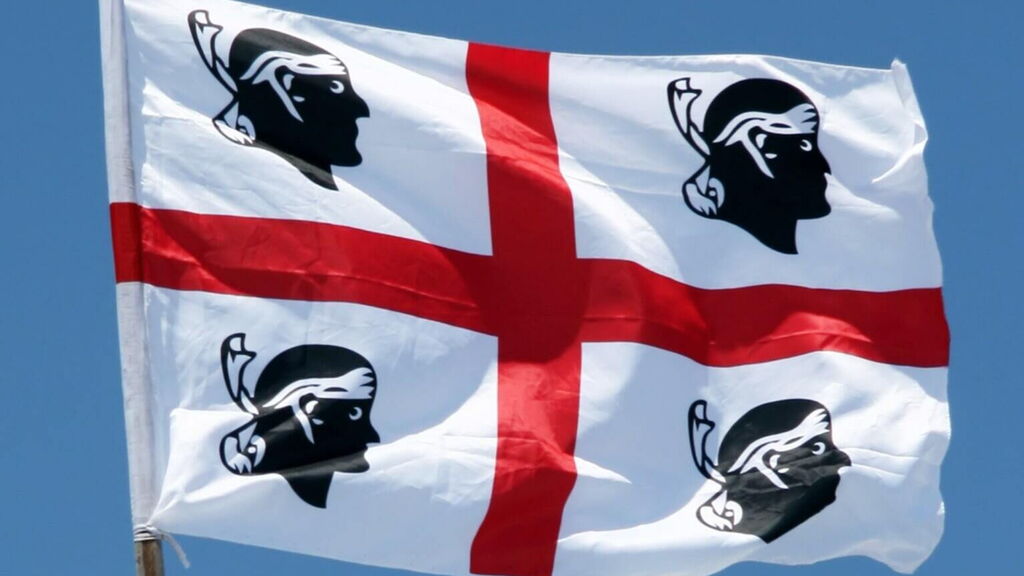
Recently, the island rose to national news for the action of a Sardinian independence activist, who aimed at international recognition of the island of Mal di Ventre, with the name of "Independent Republic of Malu Entu".
Its name derives from an incorrect translation of its Sardinian etymology: Isula de Malu 'Entu, which means "bad wind island": nothing to do with abdominal pain! The name is due instead to the unstable weather conditions of the island, often beaten by strong gusts of mistral wind.
It would be more accurate if classified as belonging to central Sardinia. Being north-west of Oristano, we arbitrarily count it among the northern minor islands.
Nowadays, the island is almost uninhabited, despite the fact that in summer it is a tourist destination. Visitors reach it from the overlooking beaches of the Sinis. The island, although small in size, was however inhabited during prehistoric times, as evidenced by various finds. Furthermore, Malu Entu is the only Sardinian minor island on which a bilobed nuraghe was erected. Among the buildings present, of great historical interest, there is also a Roman house from the 1st - 2nd century AD, even equipped with basins and a fountain. There was also probably a small monastery on the island. The numerous wrecks of boats from various eras scattered on the seabed around the island are also of undoubted archaeological interest.
Recently, the island rose to national news for the action of a Sardinian independence activist, who aimed at international recognition of the island of Mal di Ventre, with the name of "Independent Republic of Malu Entu".
North Sardinian Islands. The main islands of the Maddalena archipelago
The La Maddalena island is considered the mother island of the homonymous archipelago, as it is the largest of the 62 islands that are part of it. Furthermore, La Maddalena is the only one with a large inhabited center: the city bears the same name as the island, and has over 10.000 inhabitants. The island is located in front of the town of Palau, on the north eastern coast of Sardinia, and has an area of about 20 km², mainly covered by Mediterranean scrub. It has jagged coasts with several dream coves with a turquoise and transparent sea and shallow waters. It is a very important tourist center, as well as a city of great cultural interest, due to the presence of the Naval Archaeological Museum.
The island was the scene of great historical events. For example, it repelled the attempted invasion of the French army, led by none other than a lad named Napoleone Bonaparte. The Sardinian fleet was commanded by the local Domenico Millelire, awarded the first gold medal for military valor of the Italian navy. At the beginning of the 19th century the city was chosen by the legendary British Admiral Horatio Nelson, as naval base to face the French threat.
In the summer of 2009, La Maddalena was supposed to host the G8 meeting. It was later moved to L'Aquila by the then Prime Minister Silvio Berlusconi, following the earthquake that devastated the Abruzzo city. A choice harshly criticized by local authorities and people, as it was taken when the redevelopment works of some areas and the construction of new infrastructures had already started. The Sardinians saw the G8 as a springboard for the definitive economic revival of the area.
The Caprera island it is the second largest in the archipelago. Caprera is part of a protected area, managed by the Park Authority. It is connected to the mother island by a 600 meter long bridge.
We are talking about one of the most important tourist destinations in northern Sardinia, which at the same time proudly represents a key piece of Italian history. The hero of two worlds, Giuseppe Garibaldi, spent the last 26 years of his life on the island. Clock and calendar in his private room in the so-called white house still show the exact time and date of the death of the Risorgimento hero. Everything can now be visited in the so called Garibaldi Compendium, a Caprera museum, and one of the most important in Italy.
Caprera offers much more. It has a particular geological conformation of the coast; to the east we find an inaccessible and wild coast. Here there are coves of rare beauty, including the wonderful Cala Coticcio, one of the most beautiful beaches in the Mediterranean.
White sand, rocks that turn pink, a very shallow seabed and a dream sea, with a thousand shades of turquoise, have earned it the nickname 'Sardinian Tahiti'.
The beach is difficult to reach, if not by sea or by land after a long trek of medium difficulty on the rocks: mandatory to wear suitable shoes and carry water supplies. The closest parking is located far away from the beach.
Space on the beach is limited, therefore it is not recommended for those with small children, also due to the walk and the conformation of the cove which, surrounded by rocks, is exposed to intense sunlight throughout the day.
Attention! Recently, due to the wild accesses that have occurred in the past, it has been made mandatory to request a permit from the body that protects the park, or to contact the authorized environmental guides, to access the beach. You risk very high fines and even a police report if you do not comply with these provisions. More info is available on the official website of the La Maddalena Park Authority.
Another wonderful beach in Caprera is the so-called Spiaggia del Relitto. This jewel is located on the Punta Rossa peninsula, much more convenient to get to than Cala Coticcio. Free parking is available nearby. The beach owes its name to the remains of a boat that ran aground on the sand in 1955 after a fire broke out on board.
It is a wild little bay with fine white and soft sand, and with transparent and crystal clear water with incredible shades of blue. The aromatic scents of the surrounding Mediterranean maquis float in the air.
The island Spargi is the third in order of size among the islands of the La Maddalena Archipelago and is flanked by an islet called Spargiotto, inhabited by colonies of aquatic birds. The island has very few inlets and numerous sandy bays. The waters that bathe Spargi are a paradise for snorkelers and divers. The seabed is spectacular: the shoal of Washington and the wreck of Spargi, a boat from the Roman era, are worth mentioning.
There are some beaches of dazzling sand and breathtaking beauty. The crystalline transparencies stand out and the colors of blue topaz and emerald dominate in the various Cala Soraya, Cala Piscioli, Cala Corsara, Cala Granara, Cala Pietranera and Cala Conneri (a.k.a. Cala dell’amore, the love cove) and Cala Granara.
There are several fortifications and military infrastructures, evidence of a past in which the archipelago was a Sardinian defensive bulwark. Interesting and worth visiting are the military port of Cala Granu
and the picturesque “Forte Zanotto”, built overlooking the sea, camouflaged between rocks and Mediterranean scrub.
Santo Stefano island is known for having hosted for several years an American base for nuclear-powered submarines, operating from 1972 until 2008. Due to the USA base, the islands of La Maddalena and the town of Palau saw a massive presence of US military, that someone remembers with nostalgia because of the benefits they brought to local economy.
Today, the island has been redeveloped and hosts important tourist resorts. At Cala Villamarina, there is a disused granite quarry, where the massive granite bust of Costanzo Ciano stands out, part of an unfinished sculpture. The southern stretch of the island includes the beaches of Punta Santo Stefano and Cala Levante, overlooking the "mainland" and the coast of Palau.
The Razzoli island is the fifth largest island in the park. It features high jagged cliffs, shaped by the elements. It is part of the group of the three northern islands: Budelli, Razzoli and Santa Maria. Compared to Razzoli, only the island of Santa Maria is located further north. The two islands are a few meters away from each other, separated by the so-called Asinelli pass.
Wild vegetation grows on the incredible rocks of Razzoli, spectacular setting for dreamy coves inhabited by a rich and colorful marine fauna; a paradise for those who practice snorkelling and love exploring the seabed. Some beaches are breathtakingly beautiful, set in a pristine scenery. They can be easily reached by sea: Cala Cappello, Cala Lunga, Cala Noce, with water tones ranging from turquoise to the most intense blue.
Another legendary cove is the small Cala Bove Marino: theater of the last sighting of monk seal, dating back to 1997.
On Razzoli there is an imposing lighthouse, built in 1974, connected to another beach: Cala Lunga. Near the lighthouse there is a tomb, probably of a woman, about which mysterious and creepy legends are told.
Budelli island belongs to the group of northern islets, namely Budelli, Razzoli and Santa Maria, part of the dream archipelago.
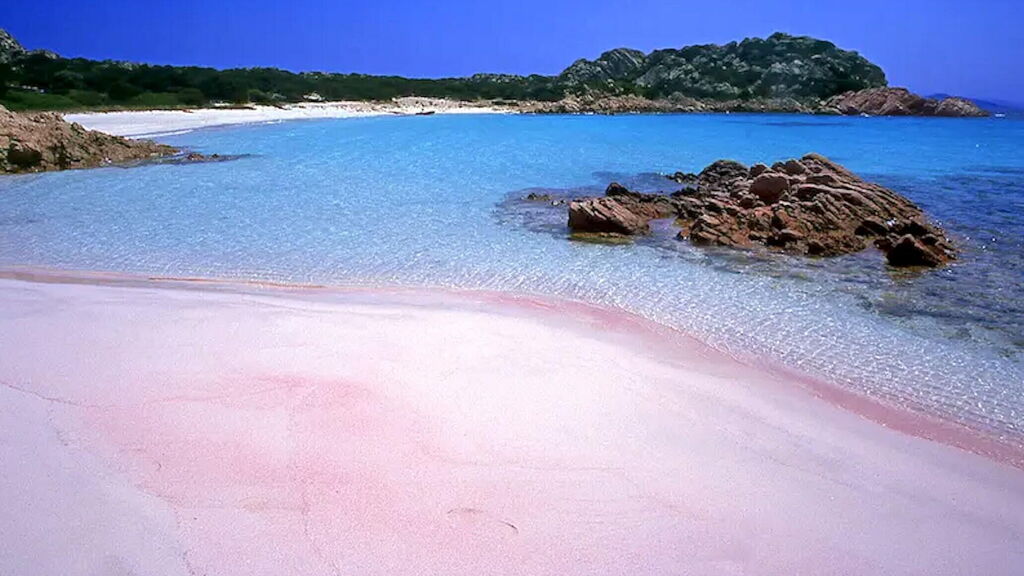
The island is famous all over the world due to its incredible Pink Beach: one of the few coves on earth to have a similar color. The sand has taken on the characteristic coral pink pigmentation due to the presence of calcareous shells of “Miniacina miniacea”, a microorganism that lives in the posidonia. Once the organism dies, its shells are carried ashore and crushed by the wave motion, becoming part of the grains of the beach. Budelli is part of the integral protection area of the La Maddalena Archipelago National Park. Therefore, access, transit, parking and bathing are absolutely forbidden. The ban is also in force to prevent visitors to take away pink sand souvenirs. Something that unfortunately happened in the past, as not everyone respects the nature and the ecosystem. It is possible to admire the amazing beach colors from the boat, as it is forbidden to disembark.
About 32 years long only one person lived on the island: Mauro Morandi, the former keeper of the Island of Budelli, originally from Modena. From 1989 to 2021, he defended and protected this corner of Eden. The Maddalena Park Authority, having planned maintenance interventions, finally invited him to leave Budelli. Tired of fighting, as well as with the elements and the stormy sea, even with the bureaucracy, Mauro moved to the island of La Maddalena at the age of over 80. The romantic story of this "Italian Robinson Crusoe" has had great international resonance, due to his desire to isolate himself from the rest of the world and to live in harmony with nature, giving up all comforts offered by modern life.
The Santa Maria island has an area of 2 square kilometres, and is the one located further north among the islands of the Maddalena Archipelago. It therefore is the closest to the Strait of Bonifacio, and to Corsica. Santa Maria belongs to the group of northern islets, which also includes Budelli, and Razzoli.
The island is permanently inhabited, and houses an 11th-century Benedictine monastery. Today Santa Maria is a destination for rich people, who have second homes there. There are also luxury restaurants and other accommodations. Santa Maria also has a lighthouse, although less famous than the Razzoli one.
This island is morphologically different from its two northern twins, as it is practically flat, but it has wonderful coves: Cala Santa Maria and Cala di Fosso above all.
Reaching the nearby island of Razzoli is a piece of cake: you can do it on foot crossing the half meter deep waters of the donkey pass.
Which island intrigued you the most? Have you ever been to one of these islands?
Back to top!
The island was the scene of great historical events. For example, it repelled the attempted invasion of the French army, led by none other than a lad named Napoleone Bonaparte. The Sardinian fleet was commanded by the local Domenico Millelire, awarded the first gold medal for military valor of the Italian navy. At the beginning of the 19th century the city was chosen by the legendary British Admiral Horatio Nelson, as naval base to face the French threat.
In the summer of 2009, La Maddalena was supposed to host the G8 meeting. It was later moved to L'Aquila by the then Prime Minister Silvio Berlusconi, following the earthquake that devastated the Abruzzo city. A choice harshly criticized by local authorities and people, as it was taken when the redevelopment works of some areas and the construction of new infrastructures had already started. The Sardinians saw the G8 as a springboard for the definitive economic revival of the area.
The Caprera island it is the second largest in the archipelago. Caprera is part of a protected area, managed by the Park Authority. It is connected to the mother island by a 600 meter long bridge.
We are talking about one of the most important tourist destinations in northern Sardinia, which at the same time proudly represents a key piece of Italian history. The hero of two worlds, Giuseppe Garibaldi, spent the last 26 years of his life on the island. Clock and calendar in his private room in the so-called white house still show the exact time and date of the death of the Risorgimento hero. Everything can now be visited in the so called Garibaldi Compendium, a Caprera museum, and one of the most important in Italy.
Caprera offers much more. It has a particular geological conformation of the coast; to the east we find an inaccessible and wild coast. Here there are coves of rare beauty, including the wonderful Cala Coticcio, one of the most beautiful beaches in the Mediterranean.
White sand, rocks that turn pink, a very shallow seabed and a dream sea, with a thousand shades of turquoise, have earned it the nickname 'Sardinian Tahiti'.
The beach is difficult to reach, if not by sea or by land after a long trek of medium difficulty on the rocks: mandatory to wear suitable shoes and carry water supplies. The closest parking is located far away from the beach.
Space on the beach is limited, therefore it is not recommended for those with small children, also due to the walk and the conformation of the cove which, surrounded by rocks, is exposed to intense sunlight throughout the day.
Attention! Recently, due to the wild accesses that have occurred in the past, it has been made mandatory to request a permit from the body that protects the park, or to contact the authorized environmental guides, to access the beach. You risk very high fines and even a police report if you do not comply with these provisions. More info is available on the official website of the La Maddalena Park Authority.
Another wonderful beach in Caprera is the so-called Spiaggia del Relitto. This jewel is located on the Punta Rossa peninsula, much more convenient to get to than Cala Coticcio. Free parking is available nearby. The beach owes its name to the remains of a boat that ran aground on the sand in 1955 after a fire broke out on board.
It is a wild little bay with fine white and soft sand, and with transparent and crystal clear water with incredible shades of blue. The aromatic scents of the surrounding Mediterranean maquis float in the air.
The island Spargi is the third in order of size among the islands of the La Maddalena Archipelago and is flanked by an islet called Spargiotto, inhabited by colonies of aquatic birds. The island has very few inlets and numerous sandy bays. The waters that bathe Spargi are a paradise for snorkelers and divers. The seabed is spectacular: the shoal of Washington and the wreck of Spargi, a boat from the Roman era, are worth mentioning.
There are some beaches of dazzling sand and breathtaking beauty. The crystalline transparencies stand out and the colors of blue topaz and emerald dominate in the various Cala Soraya, Cala Piscioli, Cala Corsara, Cala Granara, Cala Pietranera and Cala Conneri (a.k.a. Cala dell’amore, the love cove) and Cala Granara.
There are several fortifications and military infrastructures, evidence of a past in which the archipelago was a Sardinian defensive bulwark. Interesting and worth visiting are the military port of Cala Granu
and the picturesque “Forte Zanotto”, built overlooking the sea, camouflaged between rocks and Mediterranean scrub.
Santo Stefano island is known for having hosted for several years an American base for nuclear-powered submarines, operating from 1972 until 2008. Due to the USA base, the islands of La Maddalena and the town of Palau saw a massive presence of US military, that someone remembers with nostalgia because of the benefits they brought to local economy.
Today, the island has been redeveloped and hosts important tourist resorts. At Cala Villamarina, there is a disused granite quarry, where the massive granite bust of Costanzo Ciano stands out, part of an unfinished sculpture. The southern stretch of the island includes the beaches of Punta Santo Stefano and Cala Levante, overlooking the "mainland" and the coast of Palau.
The Razzoli island is the fifth largest island in the park. It features high jagged cliffs, shaped by the elements. It is part of the group of the three northern islands: Budelli, Razzoli and Santa Maria. Compared to Razzoli, only the island of Santa Maria is located further north. The two islands are a few meters away from each other, separated by the so-called Asinelli pass.
Wild vegetation grows on the incredible rocks of Razzoli, spectacular setting for dreamy coves inhabited by a rich and colorful marine fauna; a paradise for those who practice snorkelling and love exploring the seabed. Some beaches are breathtakingly beautiful, set in a pristine scenery. They can be easily reached by sea: Cala Cappello, Cala Lunga, Cala Noce, with water tones ranging from turquoise to the most intense blue.
Another legendary cove is the small Cala Bove Marino: theater of the last sighting of monk seal, dating back to 1997.
On Razzoli there is an imposing lighthouse, built in 1974, connected to another beach: Cala Lunga. Near the lighthouse there is a tomb, probably of a woman, about which mysterious and creepy legends are told.
Budelli island belongs to the group of northern islets, namely Budelli, Razzoli and Santa Maria, part of the dream archipelago.
The island is famous all over the world due to its incredible Pink Beach: one of the few coves on earth to have a similar color. The sand has taken on the characteristic coral pink pigmentation due to the presence of calcareous shells of “Miniacina miniacea”, a microorganism that lives in the posidonia. Once the organism dies, its shells are carried ashore and crushed by the wave motion, becoming part of the grains of the beach. Budelli is part of the integral protection area of the La Maddalena Archipelago National Park. Therefore, access, transit, parking and bathing are absolutely forbidden. The ban is also in force to prevent visitors to take away pink sand souvenirs. Something that unfortunately happened in the past, as not everyone respects the nature and the ecosystem. It is possible to admire the amazing beach colors from the boat, as it is forbidden to disembark.
About 32 years long only one person lived on the island: Mauro Morandi, the former keeper of the Island of Budelli, originally from Modena. From 1989 to 2021, he defended and protected this corner of Eden. The Maddalena Park Authority, having planned maintenance interventions, finally invited him to leave Budelli. Tired of fighting, as well as with the elements and the stormy sea, even with the bureaucracy, Mauro moved to the island of La Maddalena at the age of over 80. The romantic story of this "Italian Robinson Crusoe" has had great international resonance, due to his desire to isolate himself from the rest of the world and to live in harmony with nature, giving up all comforts offered by modern life.
The Santa Maria island has an area of 2 square kilometres, and is the one located further north among the islands of the Maddalena Archipelago. It therefore is the closest to the Strait of Bonifacio, and to Corsica. Santa Maria belongs to the group of northern islets, which also includes Budelli, and Razzoli.
The island is permanently inhabited, and houses an 11th-century Benedictine monastery. Today Santa Maria is a destination for rich people, who have second homes there. There are also luxury restaurants and other accommodations. Santa Maria also has a lighthouse, although less famous than the Razzoli one.
This island is morphologically different from its two northern twins, as it is practically flat, but it has wonderful coves: Cala Santa Maria and Cala di Fosso above all.
Reaching the nearby island of Razzoli is a piece of cake: you can do it on foot crossing the half meter deep waters of the donkey pass.
Which island intrigued you the most? Have you ever been to one of these islands?
Back to top!