What to see in Santa Teresa di Gallura
Friday, September 17, 2021
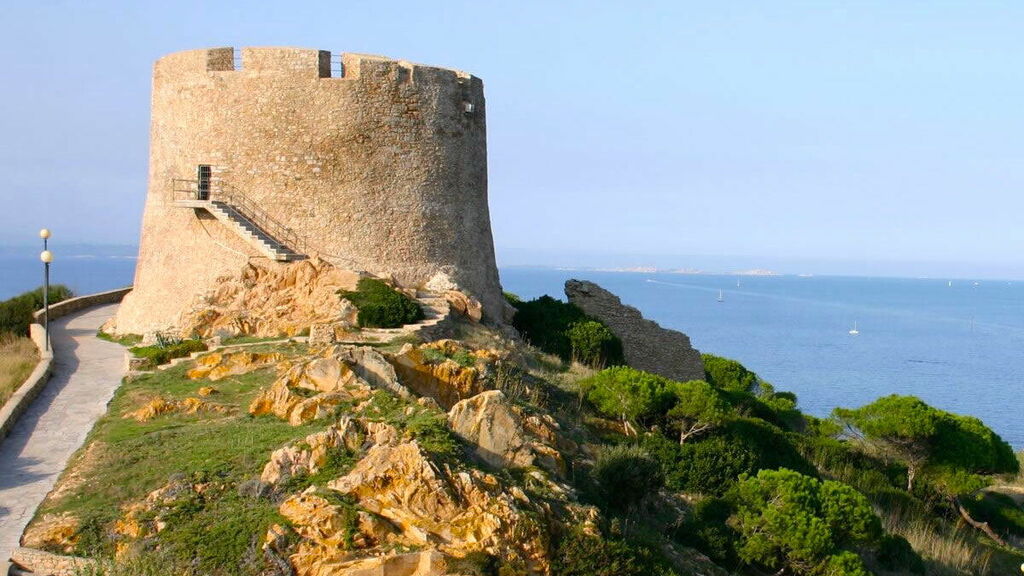
Santa Teresa di Gallura and Capo Testa
Today, we explore a particular location in Sardinia: Santa Teresa di Gallura, a well-known and unique destination, for many reasons. The town of Santa Teresa and its territory are known for its beautiful beaches and coves and for its wild and primordial coast, where granite and Mediterranean scrub are the masters. Furthermore, the town has an interesting history, linked to the Savoy royal family and the Kingdom of Sardinia. Finally, a very important factor, Santa Teresa di Gallura constitute the northernmost point of Sardinia: a little further north we find the mouths of Bonifacio and the white cliffs of Corsica, with which the inhabitants of Gallura maintain a strong bond.
If you want to find out more about this fantastic tourist destination, and take note of what to see in Santa Teresa, just continue reading this article.
The town has about 5,000 inhabitants and is visited in high season by tens of thousands of tourists, who love its nightlife, in addition to the naturalistic beauties. It’s a must for those who want to explore northern Sardinia and its attractions. We also recommend visiting the beautiful town if you want to know a corner of Sardinia, not far from the Costa Smeralda, but at the same time with a different kind of touristic offer.
The area where the tourist city stands has been inhabited since ancient times. The territory was known even to the Romans, who extracted the granite to build palaces in the capital of the Empire. It is assumed that the ancient city Tibula, an important hub, was located in this area. The modern town has noble origins: it was founded by Vittorio Emanuele I of Savoy in person, in 1808, renaming the locality known as Longosardo, with the name of his wife Maria Teresa. The king himself drew the map of the city! As evidence of the original name, there are several toponyms and names of monuments, such as the beautiful and mighty Tower of Longosardo, built by another nobleman: Philip II of Spain.
The inhabited center is built around two natural inlets: to the east we find “Porto Longone”, where the tourist port is located, to the west the inlet of the splendid Rena Bianca beach, the city beach of which we talk about later.
If you wish to visit archaeological sites, you are in the right place in northern Sardinia. We suggest the sites of the Nuragic era "Sa Testa" and "Lu Brandali". An interesting church is called the "Buoncammino", built on a building dating back to the Middle Ages, located in a pine forest outside the town. Fans of war archeology can also visit the so-called Ferrero Battery, in Punta Falcone, famous for its cannons that “never fired a single shot”.
When discovering Santa Teresa, you must spend a day in Capo Testa and the famous Valle della Luna, the “Moon Valley”: one of the northernmost and wildest spots of Sardinia. It’s a magical place, where granite rocks have been shaped into natural artworks as a result of thousands of years of erosion. The mistral wind and the water have carved unreal figures. You will find yourself catapulted into an extraterrestrial dimension, walking among the most varied rock silhouettes. Try to find the "head" that gives the name to the peninsula. We indulged ourselves with the imagination and, in the panoramic route between Santa Teresa and Capo Testa, and close to the lighthouse, we recognized a Gorilla face, a rabbit, several human figures, an eagle, E.T., a cobra, a shark, a skull and many other anthropomorphic and animal figures. Just have fun with your fantasy!
Capo Testa can be easily reached by car, by bike, and even on foot, if you are good walkers. Wear comfortable trekking shoes and get ready to discover a peculiar Sardinia. There are clear direction signs that show the road to follow. You must drive until the road end, in a coastal up and down that offers dream views. At the end of the asphalted road, a path leads to the lighthouse and the “Moon Valley”. It is a legendary cove, sheltered by incredible rocks and famous for its suggestive beauty. In the past decades it has been a meeting place for hippies and the followers of various new age waves. The visit of Capo Testa certainly will enrich your holiday. You will take home some wonderful memories, as well as magical photographic shots to share with relatives and friends. Seeing is believing!
By Capo Testa we suggest you visit the beautiful beaches of “Cala Grande” (in the Moon Valley), “Cala Spinosa” and the beach of the two Seas, namely “Rena di Ponente and Rena di Levante”… read on to find out more about these beaches.
If you want to find out more about this fantastic tourist destination, and take note of what to see in Santa Teresa, just continue reading this article.
The town has about 5,000 inhabitants and is visited in high season by tens of thousands of tourists, who love its nightlife, in addition to the naturalistic beauties. It’s a must for those who want to explore northern Sardinia and its attractions. We also recommend visiting the beautiful town if you want to know a corner of Sardinia, not far from the Costa Smeralda, but at the same time with a different kind of touristic offer.
The area where the tourist city stands has been inhabited since ancient times. The territory was known even to the Romans, who extracted the granite to build palaces in the capital of the Empire. It is assumed that the ancient city Tibula, an important hub, was located in this area. The modern town has noble origins: it was founded by Vittorio Emanuele I of Savoy in person, in 1808, renaming the locality known as Longosardo, with the name of his wife Maria Teresa. The king himself drew the map of the city! As evidence of the original name, there are several toponyms and names of monuments, such as the beautiful and mighty Tower of Longosardo, built by another nobleman: Philip II of Spain.
The inhabited center is built around two natural inlets: to the east we find “Porto Longone”, where the tourist port is located, to the west the inlet of the splendid Rena Bianca beach, the city beach of which we talk about later.
If you wish to visit archaeological sites, you are in the right place in northern Sardinia. We suggest the sites of the Nuragic era "Sa Testa" and "Lu Brandali". An interesting church is called the "Buoncammino", built on a building dating back to the Middle Ages, located in a pine forest outside the town. Fans of war archeology can also visit the so-called Ferrero Battery, in Punta Falcone, famous for its cannons that “never fired a single shot”.
When discovering Santa Teresa, you must spend a day in Capo Testa and the famous Valle della Luna, the “Moon Valley”: one of the northernmost and wildest spots of Sardinia. It’s a magical place, where granite rocks have been shaped into natural artworks as a result of thousands of years of erosion. The mistral wind and the water have carved unreal figures. You will find yourself catapulted into an extraterrestrial dimension, walking among the most varied rock silhouettes. Try to find the "head" that gives the name to the peninsula. We indulged ourselves with the imagination and, in the panoramic route between Santa Teresa and Capo Testa, and close to the lighthouse, we recognized a Gorilla face, a rabbit, several human figures, an eagle, E.T., a cobra, a shark, a skull and many other anthropomorphic and animal figures. Just have fun with your fantasy!
Capo Testa can be easily reached by car, by bike, and even on foot, if you are good walkers. Wear comfortable trekking shoes and get ready to discover a peculiar Sardinia. There are clear direction signs that show the road to follow. You must drive until the road end, in a coastal up and down that offers dream views. At the end of the asphalted road, a path leads to the lighthouse and the “Moon Valley”. It is a legendary cove, sheltered by incredible rocks and famous for its suggestive beauty. In the past decades it has been a meeting place for hippies and the followers of various new age waves. The visit of Capo Testa certainly will enrich your holiday. You will take home some wonderful memories, as well as magical photographic shots to share with relatives and friends. Seeing is believing!
By Capo Testa we suggest you visit the beautiful beaches of “Cala Grande” (in the Moon Valley), “Cala Spinosa” and the beach of the two Seas, namely “Rena di Ponente and Rena di Levante”… read on to find out more about these beaches.
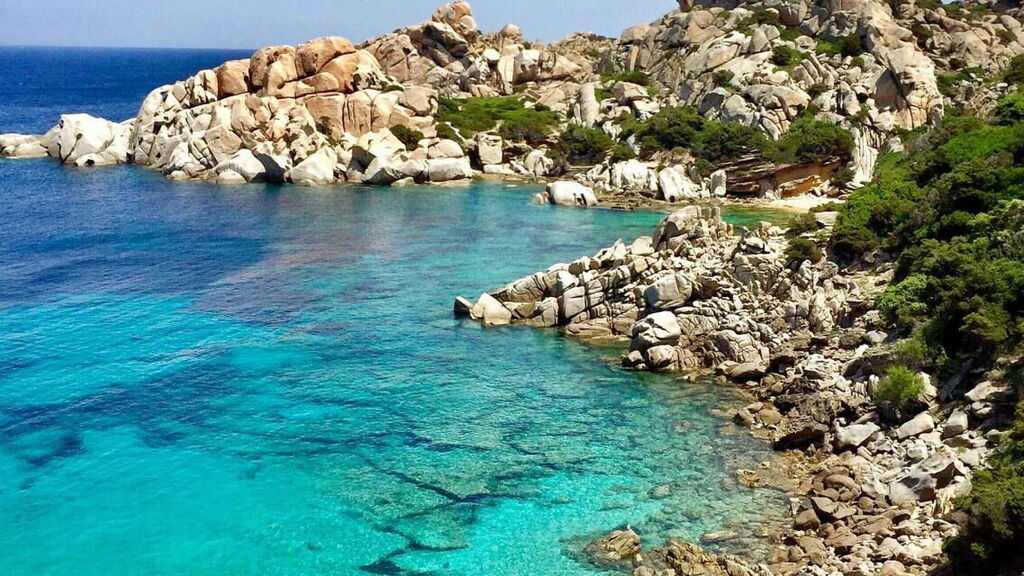
The best beaches in Santa Teresa di Gallura
The wonderful beaches and coves in Santa Teresa di Gallura and surroundings certainly deserve a separate section. They are a valid reason to discover the far north of Sardinia.
Below you will find our review of the following beaches:
- Rena Bianca;
- La Marmorata;
- Cala Sambuco;
- Santa Reparata;
- Rena di Ponente e Rena di Levante;
- Cala Grande;
- Cala Spinosa;
- Valle dell’Erica e La Licciola;
- Conca Verde.
Rena Bianca is the city beach of Santa Teresa di Gallura. And what a beach! It is a vast expanse of soft and fine sand, bathed by a crystalline sea with fairy shades. It can easily be reached on foot in a few minutes, even starting from the main square of the town. Just take a few hundred meter long descent, which crosses the inhabited center, to find yourself in paradise. It is easy to go from enjoying an excellent coffee in the coolest clubs of the town, to taking a dip in transparent waters. This is probably the most popular beach for locals, as it embodies the very essence of the town. If you still have doubts about the beauty and purity of Rena Bianca’s Sea, just consider that it has been awarded several times with the Blue Flag of the International FEE. This should dispel all doubts!
Not far from Santa Teresa, at the promontory of Punta Falcone, the northernmost tip of Sardinia, excluding the smaller islands belonging to the Maddalena Archipelago, we can find the La Marmorata beach. A large and well-equipped beach, known in the past for being linked to the history of the "Club Mediterranée", which still dominates the hill close to the beach. The sea is clear, with emerald and turquoise tones, the sand is light and soft. The beach is divided into two parts by some rocks and has two small islets in front of it. It is a fairly busy bay and during high season it is a little bit problematic to find a parking space, if not for a fee.
Cala Sambuco, is a small crescent of fine white sand, embellished by the transparent sea and a backdrop of stones and rocks. A true paradise for snorkelers. Ideal if you are looking for some privacy as it is a little difficult to reach. Be careful when you are on your way to the beach, especially in the last stretch of dirt road. It is not suitable for children, because of its conformation and the access routes. If you intend to discover this gem, bring water and all that you need to stay away from civilization and services for a while.
Not far from the nuragic site of “Su Brandali” there is the beach of Santa Reparata. The bay has a light and soft sandy beach. The water is clear and transparent, with shades ranging from emerald green to turquoise. The shallow and sandy seabed makes the beach suitable even to children, and is loved by snorkelers and divers. Santa Reparata, like the whole area of Santa Teresa, is a popular windsurfing, kitesurfing and wave surfing spot. That is due to the wind which, in addition to being useful for such water sports, cools the area, mitigating the scorching summer temperatures. The beach is protected by a picturesque cliff.
Proceeding towards the “Moon Valley”, you have to drive on an isthmus, which connects the Capo Testa peninsula to Santa Teresa. On this strip of land there are two beaches known as Rena di Ponente and Rena di Levante. To your right and to your left: sea!
The beaches always offer a shelter from the wind: whatever the direction from which it blows, alternatively to the east or to the west, the sea will be calm. Nearby is the legendary town of "Tibula" and its port, from which ships loaded with local granite, used as a building material in ancient Rome, set sail.
Once you cross the Capo Testa promontory, closer to Corsica than to the neighboring town of Palau, you will reach the spectacular beach of Cala Grande, a.k.a. "Valley of the Moon", a true icon of Santa Teresa and the whole area. The cove is immersed in a lunar landscape, pervaded by the aromatic scents of the Mediterranean scrub, enclosed by granite formations sculpted by the fury of the elements. In this magical setting, the event Festival Musiche sulle Bocche takes place in July; one of the most evocative music festivals in Sardinia. To be more precise, Cala Grande is made up of seven small valleys. The homonymous valley gives its name to the entire complex of coves and huge granite rocks. It is a remote and lonely cove, light years away from the chaotic present, with a deep seabed which makes it a diving paradise.
Erosion has also excavated several caves, used as natural shelters by the hippy community, which, starting in the late 1960s, made the valley as their home. It was the hippies who chose and renamed the place "Moon Valley", inspired by the extraterrestrial aspect of the granite in the moonlight. The nickname became so popular that today it is widely used.
Cala Spinosa is the name of another cove, located not far from the valley of the Moon. It is a small lonely bay, that you can discover near the end of the paved road that ends at Capo Testa. The scenery in this spot is breathtaking. Cala Spinosa is set like a gem among very high jagged rocks overlooking the sea, which shelter it from the wind. All around the evergreen shrubs of the Mediterranean scrub, which spread their fragrant aromas. It is one of the most photographed coves in Sardinia, mainly due to the suggestion given by the chromatic contrast between the rocks, the vegetation and the sea with its wonderful and intense colors.
The Valle dell’Erica bay, known for hosting an important resort, has some unique features. This stretch of coast is located halfway between Palau and Santa Teresa di Gallura, from which it is about 15 kilometers away. The area is almost unspoiled. The valley is rough and wild, due to the presence of a dense Mediterranean scrub, which purifies the air and protects the sandy coast of granite origin. Proceeding along the coast road you will reach a signposted intersection, which leads to a large paid parking, just a few minutes by foot away from the wonderful La Licciola beach. The beach is not equipped, therefore suitable for all those who are looking for privacy and tranquility, but less suitable for babies and toddlers. The view from the beach is a marvel. You can distinguish the islet of the “Colombaia” and in the distance the natural pearl of the “Spargi island”, part of the “La Maddalena Archipelago”.
The beach is divided into two parts by rocks, which actually delimit two distinct sectors: a northern and a southern beach.
The northern beach is bathed by clear emerald green waters, and is made up of fine sand, alternating with coarser granite fragments. In this section the seabed is shallow and offers easy access to the sea, as it is mainly sandy. There are choreographic granite rocks with soft pink hues that sprout here and there.
The southern part of the beach, on the other hand, has more granular sand, with pink shades.
In “Valle dell’Erica” there are further small sandy coves. These beaches are bordered by wonderful rocks, smoothed by millenary erosion, that are used as natural pools.
The reef is also an ideal spot for snorkeling as the sea is always clean and clear, while the rather deep seabed is inhabited by a colorful marine fauna.
We end our selection of beaches near Santa Teresa di Gallura, with a gem, a little secret which in our opinion deserves your attention: the Conca Verde bay. It is located on a natural inlet that protects it from bad sea conditions, not far from Valle dell'Erica. This bay is enclosed by a typical dense vegetation, as well as by tall trees, which make a calm atmosphere. It is easy to isolate yourself from the rest of the world in this oasis of peace.
The beach is made up of golden, fine and soft sand. The seabed is mostly shallow, with piles of stones scattered here and there on the sand. The bay is suitable for children, but always be vigilant. The color of the clean and crystalline sea varies between emerald green and turquoise.
You can discover the remaining beaches in the area for yourself, for example by proceeding west towards Vignola Mare and Portobello di Gallura. Let us know which ones you think are the best!
Below you will find our review of the following beaches:
- Rena Bianca;
- La Marmorata;
- Cala Sambuco;
- Santa Reparata;
- Rena di Ponente e Rena di Levante;
- Cala Grande;
- Cala Spinosa;
- Valle dell’Erica e La Licciola;
- Conca Verde.
Rena Bianca is the city beach of Santa Teresa di Gallura. And what a beach! It is a vast expanse of soft and fine sand, bathed by a crystalline sea with fairy shades. It can easily be reached on foot in a few minutes, even starting from the main square of the town. Just take a few hundred meter long descent, which crosses the inhabited center, to find yourself in paradise. It is easy to go from enjoying an excellent coffee in the coolest clubs of the town, to taking a dip in transparent waters. This is probably the most popular beach for locals, as it embodies the very essence of the town. If you still have doubts about the beauty and purity of Rena Bianca’s Sea, just consider that it has been awarded several times with the Blue Flag of the International FEE. This should dispel all doubts!
Not far from Santa Teresa, at the promontory of Punta Falcone, the northernmost tip of Sardinia, excluding the smaller islands belonging to the Maddalena Archipelago, we can find the La Marmorata beach. A large and well-equipped beach, known in the past for being linked to the history of the "Club Mediterranée", which still dominates the hill close to the beach. The sea is clear, with emerald and turquoise tones, the sand is light and soft. The beach is divided into two parts by some rocks and has two small islets in front of it. It is a fairly busy bay and during high season it is a little bit problematic to find a parking space, if not for a fee.
Cala Sambuco, is a small crescent of fine white sand, embellished by the transparent sea and a backdrop of stones and rocks. A true paradise for snorkelers. Ideal if you are looking for some privacy as it is a little difficult to reach. Be careful when you are on your way to the beach, especially in the last stretch of dirt road. It is not suitable for children, because of its conformation and the access routes. If you intend to discover this gem, bring water and all that you need to stay away from civilization and services for a while.
Not far from the nuragic site of “Su Brandali” there is the beach of Santa Reparata. The bay has a light and soft sandy beach. The water is clear and transparent, with shades ranging from emerald green to turquoise. The shallow and sandy seabed makes the beach suitable even to children, and is loved by snorkelers and divers. Santa Reparata, like the whole area of Santa Teresa, is a popular windsurfing, kitesurfing and wave surfing spot. That is due to the wind which, in addition to being useful for such water sports, cools the area, mitigating the scorching summer temperatures. The beach is protected by a picturesque cliff.
Proceeding towards the “Moon Valley”, you have to drive on an isthmus, which connects the Capo Testa peninsula to Santa Teresa. On this strip of land there are two beaches known as Rena di Ponente and Rena di Levante. To your right and to your left: sea!
The beaches always offer a shelter from the wind: whatever the direction from which it blows, alternatively to the east or to the west, the sea will be calm. Nearby is the legendary town of "Tibula" and its port, from which ships loaded with local granite, used as a building material in ancient Rome, set sail.
Once you cross the Capo Testa promontory, closer to Corsica than to the neighboring town of Palau, you will reach the spectacular beach of Cala Grande, a.k.a. "Valley of the Moon", a true icon of Santa Teresa and the whole area. The cove is immersed in a lunar landscape, pervaded by the aromatic scents of the Mediterranean scrub, enclosed by granite formations sculpted by the fury of the elements. In this magical setting, the event Festival Musiche sulle Bocche takes place in July; one of the most evocative music festivals in Sardinia. To be more precise, Cala Grande is made up of seven small valleys. The homonymous valley gives its name to the entire complex of coves and huge granite rocks. It is a remote and lonely cove, light years away from the chaotic present, with a deep seabed which makes it a diving paradise.
Erosion has also excavated several caves, used as natural shelters by the hippy community, which, starting in the late 1960s, made the valley as their home. It was the hippies who chose and renamed the place "Moon Valley", inspired by the extraterrestrial aspect of the granite in the moonlight. The nickname became so popular that today it is widely used.
Cala Spinosa is the name of another cove, located not far from the valley of the Moon. It is a small lonely bay, that you can discover near the end of the paved road that ends at Capo Testa. The scenery in this spot is breathtaking. Cala Spinosa is set like a gem among very high jagged rocks overlooking the sea, which shelter it from the wind. All around the evergreen shrubs of the Mediterranean scrub, which spread their fragrant aromas. It is one of the most photographed coves in Sardinia, mainly due to the suggestion given by the chromatic contrast between the rocks, the vegetation and the sea with its wonderful and intense colors.
The Valle dell’Erica bay, known for hosting an important resort, has some unique features. This stretch of coast is located halfway between Palau and Santa Teresa di Gallura, from which it is about 15 kilometers away. The area is almost unspoiled. The valley is rough and wild, due to the presence of a dense Mediterranean scrub, which purifies the air and protects the sandy coast of granite origin. Proceeding along the coast road you will reach a signposted intersection, which leads to a large paid parking, just a few minutes by foot away from the wonderful La Licciola beach. The beach is not equipped, therefore suitable for all those who are looking for privacy and tranquility, but less suitable for babies and toddlers. The view from the beach is a marvel. You can distinguish the islet of the “Colombaia” and in the distance the natural pearl of the “Spargi island”, part of the “La Maddalena Archipelago”.
The beach is divided into two parts by rocks, which actually delimit two distinct sectors: a northern and a southern beach.
The northern beach is bathed by clear emerald green waters, and is made up of fine sand, alternating with coarser granite fragments. In this section the seabed is shallow and offers easy access to the sea, as it is mainly sandy. There are choreographic granite rocks with soft pink hues that sprout here and there.
The southern part of the beach, on the other hand, has more granular sand, with pink shades.
In “Valle dell’Erica” there are further small sandy coves. These beaches are bordered by wonderful rocks, smoothed by millenary erosion, that are used as natural pools.
The reef is also an ideal spot for snorkeling as the sea is always clean and clear, while the rather deep seabed is inhabited by a colorful marine fauna.
We end our selection of beaches near Santa Teresa di Gallura, with a gem, a little secret which in our opinion deserves your attention: the Conca Verde bay. It is located on a natural inlet that protects it from bad sea conditions, not far from Valle dell'Erica. This bay is enclosed by a typical dense vegetation, as well as by tall trees, which make a calm atmosphere. It is easy to isolate yourself from the rest of the world in this oasis of peace.
The beach is made up of golden, fine and soft sand. The seabed is mostly shallow, with piles of stones scattered here and there on the sand. The bay is suitable for children, but always be vigilant. The color of the clean and crystalline sea varies between emerald green and turquoise.
You can discover the remaining beaches in the area for yourself, for example by proceeding west towards Vignola Mare and Portobello di Gallura. Let us know which ones you think are the best!
Villas for rent to comfortably discover Santa Teresa di Gallura
If you are fascinated by this destination and want to easily discover Santa Teresa di Gallura and the north of Sardinia by yourself, we suggest you stay overnight in one of the wonderful villas in the area.
Our selection:
- Villa Incanto Di Gallura, in Baia Santa Reparata, just 3 Km from Santa Teresa's town center.
- Villa Smeralda, 19 km from Santa Teresa
Contact us by phone or Whatsapp at +39 3423633722 for a non-binding chat with our experts, who will be able to suggest the solution that best suits your needs.
Back to top!
Our selection:
- Villa Incanto Di Gallura, in Baia Santa Reparata, just 3 Km from Santa Teresa's town center.
- Villa Smeralda, 19 km from Santa Teresa
Contact us by phone or Whatsapp at +39 3423633722 for a non-binding chat with our experts, who will be able to suggest the solution that best suits your needs.
Back to top!