Sardinian myths and legends
Origins of Sardinian myths
Our grandparents have handed down to us tales about fantastic creatures and anti-heroes of everyday life, as well as stories that seem to be closely linked with myths and legends of the ancient Greek tradition and of the Roman era. We all recall their fascinating and wise way of narrating with great pathos. In turn, our "giajos" (ancestors) learned these tales around the home fireplace, where the family gathered in ancient times, to pass down the so-called "contos de 'foghile" (fireplace tales).
Every single town and city of Sardinia has its own legends and tales, part of Sardinian folklore, handed down from father to son. In the Anglona and the lower Gallura, were narrated the deeds of “Antoneddu”, a shrewd boy struggling with witches and ogres, which he defeated thanks to his cunning. A cross between Hop-o'-My-Thumb and the little Hans from the Hänsel and Gretel tale.
Inevitably, the stories have undergone distortions over the years, due to the oral passage from generation to generation, like ancient rhapsodies did, which brought to many variations of the same stories.
Further legends are linked to historical characters who really existed, whose deeds have been emphasized in hyperbolic folk tales. Several stories narrate the exploits of legendary Sardinian bandits of the past: island brigands who fought against the Savoy armies, and who were not at all hated by the population, quite the contrary! It is possible to compare these figures to other “mythicized” personalities of international fame, such as Robin Hood and Rob Roy MacGregor.
The best known and most feared bandits of the time belonged to a noble family: the Delitala, sworn enemies of the Savoy. The most notorious exponent of the family was nothing less than a legendary woman: Donna Lucia Delitala Tedde, a sort of female version of Zorro. She lived during the Spanish Succession War, and she was respected and feared as a warrior queen. A masked outlaw, animated by a strong patriotic sentiment, remembered for her heroic deeds, as well as for her pugnacious and rebellious character. She was an example and encouragement to the population to fight to free themselves from the oppressors. Even the death of Donna Lucia is still shrouded in mystery: conflicting versions circulate on the ways and circumstances in which she was murdered.
The then viceroy Carlo Amedeo Battista of San Martino d'Agliè di Rivarolo, wrote a letter to King Carlo Emanuele III, in which he described the banditess with the following words: She did not want to marry in order not to depend on a husband, according to what she used to say. She has two grenadier mustaches and she uses weapons and horse like a gendarm., thus feeding even more the legend of Donna Lucia.
Other northern Sardinian myths, related to a legendary bandit narrate the deeds of the infamous Muto di Gallura, an emblematic character, protagonist of the homonymous historical novel by Enrico Costa from Sassari. The real name of the ruthless deaf-mute was Bastiano Tansu, who rose to the news as one of the most vengeful Sardinian outlaws, involved in the ferocious feud between the Vasa and the Mamia families, which bloodied Gallura in the mid-nineteenth century. He was originally from Aggius, a wonderful village in the internal Gallura, in whose territory there are lunar landscapes due to incredible granite rock formations, also known for the "Museum of Banditry", which is worth visiting.
Following the publication in 1884 of the novel by Costa, entitled "Il Muto di Gallura", the inhabitants of Aggius and neighboring villages fed the myth of the bloodthirsty bandit, adding colorful details to the stories about his heinous deeds.
A legend that we think is very interesting was written with great narrative skill by the sharp writer Gianmichele Lisai. It is part of the wonderful collection of myths and legends about Sardinia called "101 stories about Sardinia, that you have never been told". We have paraphrased the legend of Torco, hero of Sandalia. The links to ancient Greek myths are obvious:
Before civilization developed in Sardinia, Torco protected the ancient island from attacks by enemies from the sea, who intended to conquer and plunder it. Son of Neptune, God of the sea, Torco was gifted with a legendary strength and a great connoisseur of seafaring art. Tireless, he watched the coasts of Sardinia aboard a boat made of reeds. It was him who noticed that the island had the shape of a sandal, baptizing it precisely "Sandalia". Torco clashed several times with the powerful Atlante, commander of the Mediterranean pirates from the coasts of Africa. The bloody battles between Torco's and Atlante's crews always ended in the same way: Sandalia's brave soldiers, led by Torco, had the upper hand.
Over the years, even Torco aged, despite his divine origins. Atlante, in full vigor, decided to take advantage of Torco's physical decay, to launch the definitive attack. He placed himself at the head of all the pirate crews of Africa, which he led to the coasts of Sandalia to carry out its conquest. Here an epic battle took place between the two armies of the sea. The pirates were in surplus, and at various stages of the battle they managed to land on Sandalia. Despite the numerical inferiority, Torco and his valiant men always managed to repel the invaders and even took over, until a nefarious event overturned the fate of the battle. Atlante's ship rammed Torco's fragile boat, which sank into the sea depths with all the crew. The inhabitants of the island fell into despair, because without the brave leader they defenseless against the pirates.
Neptune's intervention was providential. He saved his lifeless son by blowing the spirit of the sea into his mouth, to turn him into a merman: half man and half fish. Torco acquired the ability to swim as agile and fast as a fish. With renewed determination and strength he placed himself at the head of the army of mermen, with whom he surrounded the pirate ships. By vigorous movements of the tails they caused high waves, which shattered the boats of the invaders, causing them to be shipwrecked. Once again the island was saved thanks to its hero.
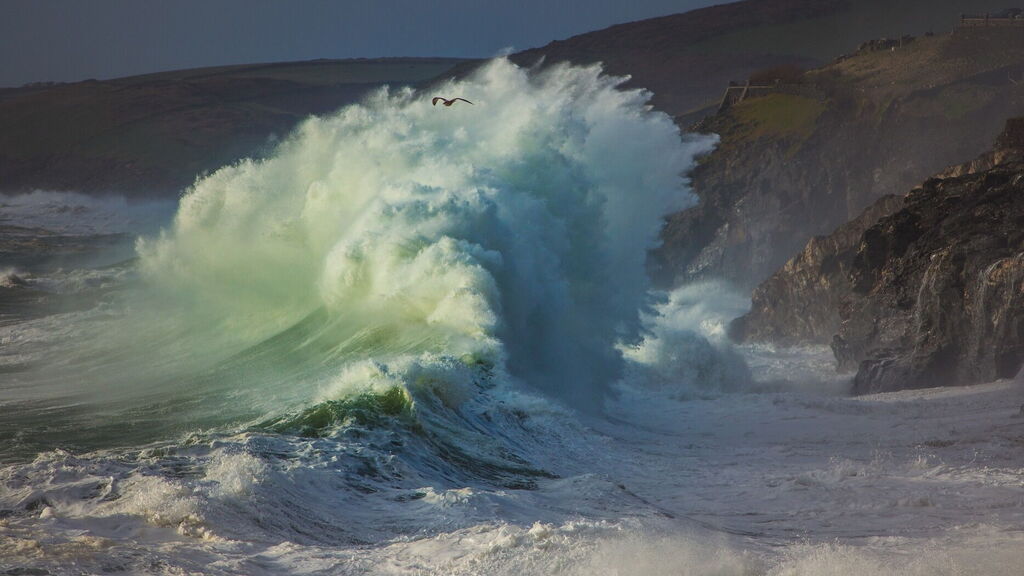
Legend has it that even today Torco and his faithful mermen inhabit the sea of Sandalia, causing impetuous storms with powerful movements of their tails to signal the dangers coming from the sea.
Other legends are more recent, or have been elaborated and taken up in the scientific and archaeological theories of various Sardinian writers and scholars. Probably, the most fascinating legend of all, is related to the theory of the well-known Italian journalist Sergio Frau, who identified Sardinia as the mythical Atlantis!
In his essay, the writer of Sardinian origins accurately analyzes many clues, numerous geographical, anthropological and historical analogies, traces of cataclysms on nuragic constructions and archaeological finds. His investigations and deductions lead the writer to formulate the theory that the mythical Pillars of Hercules, of which among others wrote the philosopher of ancient Greece Plato, have for centuries been wrongly located. Sergio Frau states they should be in the Strait of Sicily. Starting from this assumption, the legendary island of Atlantis, of which Plato speaks in the "Timaeus and Critias", would actually be Sardinia
If you are passionate about historical archeology and want to deepen this fascinating theory, you can read the essay by Sergio Frau, entitled "The Pillars of Hercules".
Sardinian mythology of the Nuragic civilization
It is certain that many ancient tales are in some way linked to the presence on the island of the mysterious "Dolmen" and "Menhir", of the pre-Nuragic burial chambers carved into the rock, called "Domus de Janas", of the evocative "Tombs of the Giants", of the enigmatic and geometric "Sacred Wells" and the imposing Nuraghic towers of the Bronze Age. These are fascinating stone buildings, the origins of which probably seemed a mystery to the inhabitants of the rural hinterland of Sardinia in the past centuries: people dedicated to working in the fields and on livestock farms and often poorly educated.
Therefore, the construction of such ancient monuments has been erroneously attributed to fantastic creatures: “Domus de Janas” means “House of the Fairies” in Logudorese Sardinian dialect.
Over time, various legends have originated from this popular belief, having as protagonists mythological fantastic creatures. An example is represented by a myth from the Oristano area, contained in the aforementioned collection by Lisai, entitled: The madness that lived in the well of Santa Cristina. In this story the madness has the allegorical appearance of a beautiful and vengeful woman, who, following an injustice caused by the inhabitants of Paulilatino, magically distributes characters and peculiarities to the inhabitants of the villages of Campidano, Montiferru and the Sinis peninsula.
Another important mythological figure in Sardinia is the "giant". On the island there is a pseudo-adoration for these mythological figures, deeply rooted in Sardinian culture. Several myths and legends have been dedicated to giants, which are lost in the mists of time.
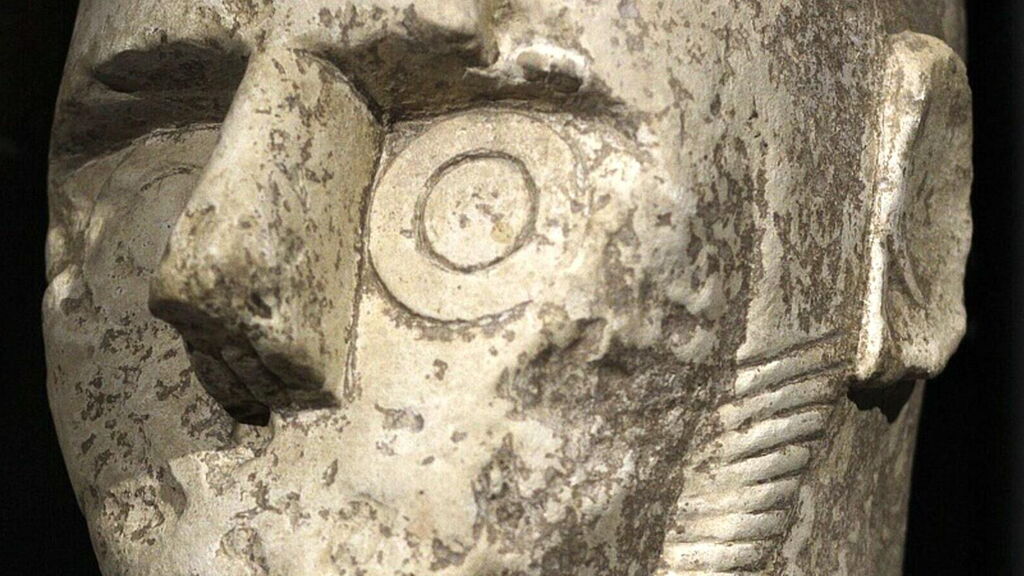
The theme was also taken up in the figurative artistic field: the apotheosis is represented by the Statues of the Giants of Monte Prama; stone representations of heroes, up to 2.5 meters high. The sculptures were accidentally found by some farmers in 1974 in the Sinis Peninsula, precisely in Mont'e Prama: a site to which several scholars now attribute the status of "Heroon". The discovery of the all-round sculptures of the proud archers, warriors and boxers was neglected for decades. Over time, due to their imposing and enigmatic appearance, and thanks to the dating that places them in the Nuragic era, the statues have become Sardinian icons.
The stone heroes, for us Sardinians simply "the Giants", have uncovered a world that had apparently been deliberately ignored for years, forcing archaeologists and scholars to rewrite the history of art. The sculptures are inspired by the features of the smallest bronze statues, called “bronzetti”, often found inside nuraghi and in nuragic worship places.
It is difficult to find artworks similar to the statues of the Giants throughout the Mediterranean area.
If as planned further excavations in this area, or in other areas with a high concentration of finds in Sardinia, are carried on, it will be possible to shed light on the mystery still represented by the legendary Giants, attributing them the importance they actually hold for the Mediterranean and worldwide art and archeology.
Are you passionate about myths and legends? On your next visit to Sardinia, ask the village elders to tell some "contos’ de’ foghile "!
You can comfortably stay in one of our beautiful villas, from which you can easily move within Sardinia, a land of legends and traditions.
Villa Gloriator
Villa with private pool in Portobello di Gallura.
Villa Jalisia
Villa with private pool in Budoni.
Villa Filugnana
Villa for rent in Santa Teresa di Gallura.
Villa Domus Ardea
Villa for rent in San Teodoro.
Contact us for more info and get a tailor made quotation.
Our expert booking managers will be happy to give you the best advices about Sardinia villa rentals.
Back to Top!