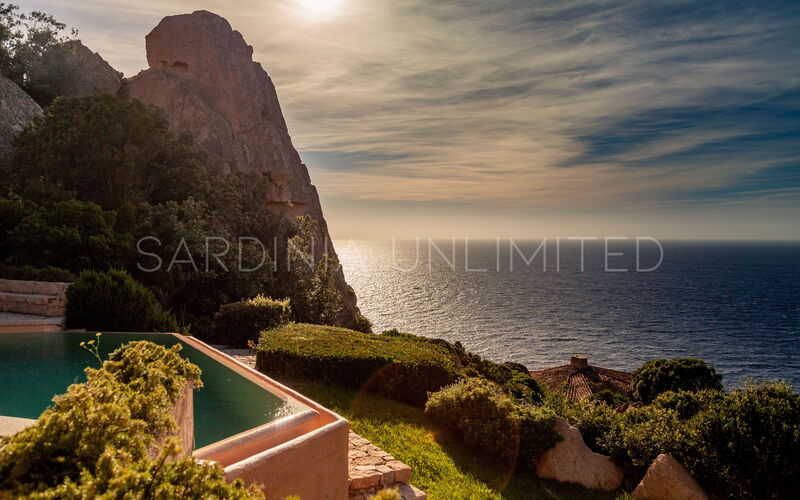
Winter in Sardinia: all about the spots to visit
Sunday, November 21, 2021
Rites, traditions and destinations for the winter in Sardinia
It probably sounds strange to spend a winter holiday in Sardinia.
In fact, this island holds many surprises and is full of attractions, events and things to do in every season, even during the winter.
The main ski slopes are located on the summit of Bruncu Spina, part of the Gennargentu massif, and extend for several kilometers in the heart of the province of Nuoro, with facilities of ascent.
The ski season lasts 2 to 3 months, usually from December to March, when abundant snowfalls occur, attracting several thousand Sardinian and non-Sardinian enthusiasts.
The cold season is particularly suitable for visiting archaeological sites, which are distributed far and wide throughout the island, to be included in trekking itineraries and healthy open-air walks.
In Sardinia there are between 7,000 and 8,000 Nuraghi: massive truncated conical towers dating back to the Bronze Age, built with stone boulders of different sizes, using revolutionary construction techniques for the time.
Several Nuragic villages have been brought to light through massive archaeological excavations, and are perfectly preserved. We strongly suggest you to visit one of the major complexes. Depending on where you are, you will surely have an archaeological site nearby: Nuraghe Arrubiu, Palmavera, Santu Antine, Su Nuraxi, Sa Prisgiona, Nuraghe Losa, Riu Mulinu, and so on.
To grasp the essence of these impressive monuments and the fascinating Nuragic culture, it is good to rely on an expert guide, who will introduce you to a highly evolved civilization, of which too little has been said in the past.
Further important monuments, from the prehistoric or nuragic era which are worth visiting, are the Domus de Janas, the Sacred Wells and the Tombs of the Giants. Also to discover these monuments it is good to rely on expert archaeological guides.
The magnetic and imposing statues of the Giants of Monte Prama deserve more attention: we have already talked about them, in the blog about Sardinian legends and myths.
All manifestations and rites of the Barbagia Carnival, which mixes the sacred and the profane, are of enormous interest. This period of the year has great anthropological and socio-cultural value, due to the strong identity imprint it has on local populations.
The carnival in the Barbagia begins with the rituals which take place on January 16, on the eve of the feast of Saint Anthony the Abbot. Masked figures dance around the ritual fires that are lit in the squares in many villages.
Several towns have their own traditional carnival masks.
The most famous masks, known even beyond the island's borders, are those of the town of Mamoiada, which celebrates the beginning of Carnival on January 17th, and where the anthropomorphic figures of the Mamuthones and Issohadores perform a suggestive parade.
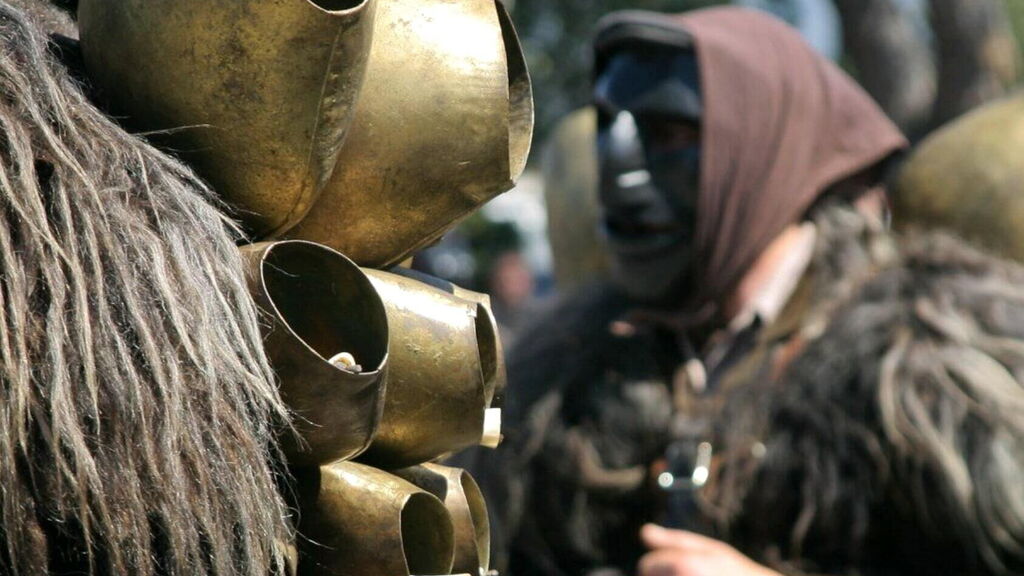
Tradition provides that twelve Mamuthones (one for each month of the year), personified by vigorous local actors, proceed at a rhythmic pace in two parallel rows. The solemn footsteps and leaps of the imposing figure covered in black sheepskins make the cowbells resound loudly. The bells are clasped on their shoulders and weigh around 55 lbs.
Mamuthones’ faces are hidden behind the viseras, which are traditional wooden masks made of peartree wood. The visera is painted black and has grotesque features from which only the penetrating eyes of the actors can be seen. It is handycrafted by local artisans, or by the Mamuthones themselves. They also wear the characteristic handkerchief on their heads, called Muncadore, which is tied under the chin.
Their pace has a strong magnetic power, also arousing awe in the audience: as soon as the Mamuthones appear, a respectful silence falls, the crowd dodges to make room for the procession and the children run away in fear.
The ritual is completed by a further costume, a colored one (dominant colors are red and white): the Issohadores. Eight of them proceed alongside the Mamuthones, who they watch over and to whom they dictate the pace. In addition, the Issohadores jokingly capture the spectators, using a rope called "sa soha", thrown as a lasso on the crowd enjoying the parade.
The Issohadores also wear a wooden mask, called "sa visera 'e santu", painted white and with more delicate features, in contrast to the black one with the rough features of the Mamuthones.
Other towns in the interior of Sardinia have their own anthropomorphic masks and their own propitiatory rituals, which you can discover by spending the days of Carnival in Sardinia. We point out the Boes and Merdùles from Ottana and the Thurpos from Orotelli.
In other Sardinian municipalities, far from the province of Nuoro and from the ancestral tradition of the Barbagia Carnival, it is celebrated in an evocative way. Interesting is the very ancient "Karrasegare Osinku": a peculiar carnival of the seaside town of Bosa, on the west coast of Sardinia.
One of our favorite ways to celebrate carnival is to attend the spectacular and evocative equestrian event called the Sartiglia in Oristano. It is a horse race, where the knights try to catch a silver star while riding fast through the town. It takes place on the last Sunday and Tuesday of Carnival and which includes wonderful rituals and choreography.
Other Sardinian towns offer more modern and widespread celebrations and events, with allegorical floats and dances that involve the whole population, as happens for example in the heart of Gallura, in Tempio Pausania.
Waking up on Christmas Day with a view of an intense blue sea, after spending the eve with loved ones, or mingling with the hospitable inhabitants of the island in clubs and Christmas markets, is priceless.
Among the places that offer an optimal combination of tradition and fun on the sea we mention Alghero, Cagliari, Olbia and Castelsardo: tourist cities that usually have a very rich events calendar for New Year's Eve, with various events and free concerts in the town squares by internationally renowned artists.
In fact, this island holds many surprises and is full of attractions, events and things to do in every season, even during the winter.
• Skiing in Sardinia.
Probably, if you love skiing, Sardinia is not the most suitable destination for you... even if, to be honest, there is a ski area on the island spread over the territories of Fonni, Villagrande Strisaili and Desulo. You didn't expect it, did you?The main ski slopes are located on the summit of Bruncu Spina, part of the Gennargentu massif, and extend for several kilometers in the heart of the province of Nuoro, with facilities of ascent.
The ski season lasts 2 to 3 months, usually from December to March, when abundant snowfalls occur, attracting several thousand Sardinian and non-Sardinian enthusiasts.
• Visit archaeological sites.
The attractions in Sardinia in winter are certainly not limited to activities in the ski resorts.The cold season is particularly suitable for visiting archaeological sites, which are distributed far and wide throughout the island, to be included in trekking itineraries and healthy open-air walks.
In Sardinia there are between 7,000 and 8,000 Nuraghi: massive truncated conical towers dating back to the Bronze Age, built with stone boulders of different sizes, using revolutionary construction techniques for the time.
Several Nuragic villages have been brought to light through massive archaeological excavations, and are perfectly preserved. We strongly suggest you to visit one of the major complexes. Depending on where you are, you will surely have an archaeological site nearby: Nuraghe Arrubiu, Palmavera, Santu Antine, Su Nuraxi, Sa Prisgiona, Nuraghe Losa, Riu Mulinu, and so on.
To grasp the essence of these impressive monuments and the fascinating Nuragic culture, it is good to rely on an expert guide, who will introduce you to a highly evolved civilization, of which too little has been said in the past.
Further important monuments, from the prehistoric or nuragic era which are worth visiting, are the Domus de Janas, the Sacred Wells and the Tombs of the Giants. Also to discover these monuments it is good to rely on expert archaeological guides.
The magnetic and imposing statues of the Giants of Monte Prama deserve more attention: we have already talked about them, in the blog about Sardinian legends and myths.
• Participate in the Sardinian “Karrasegare” celebrations.
The months of January and February in particular, in addition to being among the coldest periods of the year, hold important and surprising events related to Karrasegare: the Sardinian Carnival.All manifestations and rites of the Barbagia Carnival, which mixes the sacred and the profane, are of enormous interest. This period of the year has great anthropological and socio-cultural value, due to the strong identity imprint it has on local populations.
The carnival in the Barbagia begins with the rituals which take place on January 16, on the eve of the feast of Saint Anthony the Abbot. Masked figures dance around the ritual fires that are lit in the squares in many villages.
Several towns have their own traditional carnival masks.
The most famous masks, known even beyond the island's borders, are those of the town of Mamoiada, which celebrates the beginning of Carnival on January 17th, and where the anthropomorphic figures of the Mamuthones and Issohadores perform a suggestive parade.
Tradition provides that twelve Mamuthones (one for each month of the year), personified by vigorous local actors, proceed at a rhythmic pace in two parallel rows. The solemn footsteps and leaps of the imposing figure covered in black sheepskins make the cowbells resound loudly. The bells are clasped on their shoulders and weigh around 55 lbs.
Mamuthones’ faces are hidden behind the viseras, which are traditional wooden masks made of peartree wood. The visera is painted black and has grotesque features from which only the penetrating eyes of the actors can be seen. It is handycrafted by local artisans, or by the Mamuthones themselves. They also wear the characteristic handkerchief on their heads, called Muncadore, which is tied under the chin.
Their pace has a strong magnetic power, also arousing awe in the audience: as soon as the Mamuthones appear, a respectful silence falls, the crowd dodges to make room for the procession and the children run away in fear.
The ritual is completed by a further costume, a colored one (dominant colors are red and white): the Issohadores. Eight of them proceed alongside the Mamuthones, who they watch over and to whom they dictate the pace. In addition, the Issohadores jokingly capture the spectators, using a rope called "sa soha", thrown as a lasso on the crowd enjoying the parade.
The Issohadores also wear a wooden mask, called "sa visera 'e santu", painted white and with more delicate features, in contrast to the black one with the rough features of the Mamuthones.
Other towns in the interior of Sardinia have their own anthropomorphic masks and their own propitiatory rituals, which you can discover by spending the days of Carnival in Sardinia. We point out the Boes and Merdùles from Ottana and the Thurpos from Orotelli.
In other Sardinian municipalities, far from the province of Nuoro and from the ancestral tradition of the Barbagia Carnival, it is celebrated in an evocative way. Interesting is the very ancient "Karrasegare Osinku": a peculiar carnival of the seaside town of Bosa, on the west coast of Sardinia.
One of our favorite ways to celebrate carnival is to attend the spectacular and evocative equestrian event called the Sartiglia in Oristano. It is a horse race, where the knights try to catch a silver star while riding fast through the town. It takes place on the last Sunday and Tuesday of Carnival and which includes wonderful rituals and choreography.
Other Sardinian towns offer more modern and widespread celebrations and events, with allegorical floats and dances that involve the whole population, as happens for example in the heart of Gallura, in Tempio Pausania.
• Celebrating Christmas and the New Year’s Eve at the sea in Sardinia.
Celebrating Christmas and New Year's Eve in Sardinia could prove to be an unexpectedly interesting experience, especially if you choose a city or coastal location.Waking up on Christmas Day with a view of an intense blue sea, after spending the eve with loved ones, or mingling with the hospitable inhabitants of the island in clubs and Christmas markets, is priceless.
Among the places that offer an optimal combination of tradition and fun on the sea we mention Alghero, Cagliari, Olbia and Castelsardo: tourist cities that usually have a very rich events calendar for New Year's Eve, with various events and free concerts in the town squares by internationally renowned artists.
Winter in Sardinia, not just the sea: the best tourist routes
Winter in Sardinia is also a period in which you can make various excursions or organize city breaks.
- Cagliari
The capital of Sardinia is a modern and vibrant city, which never lost its character as a crossroads of the Mediterranean, nor its Sardinian roots and traditions.
The city deserves to be visited for various reasons: for the beauty of the historic center, with the buildings and monuments from the Pisan Aragonese era, for the vibrant culinary scene of neighborhoods such as La Marina and Castello, for the white beaches and the dream landscapes of the hills and peripheral parks, as well as for the culture that you can discover in museums and historic buildings.
Located in the South of Sardinia, in the center of the Golfo degli Angeli, a visit to the city offers the opportunity to combine the discovery of this beautiful area. There are many villas and holiday homes where to stay overnight in Southern Sardinia.
- Alghero
The second coastal city to visit absolutely, even in the winter months is the white city Alghero, center in the north west of Sardinia with a strong Catalan identity. Both Cagliari and Alghero were part of the so-called 7 Royal cities of Sardinia (Cagliari, Sassari, Oristano, Iglesias, Alghero, Bosa and Castelsardo), which enjoyed exclusive privileges during the Aragonese domination. This is also reflected in the architecture and layout of this charming town in the north-west of Sardinia.
Alghero is the second largest city in the Metropolitan City of Sassari area, after its homonymous capital. It also has a great strategic importance for the economy and tourism, thanks to the presence of the international airport, which together with the commercial and tourist ports of Porto Torres constitutes the hub of the north-east.
The main reason why we suggest visiting Alghero is the timeless beauty of its old city. Lose yourself in the typically Spanish alleys of the historic center, try the typical dishes based on fish and lobster in the local restaurants and walk without thoughts on the mighty defensive ramparts, breathing in the iodine air that comes from the sea.
The surroundings of the town are equally beautiful and noteworthy: Capo Caccia and the Neptune’s Cave as well as numerous surrounding beaches make the area one of the most popular with tourists from all over the world.
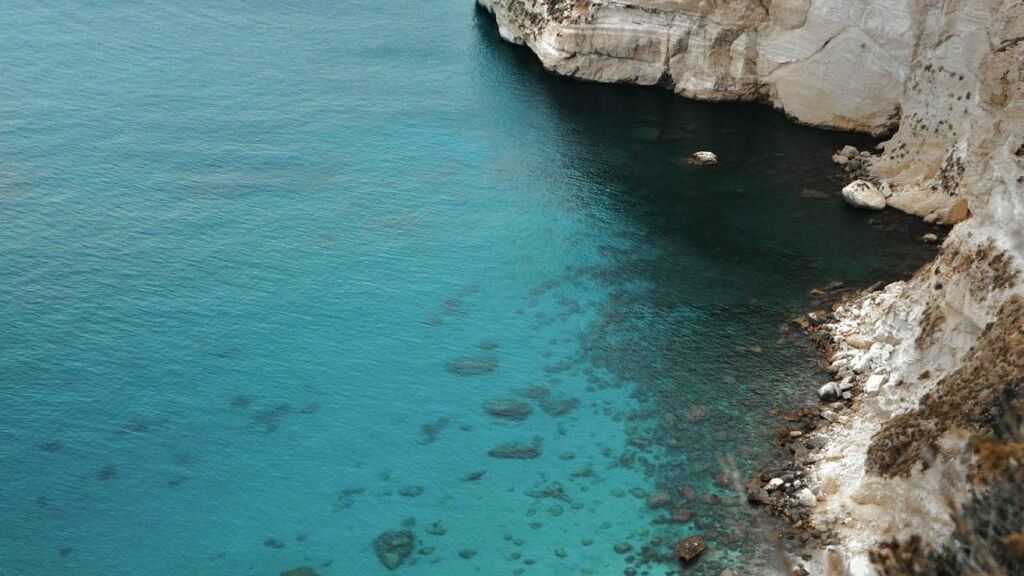
If you are daring enough and the weather is mild, you might even try to bathe in the turquoise sea… which we strongly advise against. Keep your coats and scarves on, at most immerse your feet in the transparent waters. A ray of sun will be enough to pierce the clouds, reviving the emerald colors of the sea, contrasted with the luxuriant Mediterranean scrub, to leave you breathless in front of this spectacle: a perfect subject to immortalize in your travel pictures and cherish forever.
Contact us for advice on where to stay overnight even in winter.
Our experienced Booking Managers are at your disposal for a friendly chat.
Back to Top!
• Visiting Sardinian towns in winter.
Some cities in Sardinia are so beautiful that it is worth discovering them even in winter. Considering the mild temperatures, which rarely drop below zero degrees along the Sardinian coasts, we at Sardinia Unlimited suggest visiting the two most beautiful cities in Sardinia, according to our opinion.- Cagliari
The capital of Sardinia is a modern and vibrant city, which never lost its character as a crossroads of the Mediterranean, nor its Sardinian roots and traditions.
The city deserves to be visited for various reasons: for the beauty of the historic center, with the buildings and monuments from the Pisan Aragonese era, for the vibrant culinary scene of neighborhoods such as La Marina and Castello, for the white beaches and the dream landscapes of the hills and peripheral parks, as well as for the culture that you can discover in museums and historic buildings.
Located in the South of Sardinia, in the center of the Golfo degli Angeli, a visit to the city offers the opportunity to combine the discovery of this beautiful area. There are many villas and holiday homes where to stay overnight in Southern Sardinia.
- Alghero
The second coastal city to visit absolutely, even in the winter months is the white city Alghero, center in the north west of Sardinia with a strong Catalan identity. Both Cagliari and Alghero were part of the so-called 7 Royal cities of Sardinia (Cagliari, Sassari, Oristano, Iglesias, Alghero, Bosa and Castelsardo), which enjoyed exclusive privileges during the Aragonese domination. This is also reflected in the architecture and layout of this charming town in the north-west of Sardinia.
Alghero is the second largest city in the Metropolitan City of Sassari area, after its homonymous capital. It also has a great strategic importance for the economy and tourism, thanks to the presence of the international airport, which together with the commercial and tourist ports of Porto Torres constitutes the hub of the north-east.
The main reason why we suggest visiting Alghero is the timeless beauty of its old city. Lose yourself in the typically Spanish alleys of the historic center, try the typical dishes based on fish and lobster in the local restaurants and walk without thoughts on the mighty defensive ramparts, breathing in the iodine air that comes from the sea.
The surroundings of the town are equally beautiful and noteworthy: Capo Caccia and the Neptune’s Cave as well as numerous surrounding beaches make the area one of the most popular with tourists from all over the world.
• Visiting Sardinian beaches in winter.
Finally, do not give up visiting the beaches of Sardinia even in the coldest months.If you are daring enough and the weather is mild, you might even try to bathe in the turquoise sea… which we strongly advise against. Keep your coats and scarves on, at most immerse your feet in the transparent waters. A ray of sun will be enough to pierce the clouds, reviving the emerald colors of the sea, contrasted with the luxuriant Mediterranean scrub, to leave you breathless in front of this spectacle: a perfect subject to immortalize in your travel pictures and cherish forever.
Contact us for advice on where to stay overnight even in winter.
Our experienced Booking Managers are at your disposal for a friendly chat.
Back to Top!