A selection of news, tips, ideas, edited by Sardinia Unlimited.
Alghero, Catalan town in the North-West of Sardinia
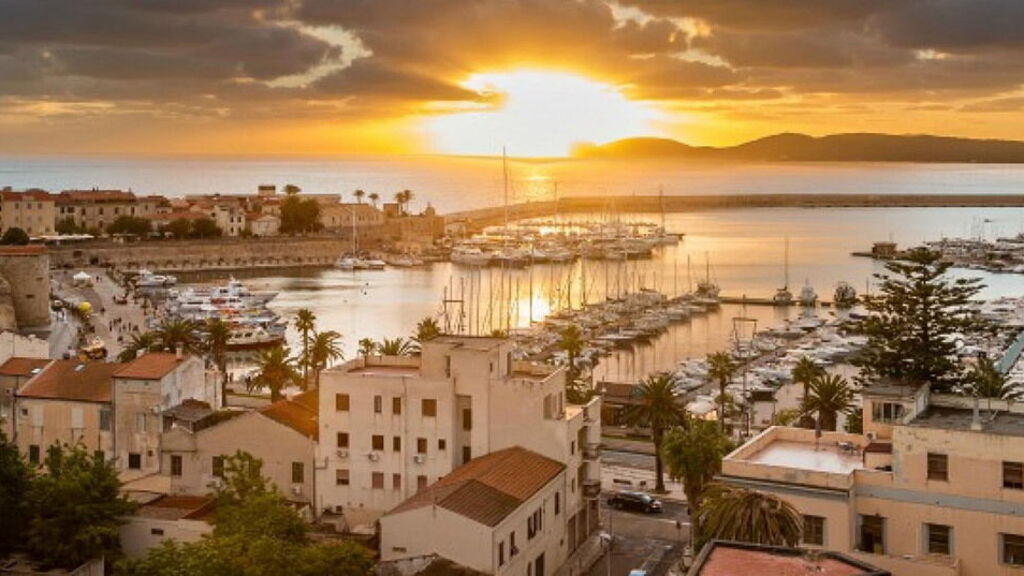
A charming Catalan town in the North-West of Sardinia
Alghero is a wonderful city in the Mediterranean sea with massive ancient defensive walls and a stunning city center. You will find there so many nice bars, restaurants, small shops and a lot of culture. The walls with its old arms for the defense of the city are absolutely to see. In the old town you'll find amazing handcrafted jewels, of gold and silver and the famous Sardinian red coral of Alghero, which is known as one of the finest and most expensive in the world.
Starting from the touristic port of Alghero you can take part at some great boat excursions. For example, you can book a dolphin watching excursion. Dolphins often swim near Alghero. Another great experience is to explore the Grotte di Nettuno at Capo Caccia - one of the most famous caves in Italy. You will see how the water formed the rocks over the years. You can visit the grotte also walking from Capo Caccia, using the "Escala del Cabirol" steps to reach the cave. From there you have a spectacular view over the Mediterranean sea.
Near Alghero you can explore another precious historic monument of Sardinia - the Nuraghe Palmavera. Nuraghi are typical Sardinian old stone towers from the bronze and iron age.
Alghero also offers beautiful sandy beaches, both in the city and a bit outside. If you are staying in Alghero for more than a day, we recommend that you also visit Stintino, a village near Alghero with beaches with sand so fine and white that you will never forget it.
From the touristic harbor of Alghero, you can also take a boat to the shores of Capo Caccia, which are mainly reachable only by boat or with a long walking and climbing session.
So, don't miss visiting Alghero and the vicinity when staying in one of the villas in Sardinia:
Villa Il Rifugio del Bandito
Villa Linayre.
Alghero, Catalan town in the North-West of Sardinia : Read More
What to do in Sardinia with children?
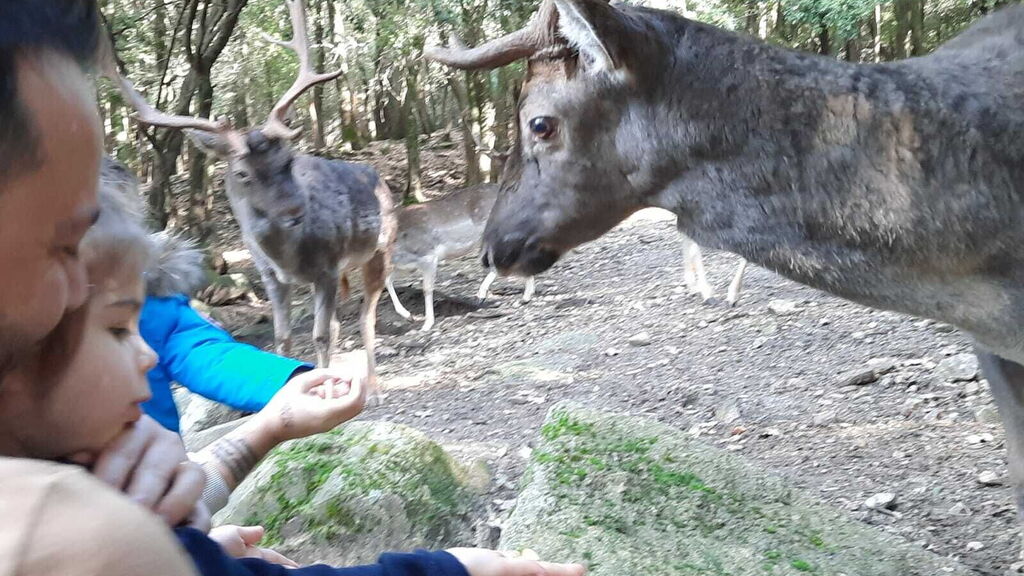
What to see in Sardinia with children? 5 top places
We at Sardinia Unlimited know very well, from personal experience, how beautiful, fun and rewarding it is to spend our holidays with children. Spending some time in the company of the little ones can also be challenging; you must always find a way to stimulate their imagination, to get them involved in playful and educational activities. A holiday in Sardinia provides endless opportunities for relaxation and recreation, in enchanting natural settings, but offers also a lot of attractions for families. This magical island is not just turquoise sea, beautiful beaches and dream landscapes: it has much more to say, even for the youngest. Below we list five of the main Sardinian attractions for children of all ages, tested directly by our little ones.
Donnortei Natural Park.
Donnortei Park is a real gem, almost a secret place that we would like to suggest to anyone visiting Sardinia, at any time of the year. It is a wonderful natural park set in a unique mountain context, in the territory of Fonni, part of the Barbagia di Ollolai. The park is private, and is managed by the family that owns these lands, as well as the homonymous farmhouse. The management of the park is done in collaboration with several Italian and Sardinian universities, which study the unique flora and fauna present within the park itself, including various endemic species. In the farmhouse you can try the typical dishes of Sardinian and Barbagian cuisine and you can stay overnight in comfortable rooms. But the main reason why we suggest visiting this wonderful structure is the possibility of booking a guided excursion inside the park itself, which is not otherwise accessible since it is fenced.
The excursion is a unique experience, to live at least once in a lifetime. A long trekking path, which winds through a dense forest of native oaks on the steep slopes of a mountain, leads to the heart of the park. An expert guide explains the natural wonders of this majestic landscape, accompanying the visitors into a little valley. Here the magic takes place every day, leaving no one indifferent - from the oldest to the youngest -. Attracted by food distributed by the guide, dozens of fallow deers, fawns and Sardinian deers materialize in front of the incredulous children, as in a fairy forest. Males with sumptuous antlers, shy females and cute "bambies", approach visitors, eating directly from their hands, despite living in the wild. Few other experiences restore harmony with nature like this, which can be experienced just a few steps from the iconic Gennargentu Mountain.
Absolutely not to be missed!
Aquarium of Cala Gonone.
Not far from the wonderful coves of the Gulf of Orosei, such as Cala Luna and Cala Goloritzé, and the spectacular Bue Marino caves, there is the Cala Gonone aquarium. If you happen to be here with children - but also without! -, take the opportunity to visit this interesting attraction. The modern structure houses 25 exhibition tanks, representing a path that crosses different seas and aquatic areas of the world. About 300 marine species live in them, from piranhas to loggerhead turtles. Educational play activities can also be carried out, to teach about respect for the oceans. Halfway through, the cute fox Rosa Fumetta, mascot of the aquarium, raises awareness of the victims of wildfires, which she miraculously survived. At the end of the visit, it is possible to play with some species in the tactile tank. There is also an outdoor playground, snack bar and ample parking.
Didactic and playful. Kids will love it!
Sardegna in Miniatura Park.
The Miniature Sardinia Park, as stated on their website, is a real integrated scientific pole, spread over an area of about 50,000 square meters. It is a complex of various attractions and theme parks of great interest, and of undoubted charm for children. The park is located near the nuragic village of Su Nuraxi in Barumini, not far from the Giara di Tuili. The first nucleus of the park, which dates back to 1999, is made up of Sardinia in miniature, where it is possible to walk along scale reproductions of some Sardinian monuments and sites. It is even possible to circumnavigate the attraction by boat. Furthermore, at the nuragic pavilion, it is possible to relive the customs and traditions of the nuragic populations during the iron age. All this by visiting the reconstruction of a typical village of the Nuragic civilization, dating back to 3,000 years ago.
An interesting Nature Park is also part of the complex. It hosts a biosphere and a tunnel aquarium, unique in Sardinia, which allows you to visit a tropical ecosystem, while learning the importance of respecting the environment. A tank with large koj carps will surely please the little ones, who will be fascinated by the wonderful colorful fish. The amazement of the children will also be great in front of the kaleidoscopic birds that cheer up the parrot aviary, followed by the oasis of succulents.
There is also an astronomy museum, a real scientific research center, where you can experiment with different activities and learn notions of astronomy and astrophysics. Of great interest is the dome of 11 meters in diameter, under which the planetarium is projected, countrywide one of the largest and most technological.
The highlight is in our opinion the Dinosaur Park, the largest of its kind in Italy, which will leave the youngest visitors speechless. The little ones of the house will certainly have fun in this part of the park, and the adults will like it too. Kids and parents will be amazed by the huge animatronic reproductions of Tyrannosaurus-rex, Apatosaurs and other Jurassic species, including baby dinosaurs, who really move and roar! You cannot miss a visit to the Megalodon, the king of the seas of prehistory, and to the recent area dedicated to the ice age, where mammoths and large prehistoric cats dominate. Are you ready to go back in time and feel like in a Hollywood blockbuster?
Top educational and fun for your children!
BittiRex.
If you are in the north of Sardinia, and you have little time available, or if Tuili and Barumini seem too distant and you don't feel like tackling such a long journey with children, we have a valid alternative for you. Near Bitti, in the historical region of Barbagia, on the border with the province of Sassari, there is BittiRex. It is another small theme park displaying real-size statues of dinosaurs. If your little ones are also passionate about paleontology and the living beings that preceded us on earth, then it is definitely worth visiting this park.
100% recommended!
Water Parks of Sardinia.
On windy summer days, when the sea is too rough and dangerous to swim safely, why not visit one of the many water parks on the island? There are several, scattered throughout the Sardinian territory. Children love sliding down the the tubes and feel the water gliding during those exciting descents. In addition, several parks offer refreshment and entertainment services, involving adults and children with fun activities, choreography and music. The largest water amusement parks, from north to south Sardinia, are: Aquafantasy in Isola Rossa, Trinità d’Agultu e Vignola; Water Paradise in Eden Beach, Sorso; Aquadream in Baja Sardinia; Parco acquatico in Baradili; BluFan in Sarroch; Diverland in Quartucciu.
Cool off by diving into the blue swimming pools!
The 5 best beaches in Costa Paradiso
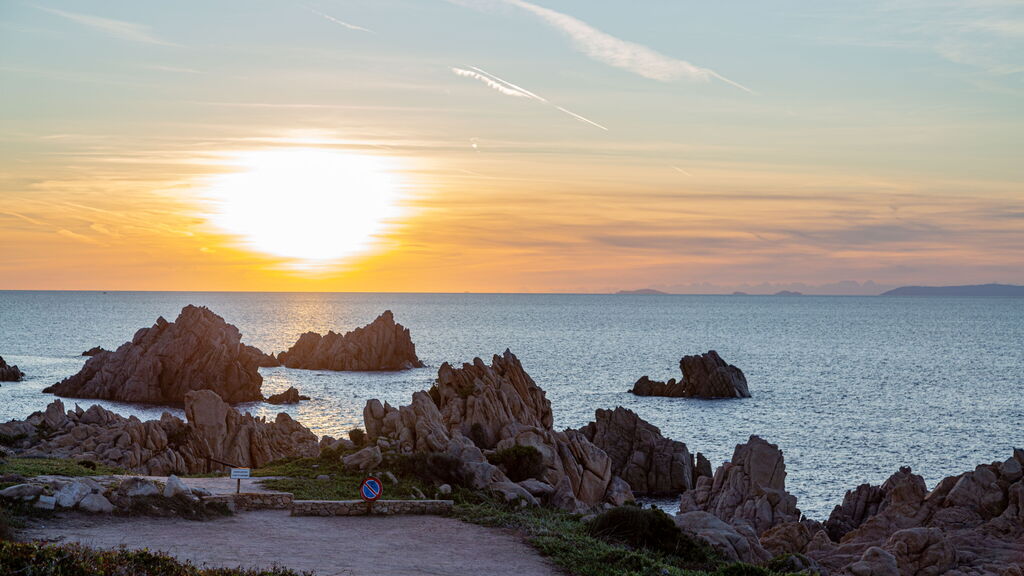
Our tips for visiting the 5 best beaches in Costa Paradiso
Costa Paradiso is a fantastic tourist resort in the north of Sardinia, halfway between Castelsardo and Santa Teresa di Gallura, frequented by thousands of visitors especially during the high season. It is like a chest full of naturalistic treasures, waiting to be unearthed.
Costa Paradiso is a hamlet of Trinità d’Agultu e Vignola, a municipality since 1958 with a double soul: hilly and maritime. Hilly, because the main urban center of Trinità d’Agultu, built around the eighteenth-century Holy Trinity Church, is located on the hills at about 360 meters above sea level; maritime, thanks to the many coastal hamlets enclosed in its vast territory. It includes the agglomeration of Vignola mare, the tourist village of Isola Rossa and the Marinedda beach, the beach of Li Feruli, Cala Sarraina, Tinnari and the hamlet of Lu Colbu. A wonderful stretch of the coast of Trinità d’Agultu and Vignola is called the Red Coast, due to the predominant color of the granite rocks and islets in the area. This portion Sardinian coast is very famous for the presence of pristine beaches and hidden coves, bordered by cliffs which, especially at sunset, take on red shades.
The hamlet of Costa Paradiso is 13 km from Trinità d’Agultu away. It opens to the visitor's eyes with an evocative and wild landscape, a natural setting for fiery sunsets. In this context, the holiday homes of the residential village and the exclusive villas for rent with sea view fit perfectly, harmoniously integrated into the landscape, retaining the charm of the area. The buildings, built with local materials, respect defined aesthetic standards, and have colors and shapes that recall those of the surrounding nature.
Whoever drives along the coastal road that leads to the village of the same name, finds himself immersed in a breathtaking promontory. It is dotted with pink granite and a dense and evergreen Mediterranean scrub, leading to wonderful bays and natural pools with crystal clear water and emerald green, turquoise and deep blue shades. Nomen omen; a true paradise!
The beaches of Costa Paradiso and surrounding areas are among the most evocative of western Gallura, known for the incredible color of the sea and delicate beaches. We mention what we believe are the 5 most beautiful beaches in the area, aware that there are others nearby, which deserve just as much attention.
The wonderful Li Cossi beach comes first with merit. It is absolutely worth taking the path that leads to the welcoming beach of fine golden sand, enclosed by enveloping reddish rocks, which give a sense of protection to bathers. We are talking about an absolute masterpiece of nature, set like a rare gem in this superb stretch of coast. The beach, as well as by sea, can be reached via a romantic path that winds along pink granite rocks eroded by the elements, with the most varied and imaginative shapes. The surrounding promontory is covered with green Mediterranean scrub that perfumes the air, cheering up the days at the beach for adults and children.
We continue with Cala Sarraina, one of the most beautiful beaches in the area, which encloses a welcoming pinkish beach, made up of coarse sand of granite origin and micro fragments of coral. It is bathed by a transparent sea like crystal and is surrounded by marvelous rocks sculpted by the mistral and by hills that smell of the typical aromas of the local vegetation. The cove is also a small natural harbor that can be reached from above, being immediately captivated by the intense color of the water. The beach can be reached in a few minutes by car, and is equipped with restaurant services and beach equipment rental.
Another gem that we point out is the Cala di Porto Leccio, set in a position sheltered from the east winds, with an old typical shepherd’s house. The beach is made up of small pebbles and fits perfectly into a setting of high and jagged coasts covered with dense scrub. The water that bathes the cove is crystal clear and tending to turquoise in color. If you are looking for a quiet place where you can sunbathe even in high season, Porto Leccio is the ideal location as it is not very crowded even in summer. The beach can be reached via the same path that leads to Li Cossi, from which it is just a few minutes away. The same path leads also to Cala Tinnari.
We continue with the romantic Cala Tinnari, part of the Red Coast, between Costa Paradiso and Isola Rossa. The beach has the shape of two converging arches and is made up of fragments of shells, tiny grains of granite and pebbles deposited from the nearby Rio Pirastru, which bring a greyish color. The hue of the sand offers a remarkable chromatic contrast with the red cliffs and the intense green of the vegetation, as well as with the wonderful clear emerald sea tending to blue. Ideal location for snorkeling, thanks to the rich marine fauna that lives in the wonderful polychrome seabed. A real oasis of peace and tranquility, this lonely bay is easily accessible by sea directly from Costa Paradiso, as well as through the natural path leading to Li Cossi.
The last beach we suggest to visit if you spend your holidays in Costa Paradiso, is about one kilometer from the town of Isola Rossa, that takes its name from an iconic islet. We are talking about La Marinedda beach, an unmissable bay with a beach of fine white sand among the most beautiful in northern Sardinia, which slips docile into the sandy seabed. In the background you can see Punta Canneddi, while all around the typical aromatic vegetation of the Mediterranean Sea, including helichrysum, and junipers, completes the idyllic landscape. The stretch of sea that laps the shoreline has shades between turquoise and intense blue, depending on the refraction and intensity of the light. It is flat and soothing in the absence of wind and somewhat turbulent when the Mistral blows. The beach is popular with water sports enthusiasts and hosts an international surfing competition.
La Marinedda is easy to reach, along the coast road that leads to Isola Rossa. The beach is equipped with refreshment services, deckchair and bathing and sports equipment rental. There is also a windsurfing and surfboarding school.
5 tips on New Year's Eve in Sardinia
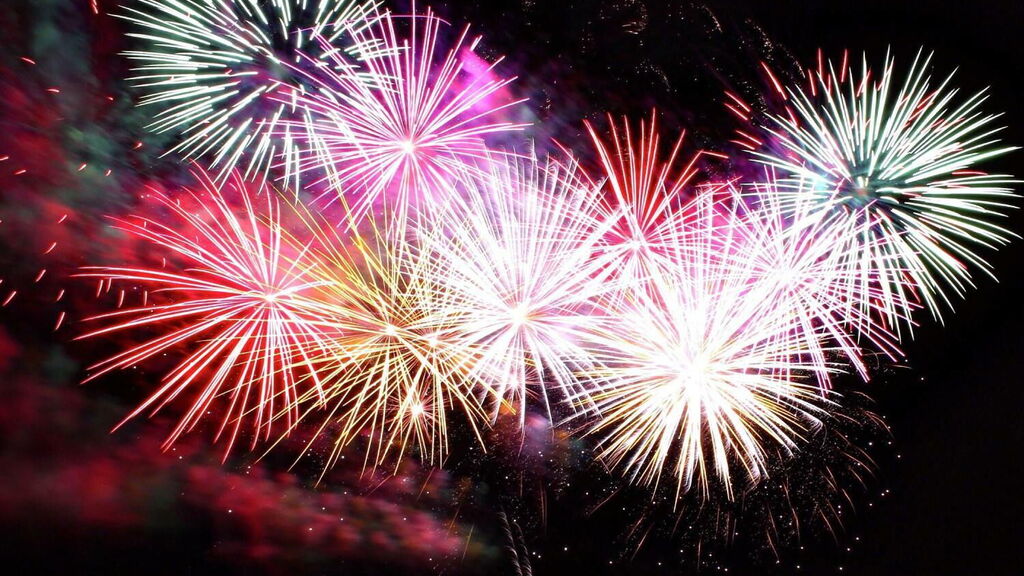
What to do for New Year's Eve in Sardinia?
New Year's Eve in Sardinia is a special time. Celebrating the departure of the old year and the arrival of a new one, drawing up a list of good intentions by looking at the sea, attending concerts and parties with our loved ones, are all things that have a special charm on this magical island. You can also use the opportunity to spend a carefree time in one of our villas for rent for New Year's Eve in Sardinia.
Various Sardinian towns usually offer a rich calendar dotted with events, comparable to that of the most important Italian cities. It includes international stars’ concerts, cultural events, food and wine tastings, and much more. The cities of Sardinia that usually have a great program for New Year's Eve are the ones with a double soul; cosmopolitan and traditional. They also have a strong tourist identity: Cagliari, Sassari, Alghero, Olbia, Castelsardo.
What to do in Sardinia in November? 5 Top tips
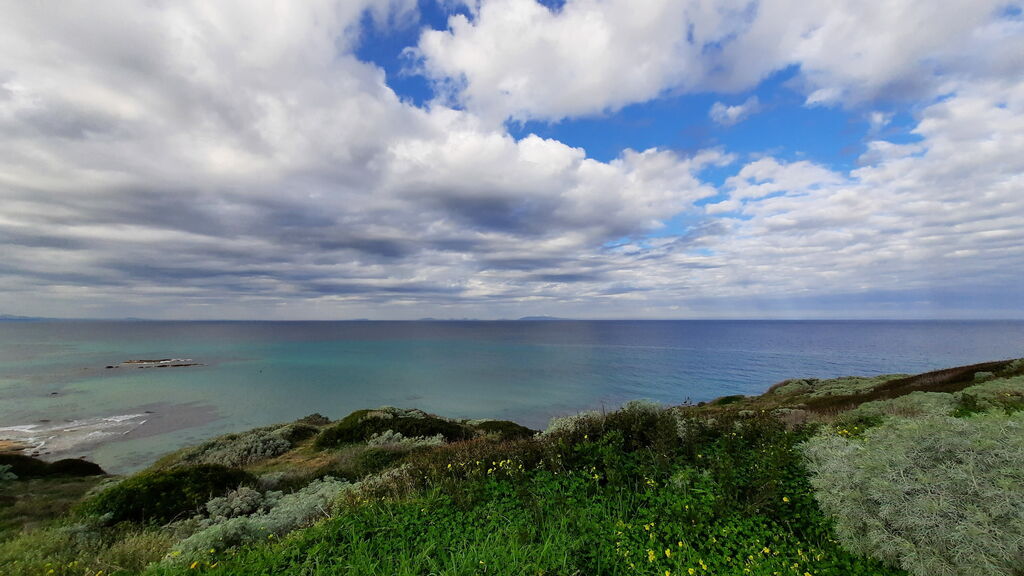
Holidays in Sardinia in November, all you need to know!
Those who have scheduled holidays in the autumn period may wonder what to do during this period. Besides staying in our pajamas, sipping hot chocolate, and watching TV series - all of which we love!—for the month of November, we suggest you visit Sardinia, for several good reasons, which are explained below.
Let's start by saying that this is a special island, which has so much to offer throughout the year. There are many things to do in Sardinia in September, October, and even November.
- Transport and connections with Sardinia.
During the autumn and winter season, the main air and sea connections with the Italian peninsula are guaranteed, also by virtue of the “Territorial Continuity Policy”, as well as numerous flights to and from various European cities.
The main airports are those of Cagliari, Olbia and Alghero. The main ports are in Cagliari, Olbia and Porto Torres.
- Climate in Sardinia in Autumn.
Temperatures during daytime are still mild even during autumn, especially in the coastal locations, where we have temperatures around 20°C are recorded, with infrequent rains, alternating with sunny periods.
While in continental Europe almost everyone starts thinking of Christmas, we in Sardinia look back to summer.
A slight temperature difference is also recorded between the north and south of the island, since the latter area is slightly milder during autumn and winter, also because it is less exposed to the northern and northwestern winds.
In the hilly and mountainous interior, temperatures are colder, and it could happen that at the end of November the first snow falls on the Gennargentu Massif and on Monte Limbara, which could be the ideal opportunity for a pleasant walk on the white slopes of these mountains.
- Advantages of deseasonalization.
Visitors from Central European and Scandinavian countries are well aware of the advantages of visiting Sardinia in October and even in November, representing the largest tourist group during the autumn months. We should learn from them, to fully enjoy an island with many facets, more liveable when uncrowded, not neglecting the undoubted economic advantages compared to the summer months, due to the lower costs for a villa or a holiday home to rent in Sardinia.
Read on to discover our 5 tips on autumn in Sardinia.
Winter in Sardinia: all about the spots to visit
Rites, traditions and destinations for the winter in Sardinia
In fact, this island holds many surprises and is full of attractions, events and things to do in every season, even during the winter.
• Skiing in Sardinia.
Probably, if you love skiing, Sardinia is not the most suitable destination for you... even if, to be honest, there is a ski area on the island spread over the territories of Fonni, Villagrande Strisaili and Desulo. You didn't expect it, did you?The main ski slopes are located on the summit of Bruncu Spina, part of the Gennargentu massif, and extend for several kilometers in the heart of the province of Nuoro, with facilities of ascent.
The ski season lasts 2 to 3 months, usually from December to March, when abundant snowfalls occur, attracting several thousand Sardinian and non-Sardinian enthusiasts.
• Visit archaeological sites.
The attractions in Sardinia in winter are certainly not limited to activities in the ski resorts.The cold season is particularly suitable for visiting archaeological sites, which are distributed far and wide throughout the island, to be included in trekking itineraries and healthy open-air walks.
In Sardinia there are between 7,000 and 8,000 Nuraghi: massive truncated conical towers dating back to the Bronze Age, built with stone boulders of different sizes, using revolutionary construction techniques for the time.
Several Nuragic villages have been brought to light through massive archaeological excavations, and are perfectly preserved. We strongly suggest you to visit one of the major complexes. Depending on where you are, you will surely have an archaeological site nearby: Nuraghe Arrubiu, Palmavera, Santu Antine, Su Nuraxi, Sa Prisgiona, Nuraghe Losa, Riu Mulinu, and so on.
To grasp the essence of these impressive monuments and the fascinating Nuragic culture, it is good to rely on an expert guide, who will introduce you to a highly evolved civilization, of which too little has been said in the past.
Further important monuments, from the prehistoric or nuragic era which are worth visiting, are the Domus de Janas, the Sacred Wells and the Tombs of the Giants. Also to discover these monuments it is good to rely on expert archaeological guides.
The magnetic and imposing statues of the Giants of Monte Prama deserve more attention: we have already talked about them, in the blog about Sardinian legends and myths.
• Participate in the Sardinian “Karrasegare” celebrations.
The months of January and February in particular, in addition to being among the coldest periods of the year, hold important and surprising events related to Karrasegare: the Sardinian Carnival.All manifestations and rites of the Barbagia Carnival, which mixes the sacred and the profane, are of enormous interest. This period of the year has great anthropological and socio-cultural value, due to the strong identity imprint it has on local populations.
The carnival in the Barbagia begins with the rituals which take place on January 16, on the eve of the feast of Saint Anthony the Abbot. Masked figures dance around the ritual fires that are lit in the squares in many villages.
Several towns have their own traditional carnival masks.
The most famous masks, known even beyond the island's borders, are those of the town of Mamoiada, which celebrates the beginning of Carnival on January 17th, and where the anthropomorphic figures of the Mamuthones and Issohadores perform a suggestive parade.
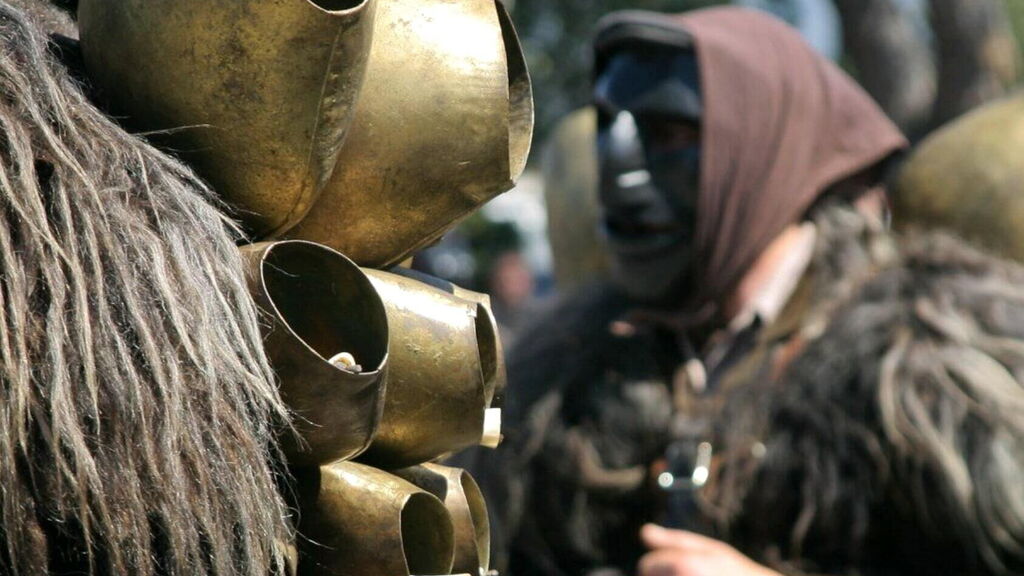
Tradition provides that twelve Mamuthones (one for each month of the year), personified by vigorous local actors, proceed at a rhythmic pace in two parallel rows. The solemn footsteps and leaps of the imposing figure covered in black sheepskins make the cowbells resound loudly. The bells are clasped on their shoulders and weigh around 55 lbs.
Mamuthones’ faces are hidden behind the viseras, which are traditional wooden masks made of peartree wood. The visera is painted black and has grotesque features from which only the penetrating eyes of the actors can be seen. It is handycrafted by local artisans, or by the Mamuthones themselves. They also wear the characteristic handkerchief on their heads, called Muncadore, which is tied under the chin.
Their pace has a strong magnetic power, also arousing awe in the audience: as soon as the Mamuthones appear, a respectful silence falls, the crowd dodges to make room for the procession and the children run away in fear.
The ritual is completed by a further costume, a colored one (dominant colors are red and white): the Issohadores. Eight of them proceed alongside the Mamuthones, who they watch over and to whom they dictate the pace. In addition, the Issohadores jokingly capture the spectators, using a rope called "sa soha", thrown as a lasso on the crowd enjoying the parade.
The Issohadores also wear a wooden mask, called "sa visera 'e santu", painted white and with more delicate features, in contrast to the black one with the rough features of the Mamuthones.
Other towns in the interior of Sardinia have their own anthropomorphic masks and their own propitiatory rituals, which you can discover by spending the days of Carnival in Sardinia. We point out the Boes and Merdùles from Ottana and the Thurpos from Orotelli.
In other Sardinian municipalities, far from the province of Nuoro and from the ancestral tradition of the Barbagia Carnival, it is celebrated in an evocative way. Interesting is the very ancient "Karrasegare Osinku": a peculiar carnival of the seaside town of Bosa, on the west coast of Sardinia.
One of our favorite ways to celebrate carnival is to attend the spectacular and evocative equestrian event called the Sartiglia in Oristano. It is a horse race, where the knights try to catch a silver star while riding fast through the town. It takes place on the last Sunday and Tuesday of Carnival and which includes wonderful rituals and choreography.
Other Sardinian towns offer more modern and widespread celebrations and events, with allegorical floats and dances that involve the whole population, as happens for example in the heart of Gallura, in Tempio Pausania.
• Celebrating Christmas and the New Year’s Eve at the sea in Sardinia.
Celebrating Christmas and New Year's Eve in Sardinia could prove to be an unexpectedly interesting experience, especially if you choose a city or coastal location.Waking up on Christmas Day with a view of an intense blue sea, after spending the eve with loved ones, or mingling with the hospitable inhabitants of the island in clubs and Christmas markets, is priceless.
Among the places that offer an optimal combination of tradition and fun on the sea we mention Alghero, Cagliari, Olbia and Castelsardo: tourist cities that usually have a very rich events calendar for New Year's Eve, with various events and free concerts in the town squares by internationally renowned artists.
Winter in Sardinia: all about the spots to visit : Read More
5 Dream villas with direct access to the sea in Sardinia
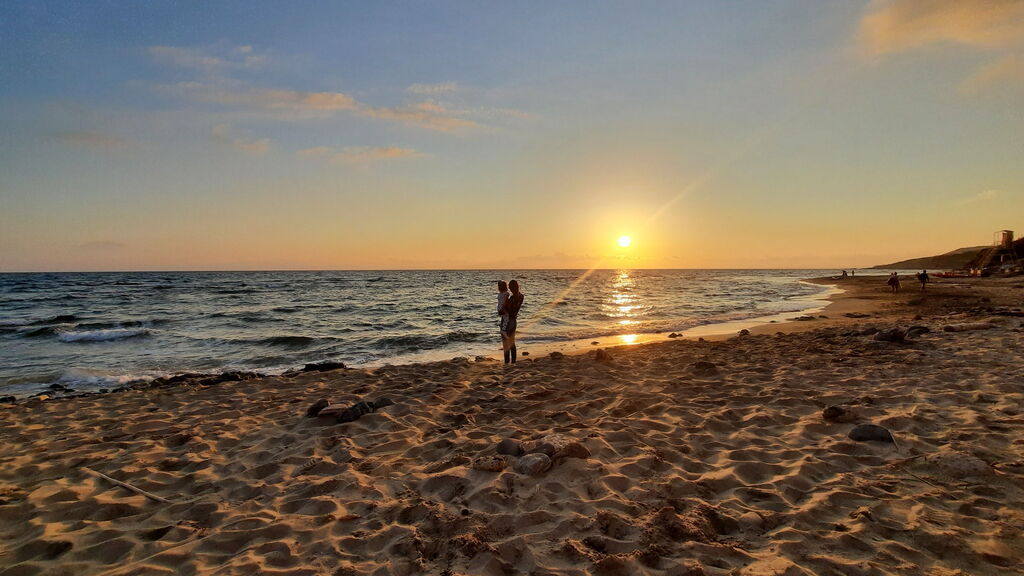
Seaside villas in Sardinia: choosing the right ones!
First of all, we would like to stress on the fact that, seaside villas or with direct access to the sea are rare on Sardinia. This is due to urban planning regulations and laws aimed at preserving the environmental and naturalistic integrity of the shores. And everyone knows, the rarer a good, the greater its value!
Thus, renting exclusive villas in Sardinia with direct beach access can be a privilege, as well as an opportunity to spend unforgettable days in fabulous locations.
To spend a holiday in Sardinia in an independent villa is a great experience. The absolute protagonist, which embellishes and gives meaning to the experience itself, is this island out of time. Thanks to its unparalleled biological variety, its great cultural richness and ancient traditions, its immense historical archaeological heritage, as well as its legendary and wild beauty, Sardinia is one-of-a-kind.
In our opinion, the best possible housing solution is a villa with direct access to the sea, to spend your holiday in relax and privacy, without having to give up fun and a dip in crystal clear waters. Furthermore, you don’t need boring car transfers to reach the seaside resorts, nor to worry about parking, often expensive or completely absent.
Some of our villas have the only access to a sandy or rocky beach, effectively turning them into private beaches. Short private paths, which sometimes are hidden from view by the Mediterranean scrub, lead to beautiful inlets bathed by crystal clear waters with unbelievable shades of blue.
Spending a holiday in a villa with private access to the sea means to live a great experience, in the utmost privacy and tranquility, away from the massive and intrusive presence of other vacationers.
5 Dream villas with direct access to the sea in Sardinia : Read More
Villas for rent in San Teodoro: where to stay?
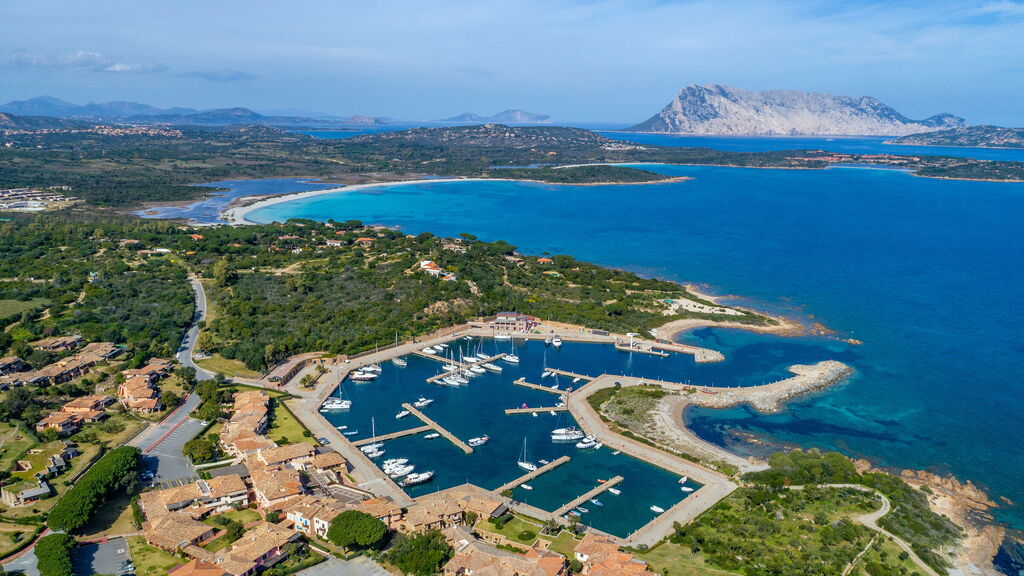
The beaches of San Teodoro, all the secrets of cobalt blue
- La Cinta beachIt is the best-known and most popular beach in San Teodoro, which we can define as the city beach due to its proximity to the town. It can be easily reached by car, motorbike, bicycle, and even on foot after a few minutes walk north of the town.The beach is about five kilometres long and has the shape of an arch. It is made of very white and soft sand, which winds between the crystalline sea and the brackish lagoon behind it, ideal for relaxing walks on the shore. The small sand dunes, which make up the beach, gently degrade into the turquoise water, merging with the shallow seabed, beloved by families with small children, as well as by sea and nature lovers.La Cinta is located in front of the Marine area of Punta Coda Cavallo and the island of Tavolara and borders to the west with the San Teodoro lagoon. This unique ecosystem rich in biodiversity is frequented by birdwatchers from all over the world, who visit San Teodoro to photograph different species of the local birdlife. Above all, the wonderful pink flamingos stand out, which can be seen close to the sand dunes, that smell of helichrysum, juniper and sea lilies.The beach is equipped with all services: car parks, info points, beach and sports equipment rental, sailing and kite-surfing schools, kiosks and refreshment points.The visit of La Cinta is an unmissable stop for those staying in the area.
- The beach of PuntaldìaPuntaldìa beach is set in a cove overlooking the majestic island of Tavolara and constitutes the northern continuation of La Cinta. The two beaches are in fact separated by the mouth of the San Teodoro Lagoon. The location of the beach shelters it from the strong winds that blow from the north and the northwest, and is, therefore, suitable for children, also thanks to the crystal clear and shallow water, the smooth rocks and the fine sand. The beach is also popular with various water sports enthusiasts - such as kites and windsurf - who find the ideal marine weather conditions just outside the bay.The beach is located south of the Marina of Puntaldìa, an ideal area for San Teodoro villa rentals.There are also exclusive resorts and golf courses. The area is equipped with all the services, refreshment points and various clubs where you can spend pleasant evenings.
- Cala BrandinchiWe have already written several articles about this beautiful beach, placing it in our top 5 Sardinian beaches ranking. A real Eden, not surprisingly nicknamed "little Tahiti", which we will always boast about.Located in front of the protected marine area of Tavolara, the imposing limestone island whose silhouette dominates the landscape, Cala Brandinchi borders a maritime stretch of great biological interest and dazzling beauty. The sand is white and soft and gives the sea its characteristic turquoise colour with cobalt reflections, and crystalline transparency. Clean waters, which invites you to dive. The beach slopes gently into the sea, with a very shallow seabed for tens of meters, ideal for families with children.Nearby there is a pine forest, with refreshment points and parking.From the car park, in addition to Cala Brandinchi, you can access the Lu Impostu beach, part of the same ecosystem.Further back we find the Brandinchi pond, very popular with biologists and birdwatchers, home to various species of aquatic birds, such as flamingos and herons.
- Lu Impostu beachLu Impostu is considered the twin beach of Brandinchi, it is a little less known than its sister but just as beautiful!The beach is about one kilometre long and quite wide. There are white dunes of fine and soft sand, covered with Mediterranean scrub. The crystalline sea reflects shades of blue and emerald green. The seabed is sandy and shallow, thus suitable even for children.There are all main services, such as refreshment points, boat and beach equipment rental. In addition, it is accessible to people with disabilities, and the large parking area in front of the beach is also suitable for campers.All the pearls of San Teodoro are very close: to the south of Lu Impostu, we find Puntaldìa, to the north Cala Brandinchi, while to the northeast stands the peninsula of Capo Coda Cavallo. Beyond it, a little further north, the horizon is once again dominated by the imposing silhouette of Tavolara. To the west extends the second largest pond of San Teodoro, in an area rich in marsh vegetation and Mediterranean scrub. Further south, on the border of the San Teodoro area, the Isuledda beach stands out.
- Capo Coda CavalloCapo Coda Cavallo is a granite promontory that slopes down to the maritime stretch in front of the islands of Tavolara and Molara and the islet of Proratora. The peninsula has numerous sandy coves and cliffs covered with aromatic Mediterranean scrub. The Coda Cavallo beach has a peculiar shape, behind which lies the etymology of the name of the promontory.The land strip and the islands make up a protected area of about 15,000 hectares of crystal-clear waters and wonderful coves, which goes from Capo Ceraso to Punta s'Isuledda. It is a very popular location for those who practice snorkelling and diving: one of the most beautiful spectacles in the Mediterranean Sea, with white sandy beaches, protected inlets, uninhabited islands, lagoons rich in flora and fauna... and infinite shades of colours that will make you fall hopelessly in love with this area.Within such a beautiful naturalistic context, there are many exclusive villas with pool to rent in Sardinia, often in a strategic position and with an amazing sea view.
- Isuedda beachThe beach extends for about 500 meters and is located in the southern part of the territory of San Teodoro, on the southern border of the marine protected area of Tavolara, which can be seen in the distance. Furthermore, from the beach, you can admire the promontory of Capo Coda Cavallo and Puntaldìa.The sand is white and soft, while the sea has shades ranging from blue to turquoise and incredible transparency. The shallow water seems to have been made especially for children.The Mediterranean scrub surrounds the beach with its intense scents and colours. Furthermore, in the vicinity of the bay, there are several land lots with olive trees and fruit trees.Even this beach has a small lagoon behind it, where it is possible to admire colourful birdlife.There are ample parking and refreshment points. It is possible to rent beach and sports equipment. The beach is also popular with water sports enthusiasts.
Sardinian myths and legends
Origins of Sardinian myths
Our grandparents have handed down to us tales about fantastic creatures and anti-heroes of everyday life, as well as stories that seem to be closely linked with myths and legends of the ancient Greek tradition and of the Roman era. We all recall their fascinating and wise way of narrating with great pathos. In turn, our "giajos" (ancestors) learned these tales around the home fireplace, where the family gathered in ancient times, to pass down the so-called "contos de 'foghile" (fireplace tales).
Every single town and city of Sardinia has its own legends and tales, part of Sardinian folklore, handed down from father to son. In the Anglona and the lower Gallura, were narrated the deeds of “Antoneddu”, a shrewd boy struggling with witches and ogres, which he defeated thanks to his cunning. A cross between Hop-o'-My-Thumb and the little Hans from the Hänsel and Gretel tale.
Inevitably, the stories have undergone distortions over the years, due to the oral passage from generation to generation, like ancient rhapsodies did, which brought to many variations of the same stories.
Further legends are linked to historical characters who really existed, whose deeds have been emphasized in hyperbolic folk tales. Several stories narrate the exploits of legendary Sardinian bandits of the past: island brigands who fought against the Savoy armies, and who were not at all hated by the population, quite the contrary! It is possible to compare these figures to other “mythicized” personalities of international fame, such as Robin Hood and Rob Roy MacGregor.
The best known and most feared bandits of the time belonged to a noble family: the Delitala, sworn enemies of the Savoy. The most notorious exponent of the family was nothing less than a legendary woman: Donna Lucia Delitala Tedde, a sort of female version of Zorro. She lived during the Spanish Succession War, and she was respected and feared as a warrior queen. A masked outlaw, animated by a strong patriotic sentiment, remembered for her heroic deeds, as well as for her pugnacious and rebellious character. She was an example and encouragement to the population to fight to free themselves from the oppressors. Even the death of Donna Lucia is still shrouded in mystery: conflicting versions circulate on the ways and circumstances in which she was murdered.
The then viceroy Carlo Amedeo Battista of San Martino d'Agliè di Rivarolo, wrote a letter to King Carlo Emanuele III, in which he described the banditess with the following words: She did not want to marry in order not to depend on a husband, according to what she used to say. She has two grenadier mustaches and she uses weapons and horse like a gendarm., thus feeding even more the legend of Donna Lucia.
Other northern Sardinian myths, related to a legendary bandit narrate the deeds of the infamous Muto di Gallura, an emblematic character, protagonist of the homonymous historical novel by Enrico Costa from Sassari. The real name of the ruthless deaf-mute was Bastiano Tansu, who rose to the news as one of the most vengeful Sardinian outlaws, involved in the ferocious feud between the Vasa and the Mamia families, which bloodied Gallura in the mid-nineteenth century. He was originally from Aggius, a wonderful village in the internal Gallura, in whose territory there are lunar landscapes due to incredible granite rock formations, also known for the "Museum of Banditry", which is worth visiting.
Following the publication in 1884 of the novel by Costa, entitled "Il Muto di Gallura", the inhabitants of Aggius and neighboring villages fed the myth of the bloodthirsty bandit, adding colorful details to the stories about his heinous deeds.
A legend that we think is very interesting was written with great narrative skill by the sharp writer Gianmichele Lisai. It is part of the wonderful collection of myths and legends about Sardinia called "101 stories about Sardinia, that you have never been told". We have paraphrased the legend of Torco, hero of Sandalia. The links to ancient Greek myths are obvious:
Before civilization developed in Sardinia, Torco protected the ancient island from attacks by enemies from the sea, who intended to conquer and plunder it. Son of Neptune, God of the sea, Torco was gifted with a legendary strength and a great connoisseur of seafaring art. Tireless, he watched the coasts of Sardinia aboard a boat made of reeds. It was him who noticed that the island had the shape of a sandal, baptizing it precisely "Sandalia". Torco clashed several times with the powerful Atlante, commander of the Mediterranean pirates from the coasts of Africa. The bloody battles between Torco's and Atlante's crews always ended in the same way: Sandalia's brave soldiers, led by Torco, had the upper hand.
Over the years, even Torco aged, despite his divine origins. Atlante, in full vigor, decided to take advantage of Torco's physical decay, to launch the definitive attack. He placed himself at the head of all the pirate crews of Africa, which he led to the coasts of Sandalia to carry out its conquest. Here an epic battle took place between the two armies of the sea. The pirates were in surplus, and at various stages of the battle they managed to land on Sandalia. Despite the numerical inferiority, Torco and his valiant men always managed to repel the invaders and even took over, until a nefarious event overturned the fate of the battle. Atlante's ship rammed Torco's fragile boat, which sank into the sea depths with all the crew. The inhabitants of the island fell into despair, because without the brave leader they defenseless against the pirates.
Neptune's intervention was providential. He saved his lifeless son by blowing the spirit of the sea into his mouth, to turn him into a merman: half man and half fish. Torco acquired the ability to swim as agile and fast as a fish. With renewed determination and strength he placed himself at the head of the army of mermen, with whom he surrounded the pirate ships. By vigorous movements of the tails they caused high waves, which shattered the boats of the invaders, causing them to be shipwrecked. Once again the island was saved thanks to its hero.
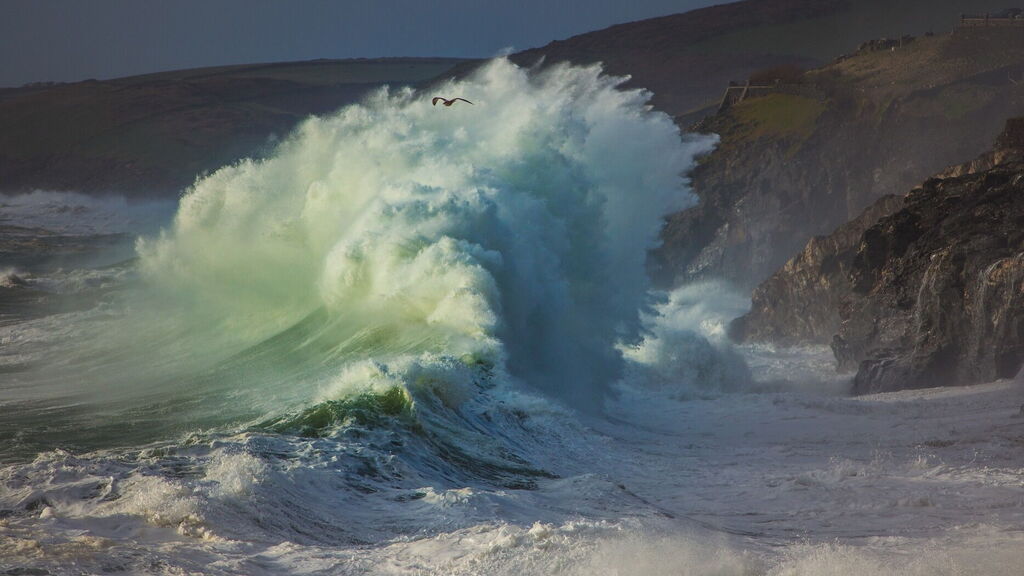
Legend has it that even today Torco and his faithful mermen inhabit the sea of Sandalia, causing impetuous storms with powerful movements of their tails to signal the dangers coming from the sea.
Other legends are more recent, or have been elaborated and taken up in the scientific and archaeological theories of various Sardinian writers and scholars. Probably, the most fascinating legend of all, is related to the theory of the well-known Italian journalist Sergio Frau, who identified Sardinia as the mythical Atlantis!
In his essay, the writer of Sardinian origins accurately analyzes many clues, numerous geographical, anthropological and historical analogies, traces of cataclysms on nuragic constructions and archaeological finds. His investigations and deductions lead the writer to formulate the theory that the mythical Pillars of Hercules, of which among others wrote the philosopher of ancient Greece Plato, have for centuries been wrongly located. Sergio Frau states they should be in the Strait of Sicily. Starting from this assumption, the legendary island of Atlantis, of which Plato speaks in the "Timaeus and Critias", would actually be Sardinia
If you are passionate about historical archeology and want to deepen this fascinating theory, you can read the essay by Sergio Frau, entitled "The Pillars of Hercules".
South-Sardinia: the best villas for rent
South of Sardinia, destinations and accommodations for your vacation
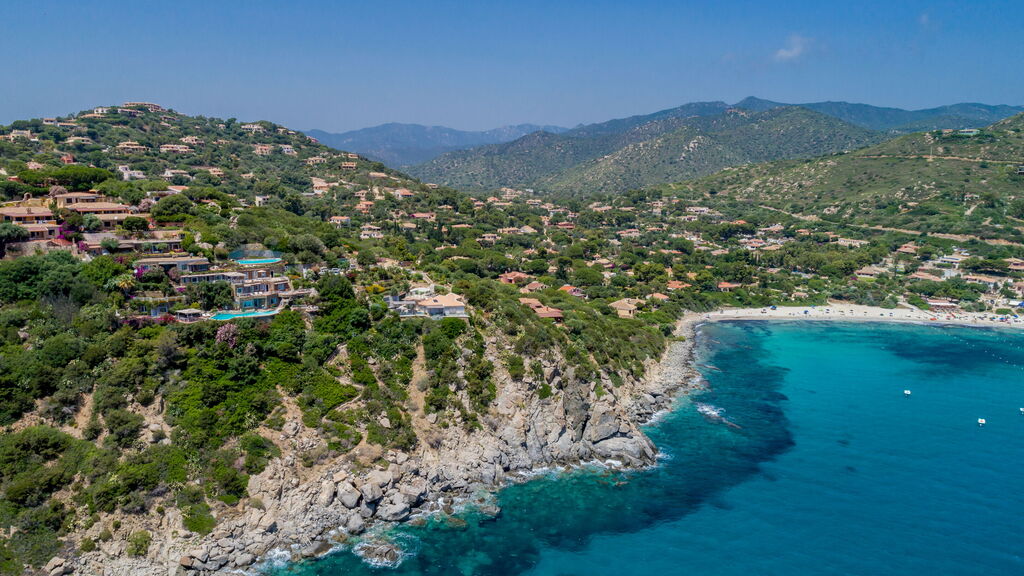
We can delimit this territory, associating it with the historic province of Cagliari and ideally placing it south of the provinces of Nuoro and Oristano.
The territory occupies approximately one third of the island, and is crossed by the vast Campidano plain and some medium-sized mountain ranges. The islands of Southern Sardinia are also part of it, such as the Island of San Pietro, the Island of Sant’Antioco, Serpentara and the Isola dei Cavoli.
It is a less known area than the north of the island, which contains glamorous destinations such as the Costa Smeralda, the wonderful coast of Alghero, the iconic Stintino and the sparkling San Teodoro, as well as the paradisiacal Maddalena Archipelago.
However, even the south includes some of the best known coastal areas and most beautiful beaches in the world. Tuerredda in the territory of Teulada, Cala Cipolla in Chia, Cala Sinzias in Castiadas, Porto Giunco in Villasimius near the natural marine protected area of Capo Carbonara, and the many sandy shores of Costa Rei and Porto Pino are just some of the southern beaches with white sand, and waters of unreal transparency and with shades ranging from turquoise to sapphire.
If you are planning your next holidays in Sardinia, but you have not yet booked the holiday home where to spend them, why not take into account that there is a large number of villas for rent in Southern Sardinia, suitable for all needs and budgets.
Keep reading this article to find out more.